
May 2025
A tenth anniversary

A popular saying in this region is “You can read the quality of a teacher by the length of his stick”. With the team, we discuss discipline - we want above all to appreciate teachers and children and to be friendly. Discipline is important, but discipline with a smile.
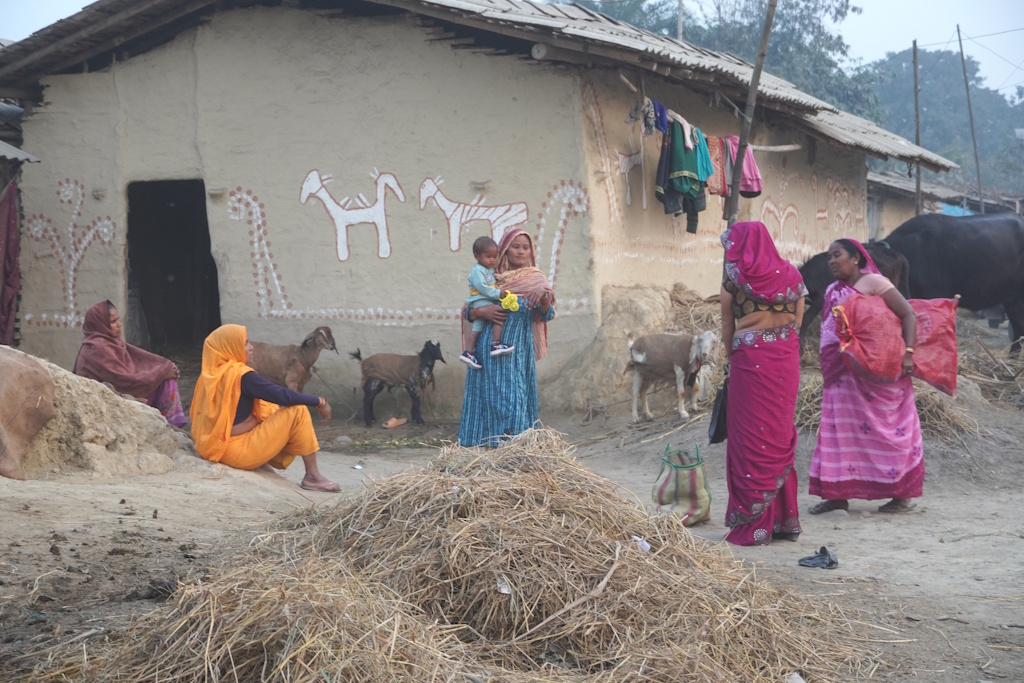
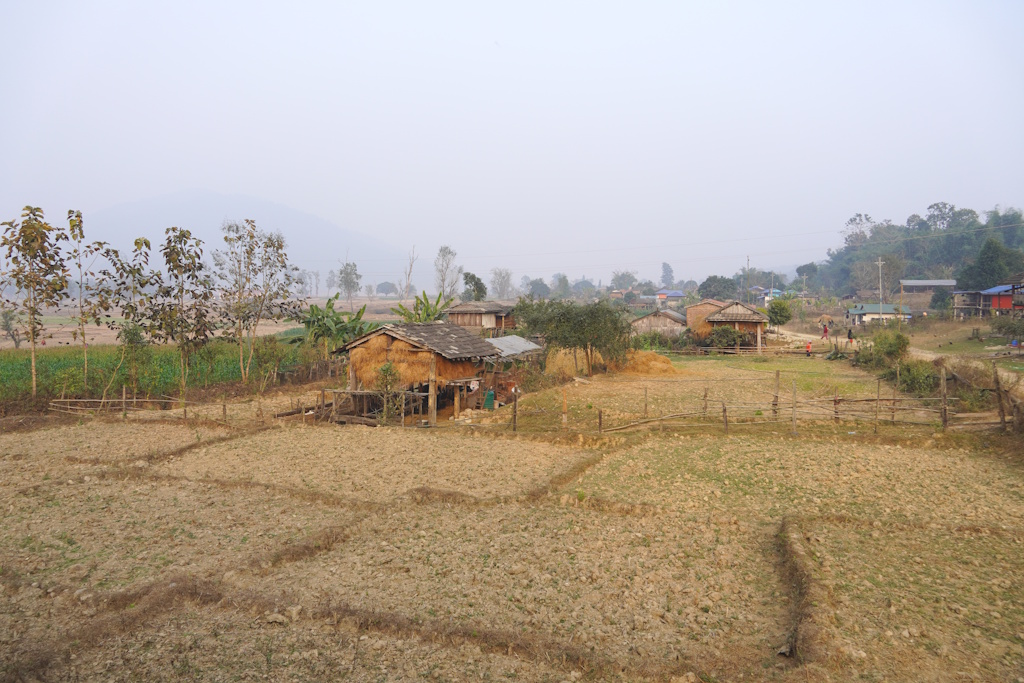
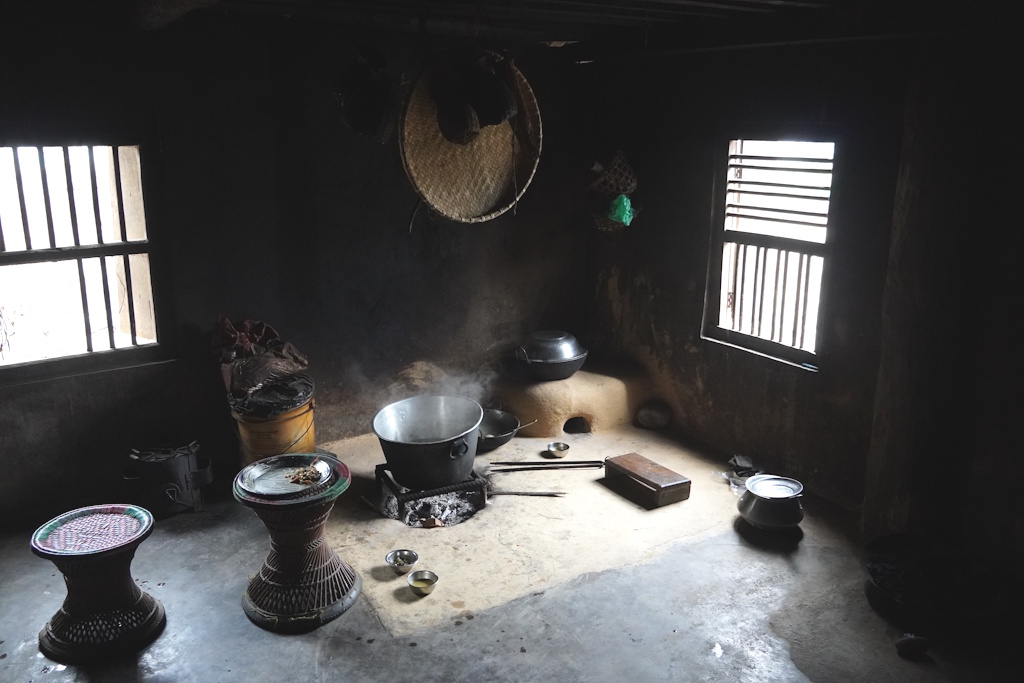
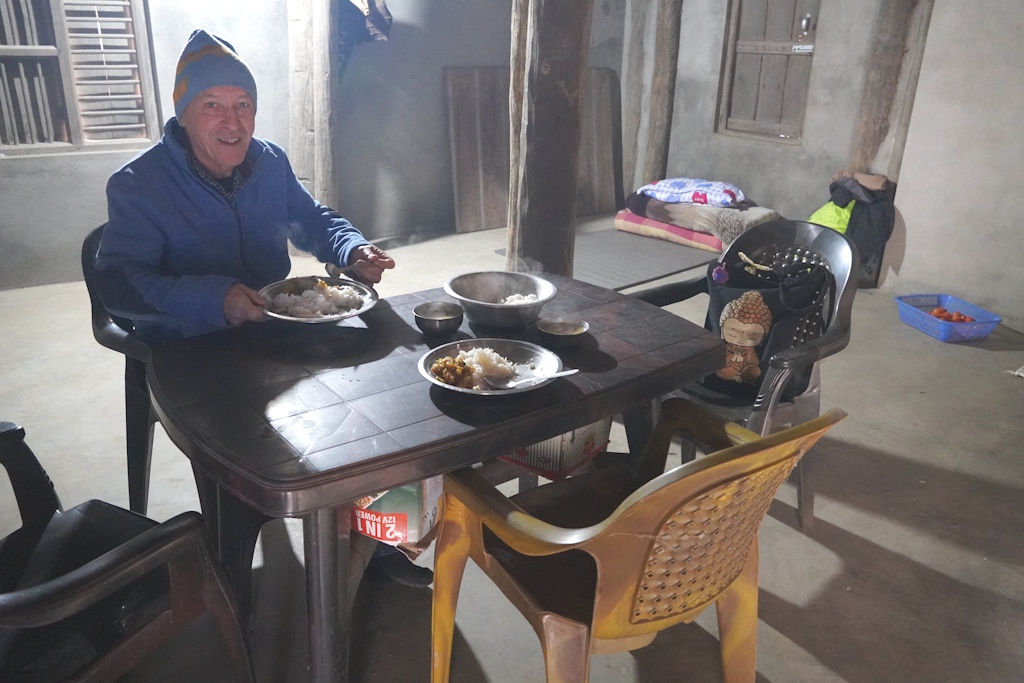
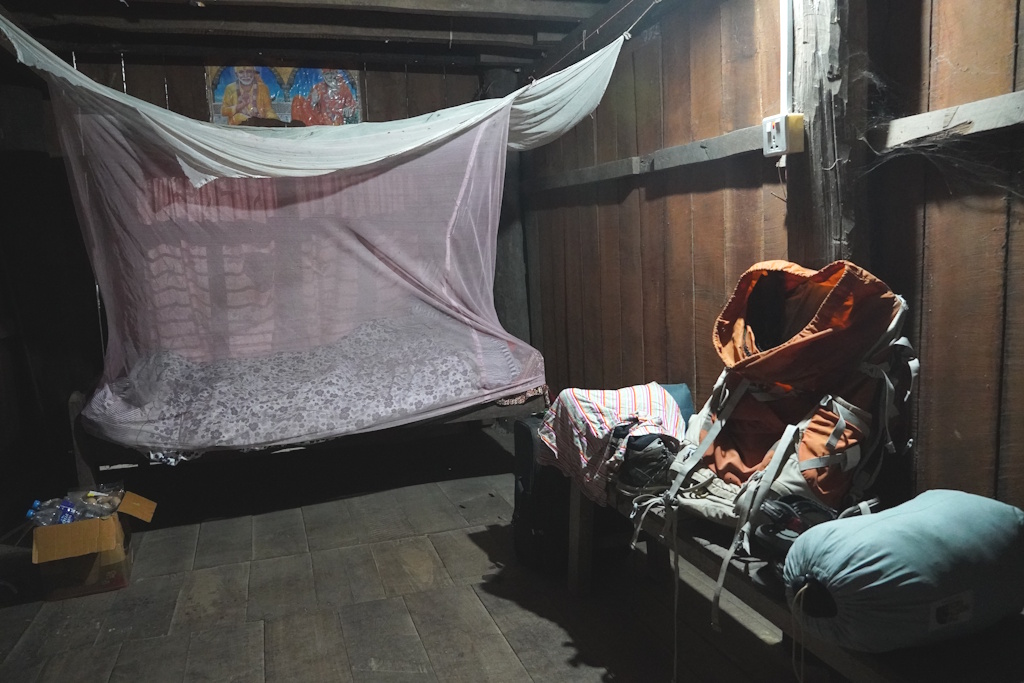
This is our tenth working holiday in Nepal, from 30 January to 5 March 2025. For four weeks, we will work from 8 to 8 with our partners from the Centre for Educational Policies and Practices. Each week follows a tight schedule: travelling to an area, getting to know the local team and integrating ourselves in the village, visiting and discussing the ecological initiatives, observing about five schools and giving an activity in each class, followed by a day of co-teaching with the teachers in one of those schools, a day of collaborating with and training teachers from different schools in the area, a day of evaluating with CEPP, reordering our didactic materials and designing and using new ones with the team. We don't have to worry about logistics: CEPP gets us everywhere, welcomes us with a khata (traditional scarf) and spoils us with tasty rice, lentils and vegetables and a bed with mosquito net.
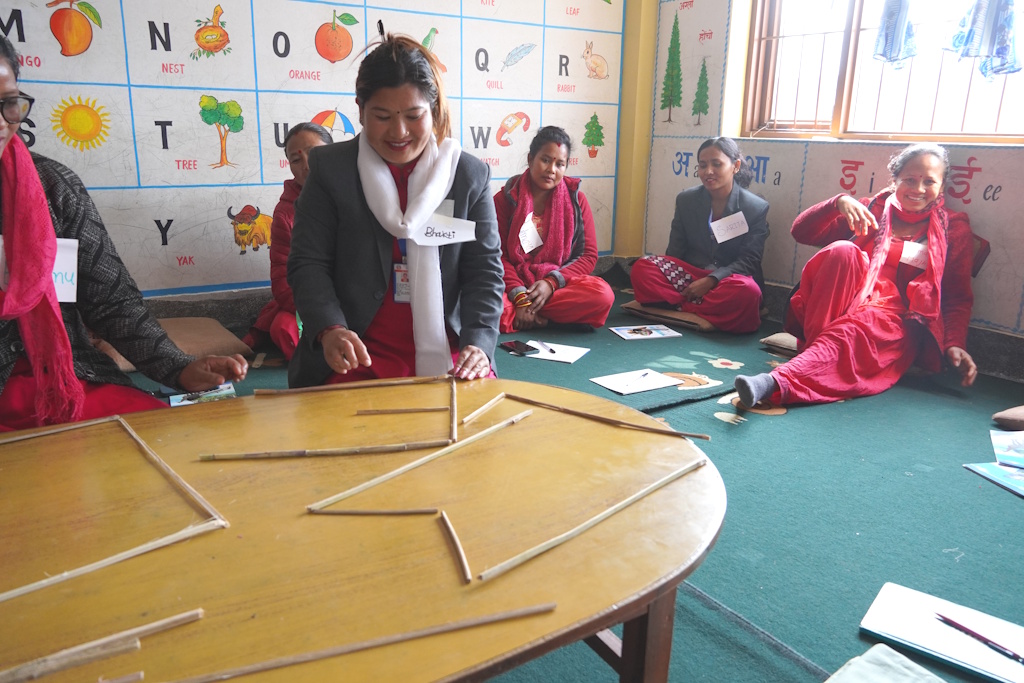
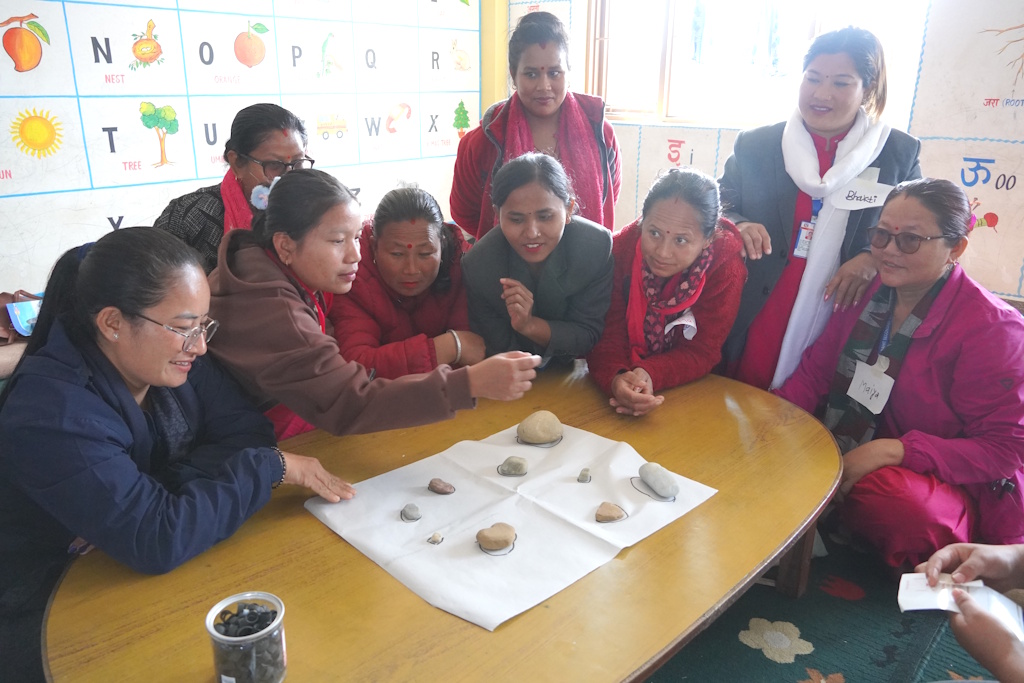
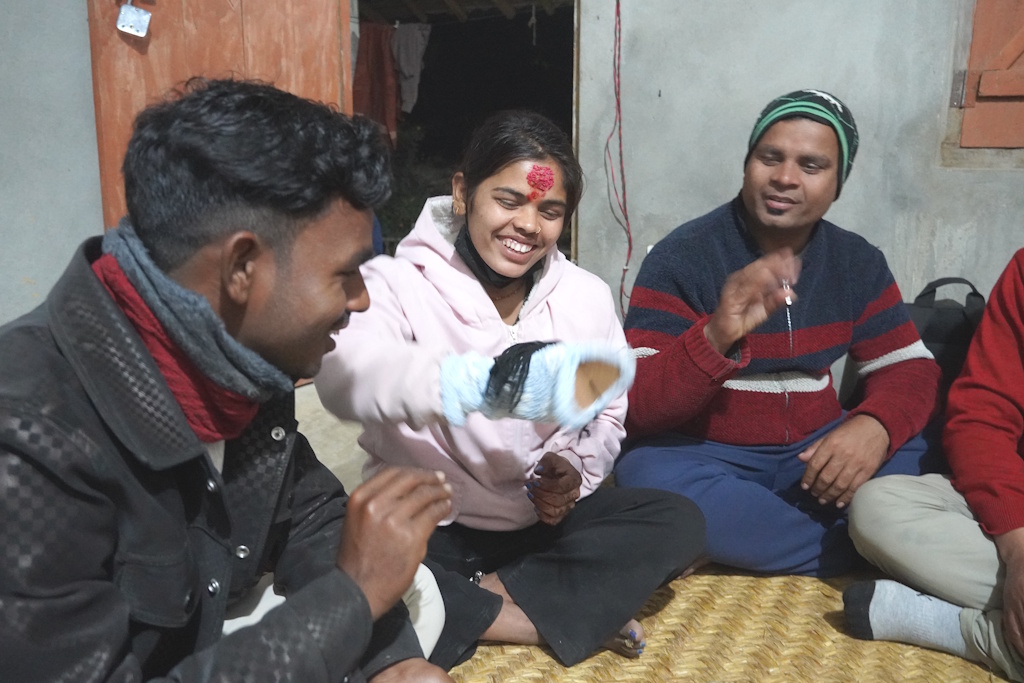
We make a puzzle out of stones: we draw the outline around them and then take the stones away. Who puts the big, small, round, square stones in the right place? Can you sort the stones from small to big? Do they all have the same colour? How heavy does a stone weigh?
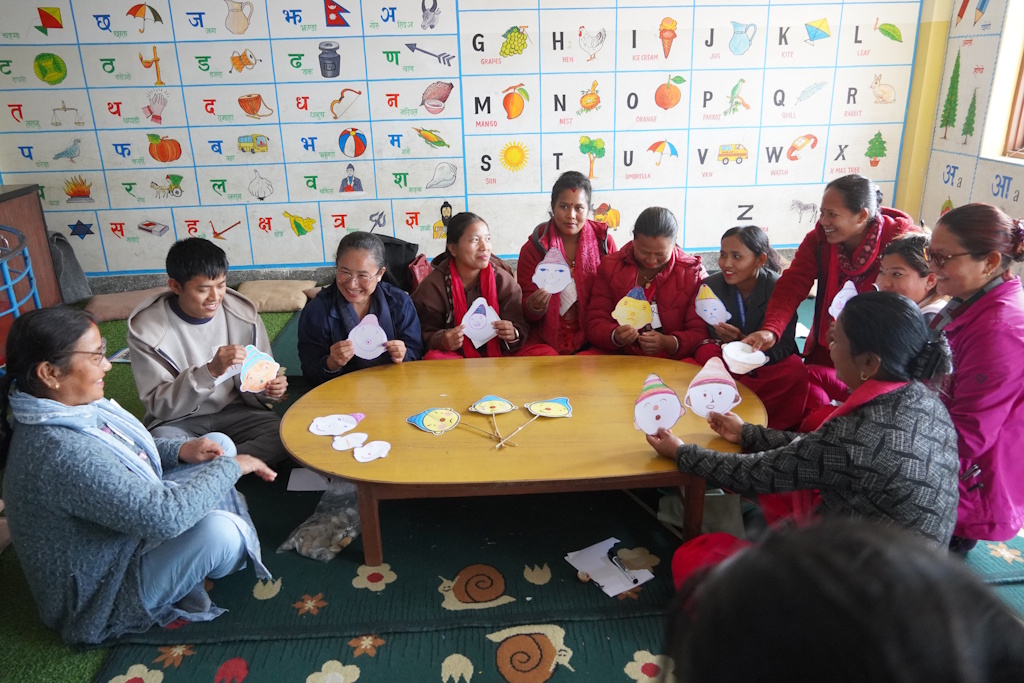
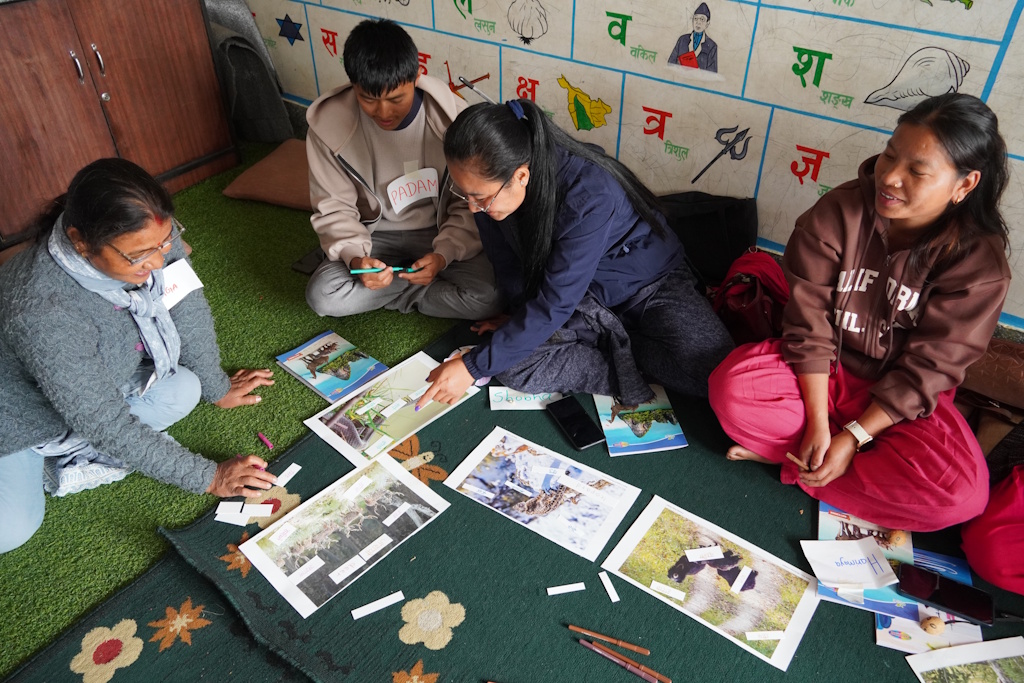
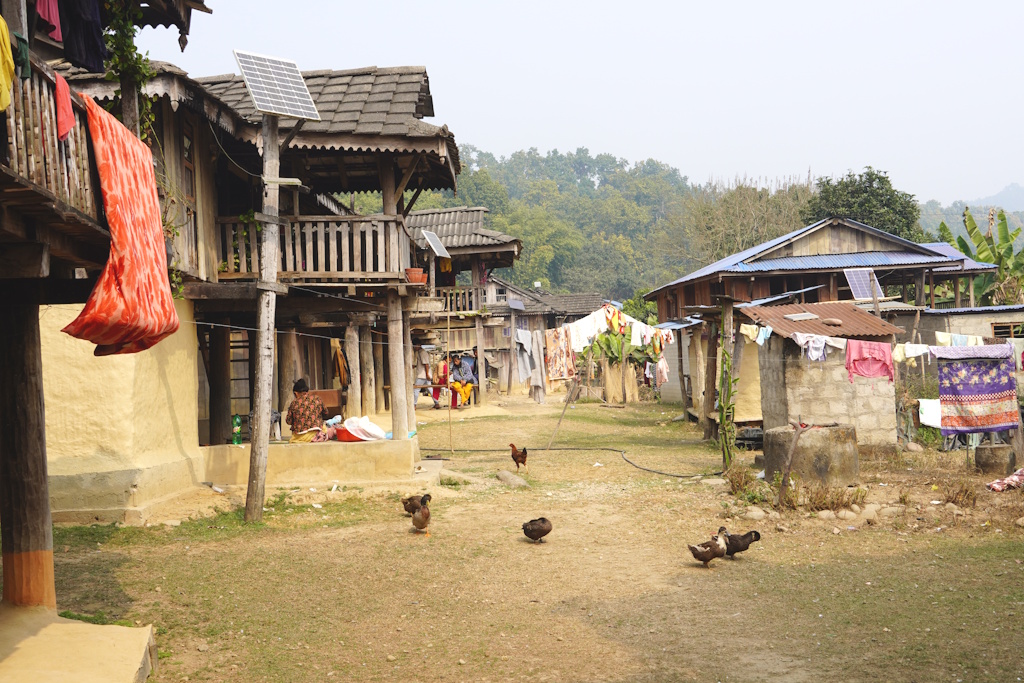
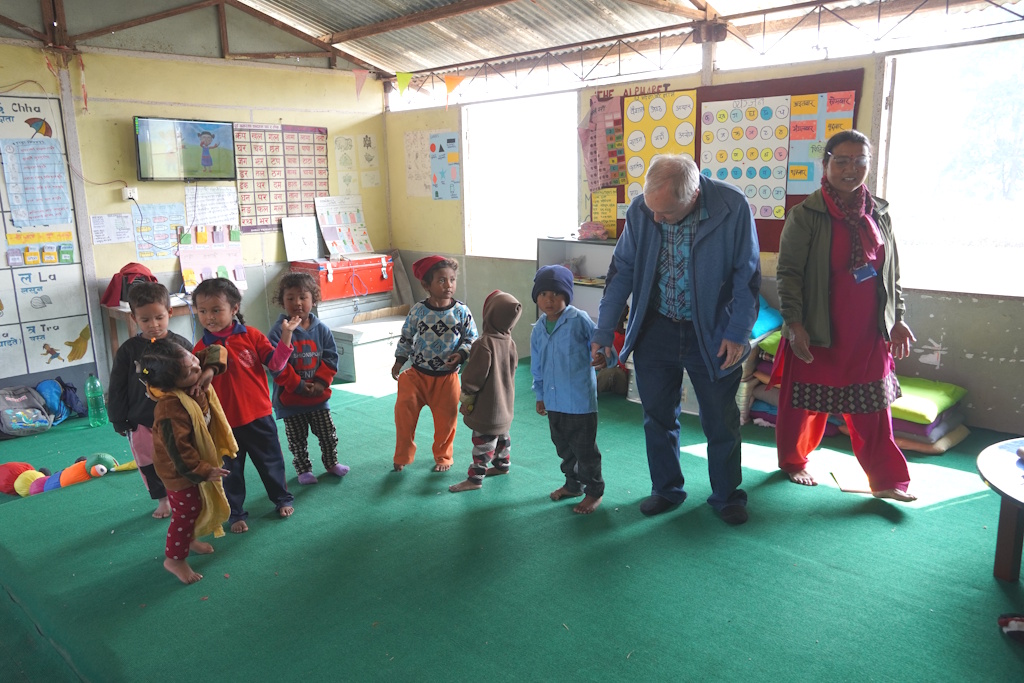
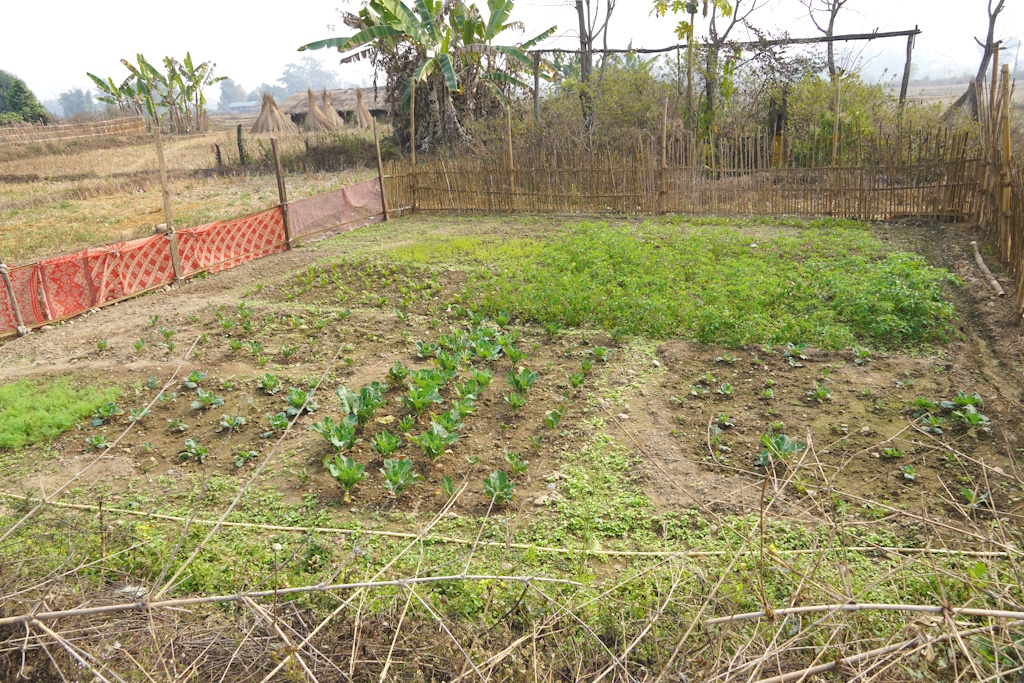
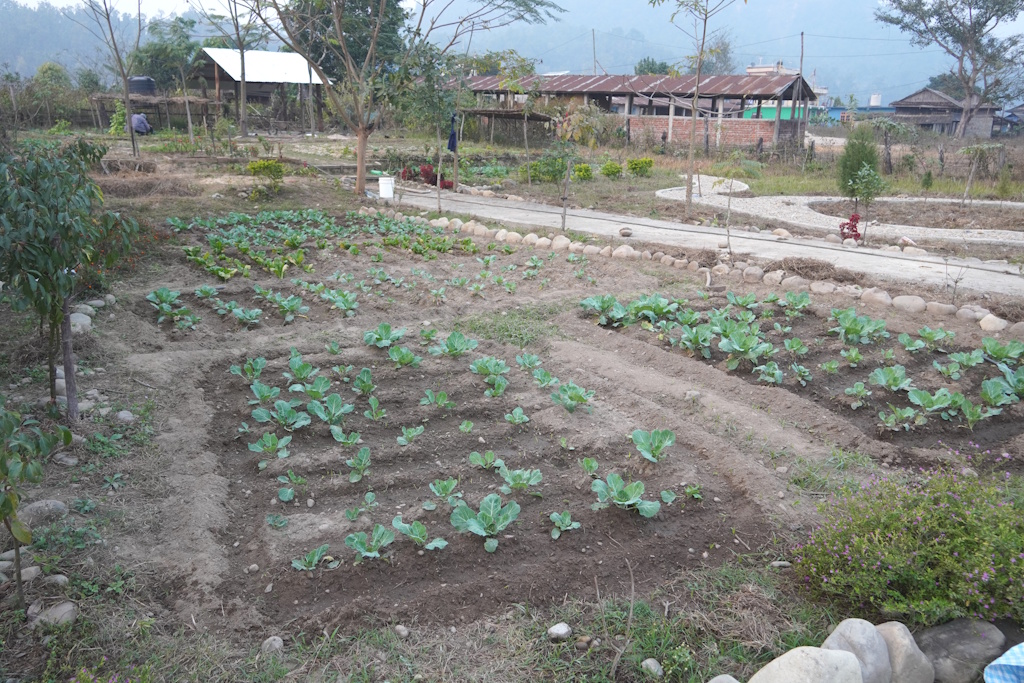
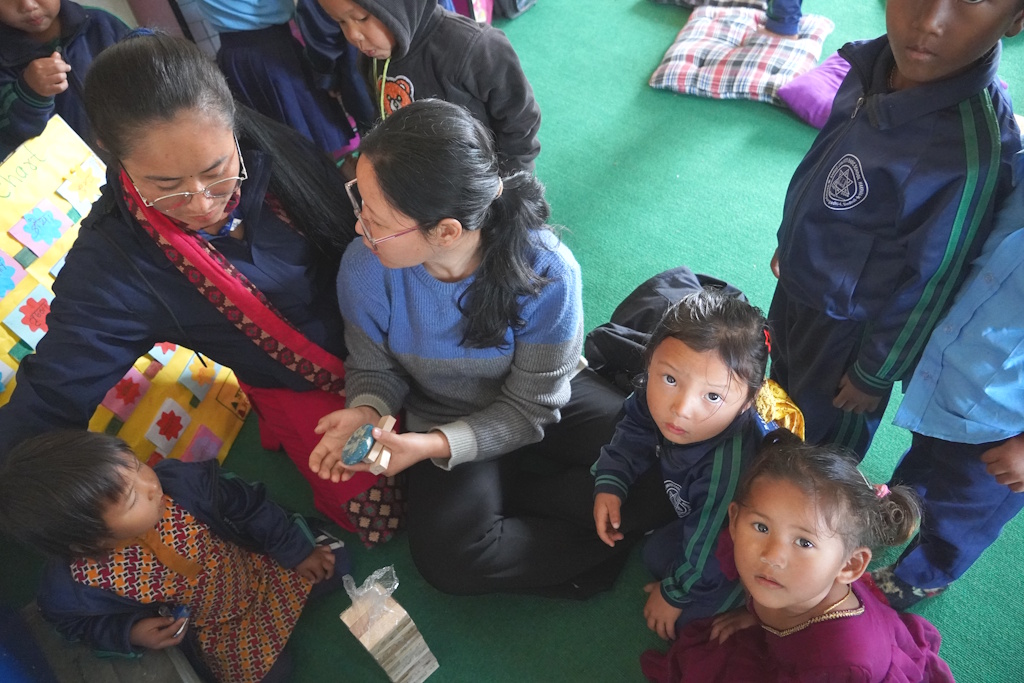
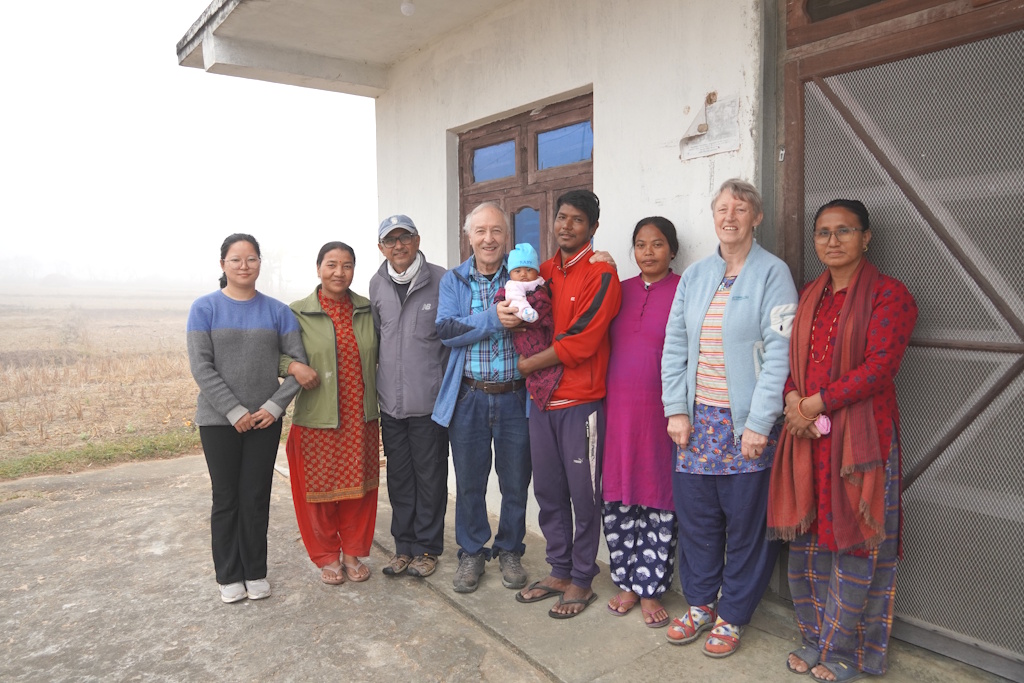
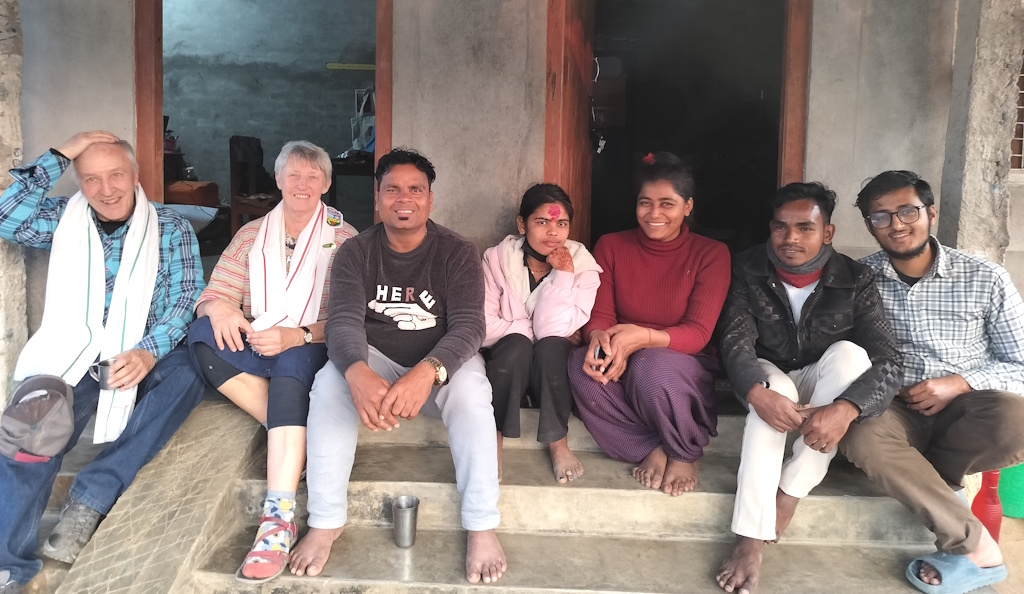
Teeka, to Paul's left, is initiator and organiser of CEPP and comes along to our formations in Sindhuli and Bagmati. We review progress in both districts and in Madesh and discuss education and the environment, in Nepal, in Belgium and elsewhere in the world. On the right in the picture is Panchee, teacher in Hakpara and Sangita's sister-in-law. Almost everyone is related to each other in Jutepani... We feel at home there too and do not want to leave…
Dear readers, you probably noticed: we could go on for (p)ages telling you about our cooperation in Nepal. We hope you can get a taste of the atmosphere, friendship and solidarity.
We would like to thank you for your support for this project. It is much needed.
Fundraising is very difficult in the current situation in the world...
Your donation is very welcome on account number BE 32 2200 7878 0002 of Bikas npo, marked “From school to school”.
If you would like to consider this, a fixed monthly (modest) amount is the most encouraging, offering CEPP perspective and security.
In the next issue of the Bikas magazine, we will tell you more about our experiences in Makwanpurgadhi and in Rasuwa district, where we supported CEPP in their operation in the Haku schools. You can read back on the last 10 years of cooperation at https://bikas.org/EN/From_school_to_school
March 2025
Teenagers
In their operations, our Nepalese partners at the Centre for Educational Policies and Practices focus mainly on the most vulnerable group: the youngest children, from kindergarten and the first years of school. Taking care of their well-being and development is paramount.
But teenagers, young people with their own wishes, desires and characteristics, also deserve full attention. They are the responsible citizens of tomorrow, in a society in full change....
How does CEPP try to meet their needs?
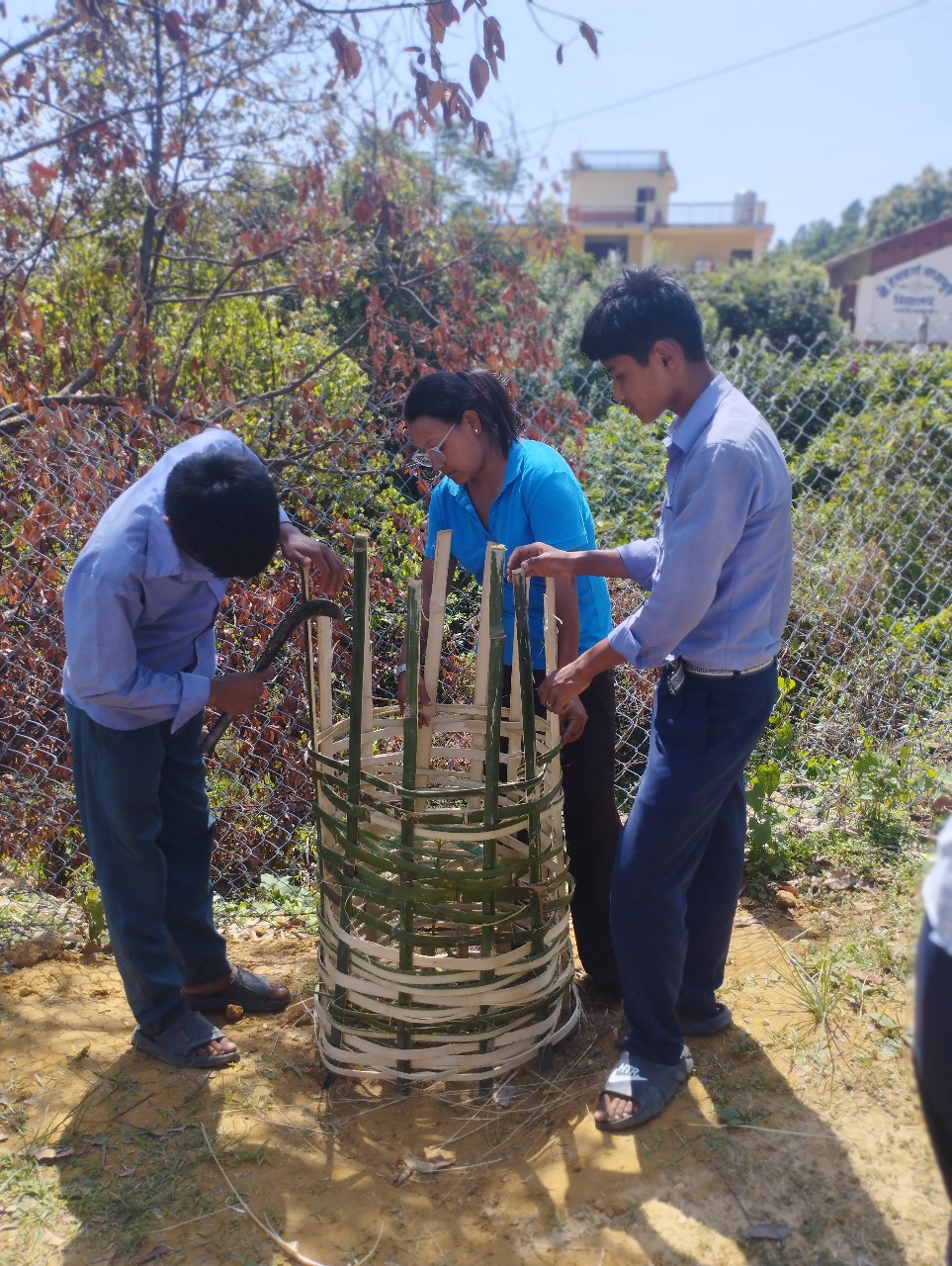
The pupils of the highest classes have a major input in the plantings in the playground: shade trees bring coolness in the dry season and fruit trees bring variety to the diet.
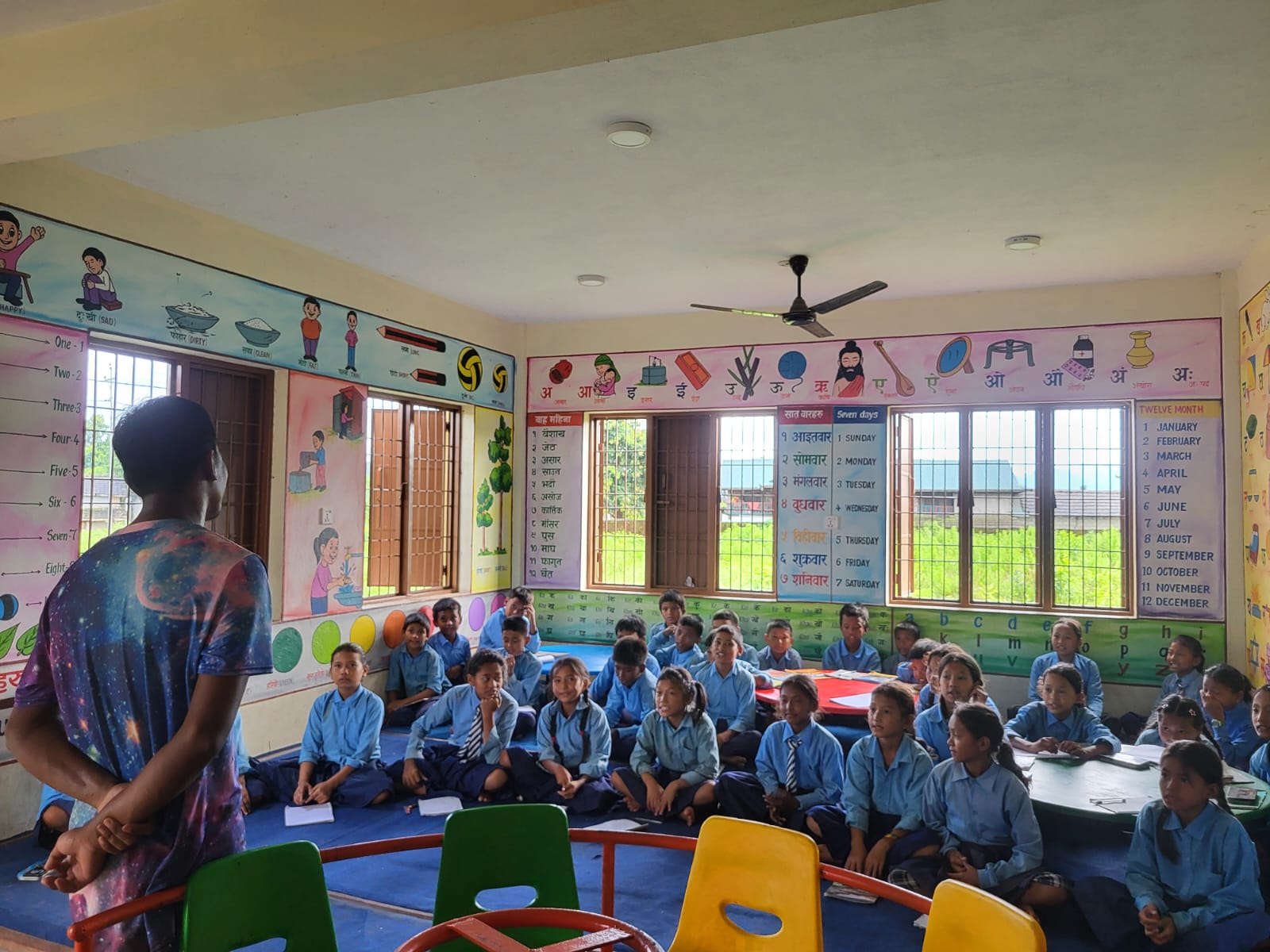
For this group, CEPP runs workshops on climate disruption, energy sources, the impact of pollution and artificial fertilisation, deforestation and reforestation, balanced nutrition, waste policy and ecological agriculture.
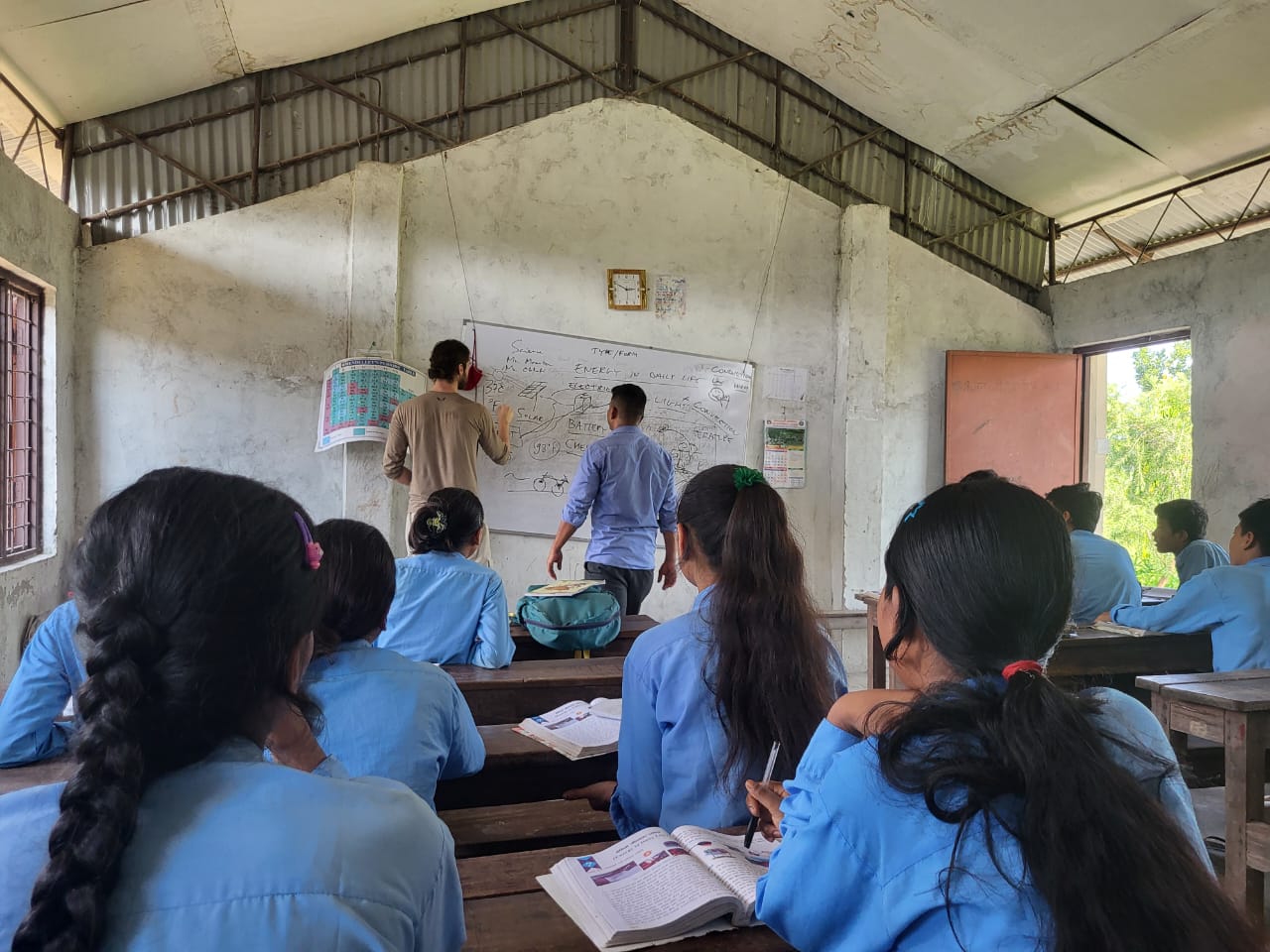
Sometimes in collaboration with Belgian volunteers or interns from our colleges....
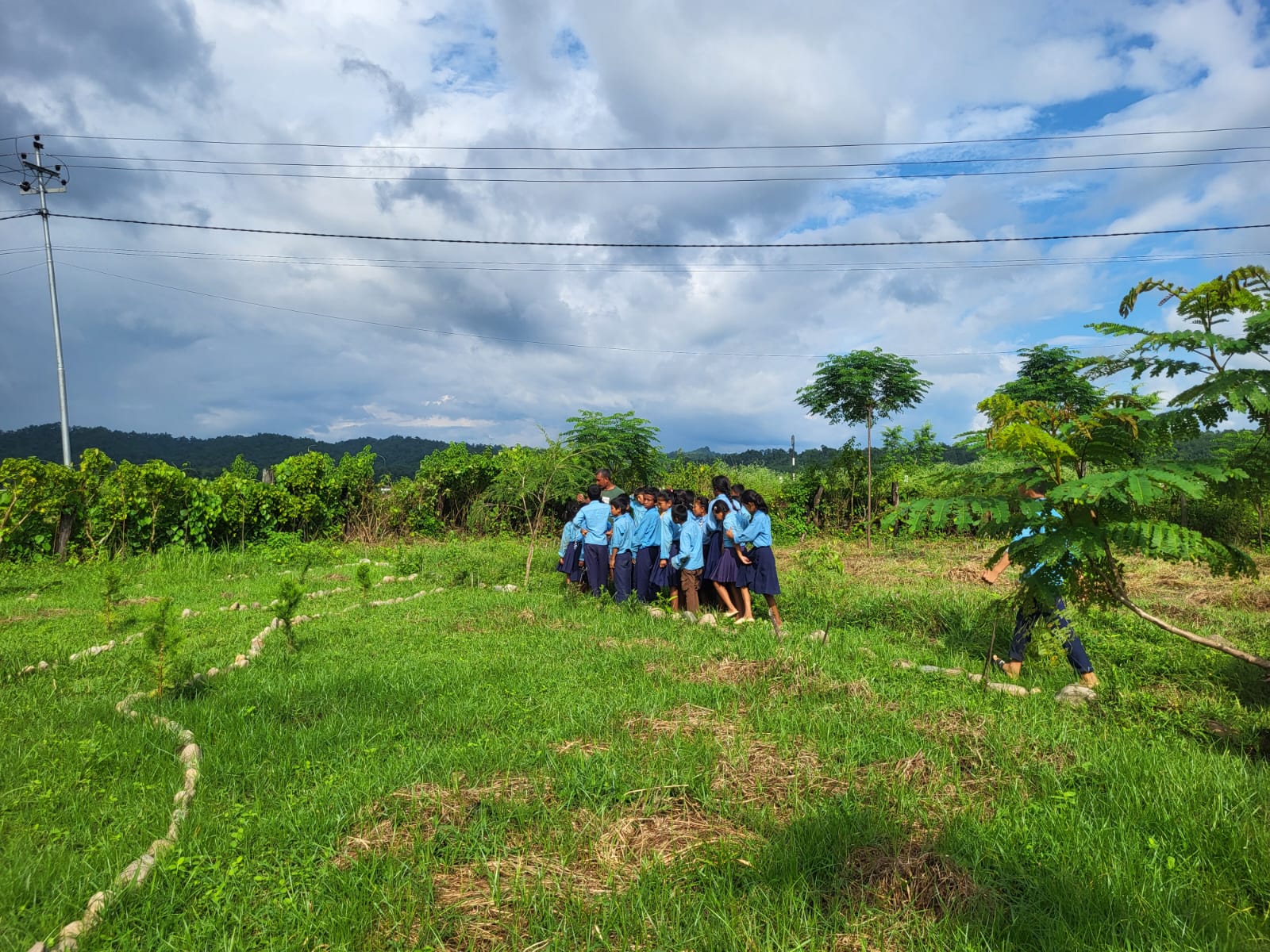
... and always with observation and action on and around the school grounds.
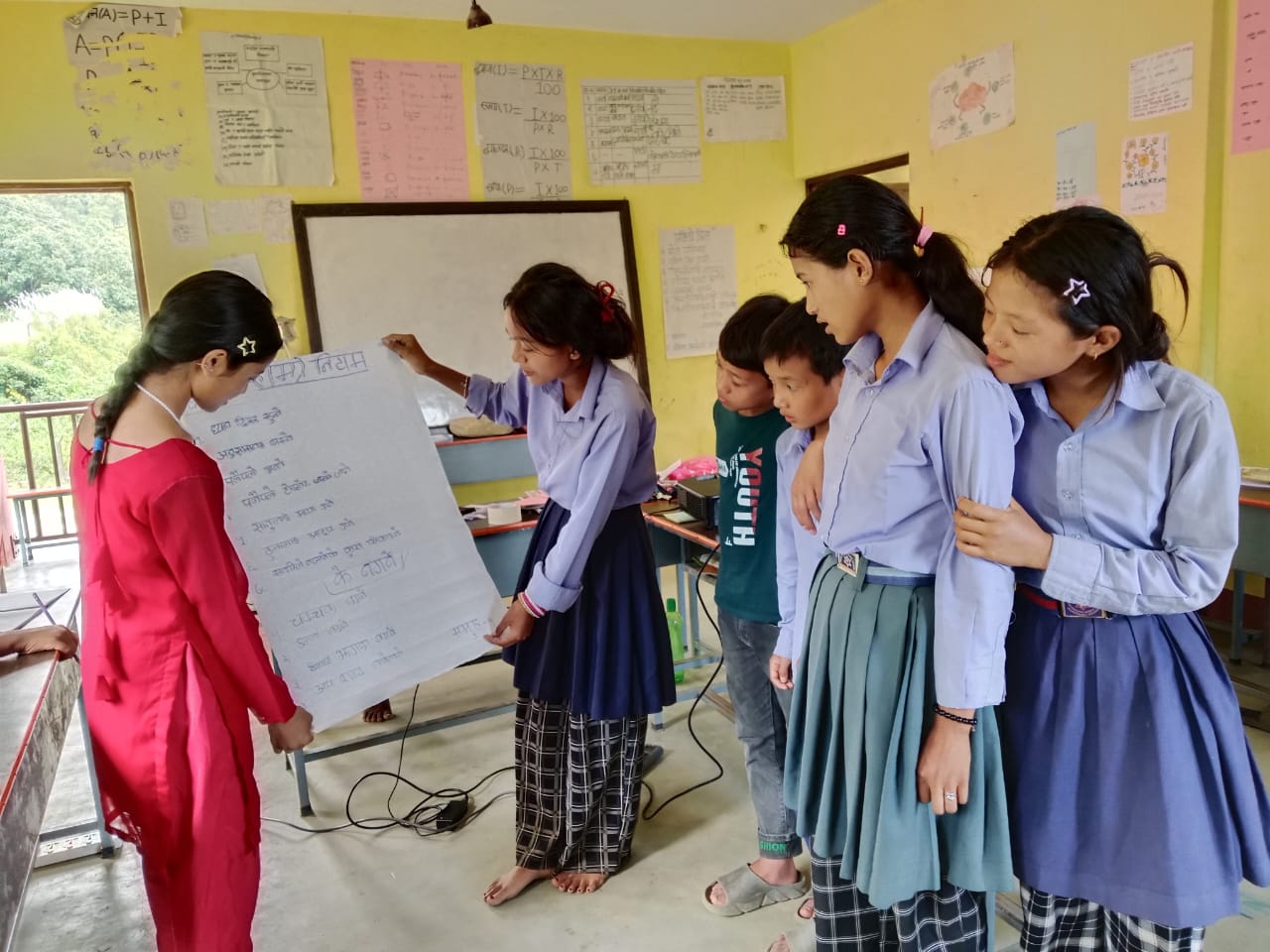
CEPP runs a special programme for adolescents aged between 12 and 16 called ‘Life skills’. These girls have written down on a big sheet what is important to them at this stage of their lives.
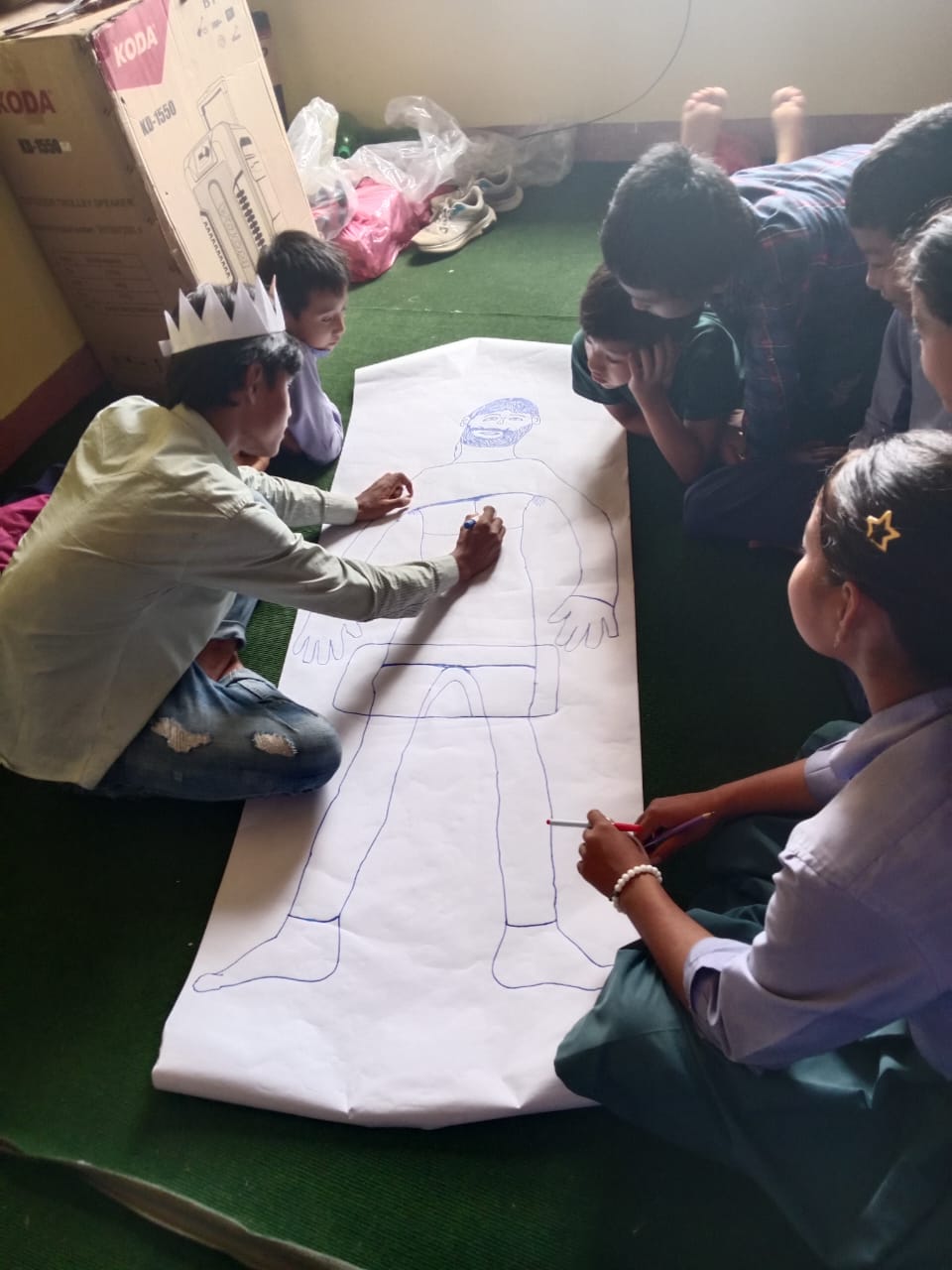
Boys draw a life-size version of themselves and discuss what changes are taking place in their bodies.
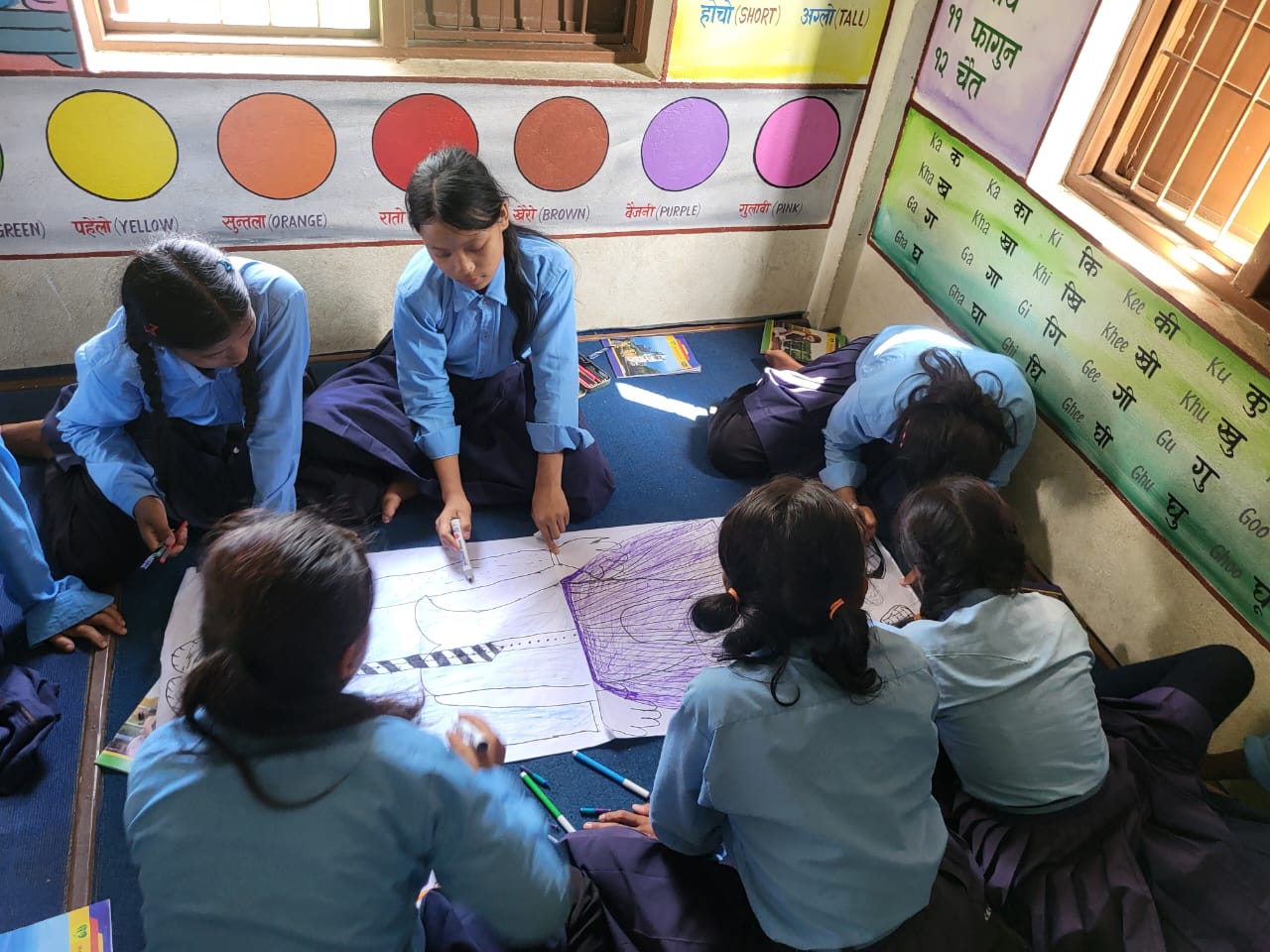
Girls do the same.
The offer around ‘Life skills’ covers various themes that concern young people: adolescence, child marriage, good touch and bad touch, menstruation and relationships.
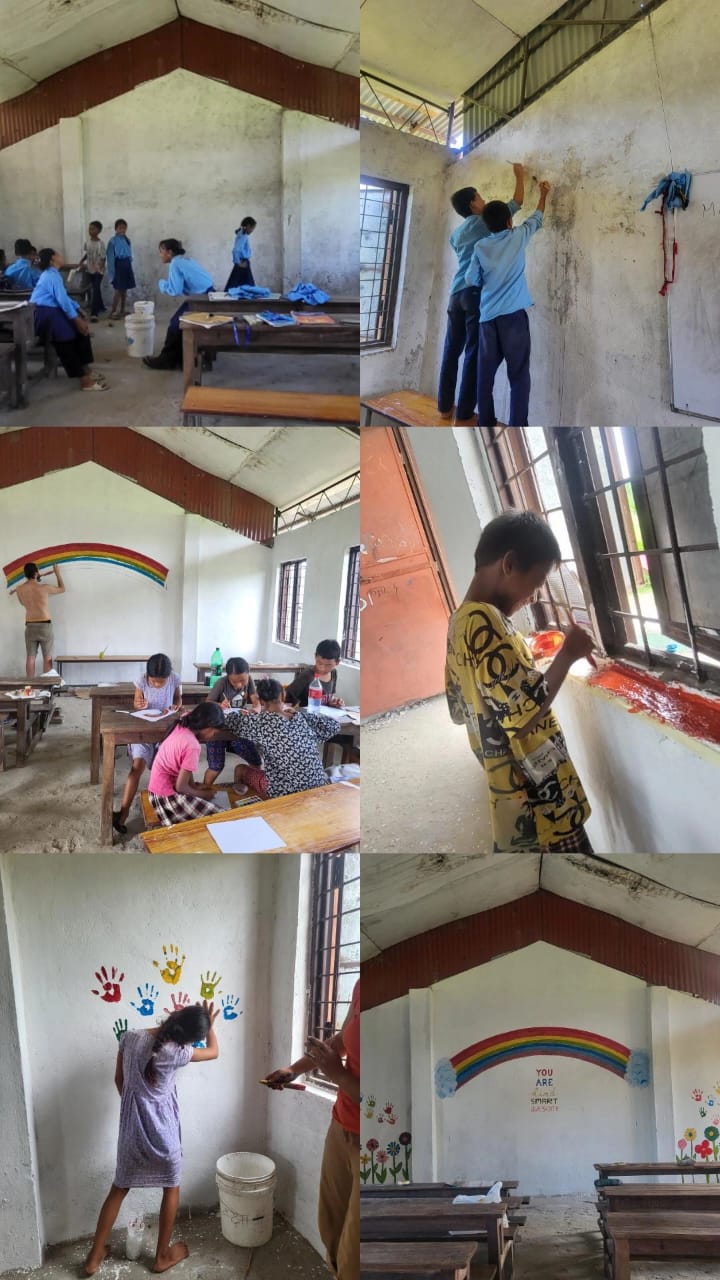
In rural areas, schools often go only up to Class 4 or 6 or at most up to Class 10.
These Class 6 children have a say in improving and decorating their classrooms. During three consecutive holidays, they transformed their classroom into a pleasant learning environment.
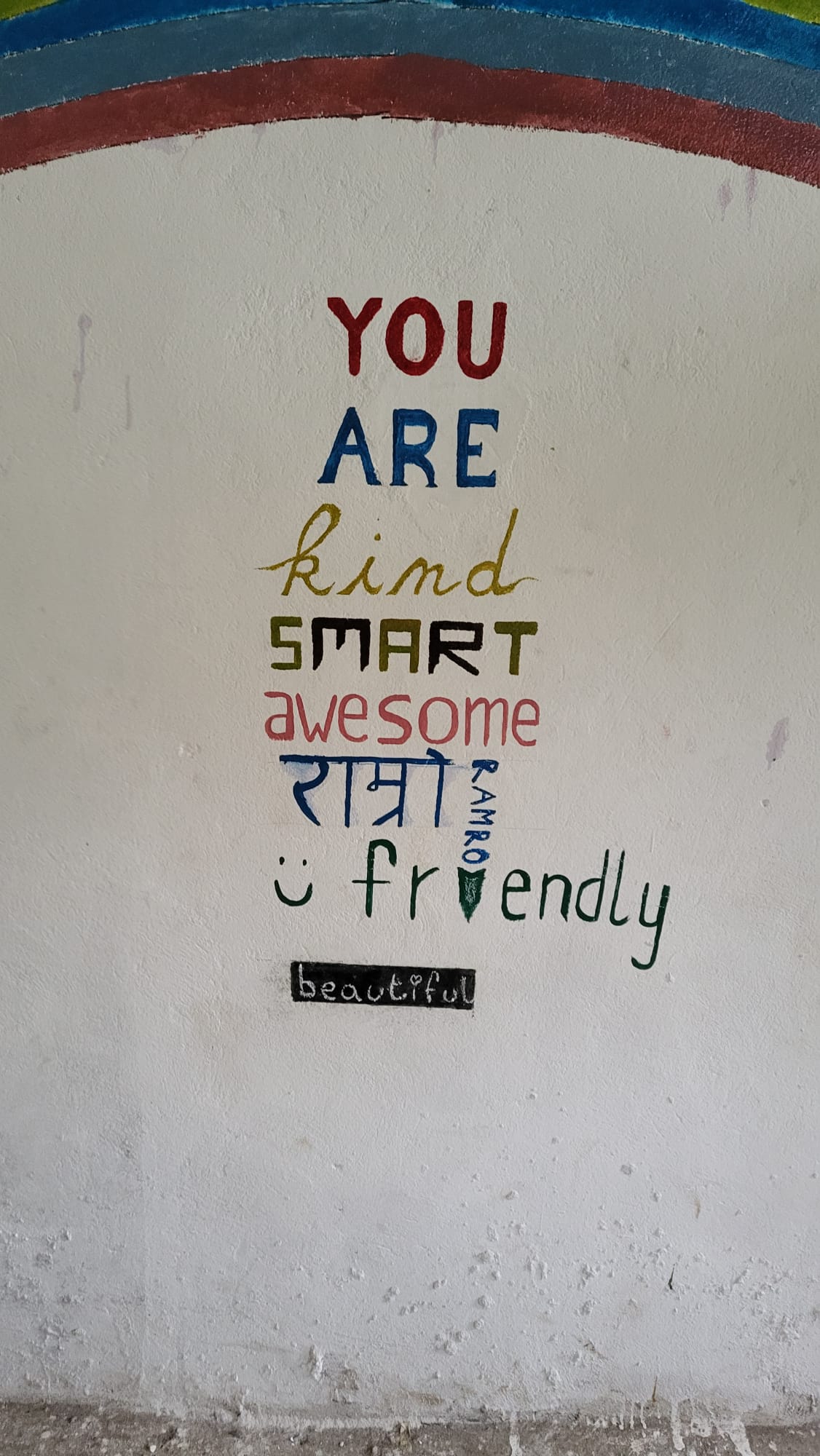
They consulted with each other, discussed which features they consider important and painted those words under the rainbow.
The photos in this article were taken by Smarika Limbu, CEPP's education officer for Sindhuli District and by Amarmaya Lama, education officer for Makwanpurgadhi.
Your support is welcome in the account number BE32 2200 7878 0002 in the name of BIKAS npo, mentioning ‘From School to School’.
Thank you! You are awesome.
Paul Beké and Carine Verleye
December 2024
The child is a miracle
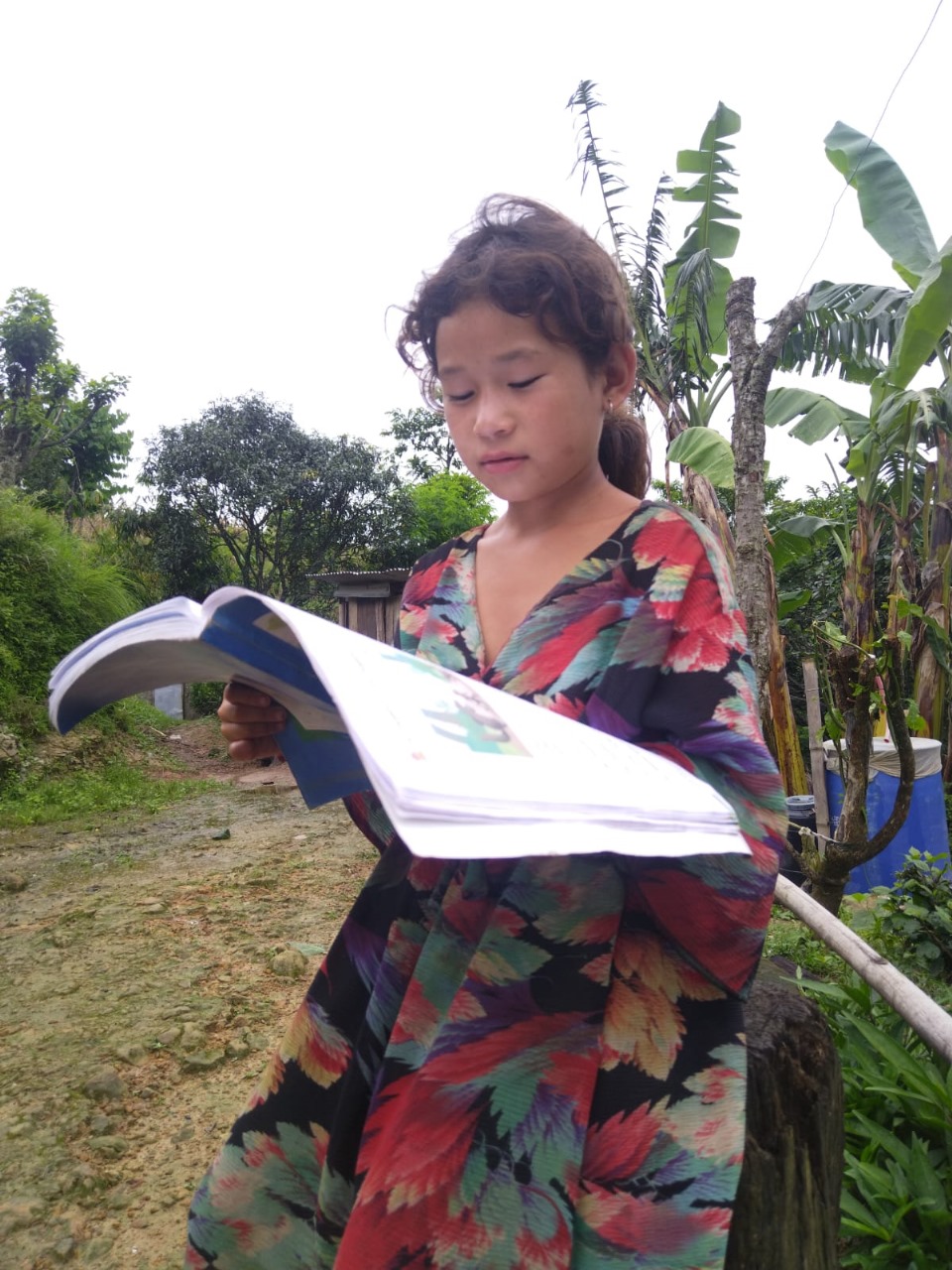
Catalan cellist Pablo Casals said it: ‘A child must know that he is a miracle, that since the beginning of the world there has been no other child like him and that until the end of the world there will be no other child like him.’ And of course that applies to girls too....
The main motivation of our Nepalese partners at the Centre for Educational Policies and Practices is to improve the quality of primary education. The organisation chooses to put children's talents, needs and interests at the centre of the educational process, in contrast to the great importance traditionally attached in Nepal to ‘book learning’ and the reproduction of acquired knowledge.
CEPP chooses to pay special attention to the youngest children: toddlers and first- and second-grade children, because they believe it is important that children get a good foundation. This too is rather unusual in Nepal: bigger students enjoy more prestige and often get the best classrooms, while in teachers' rooms you find plenty of didactic materials that unfortunately rarely find their way to the classes with the youngest children.
Improving early childhood education is only possible if there is close cooperation and rapport between students, teachers, management, parents and the village community, and if everyone can participate in ‘lifelong learning’.
How does CEPP, in collaboration with the above partners, make early childhood education better and more attractive?
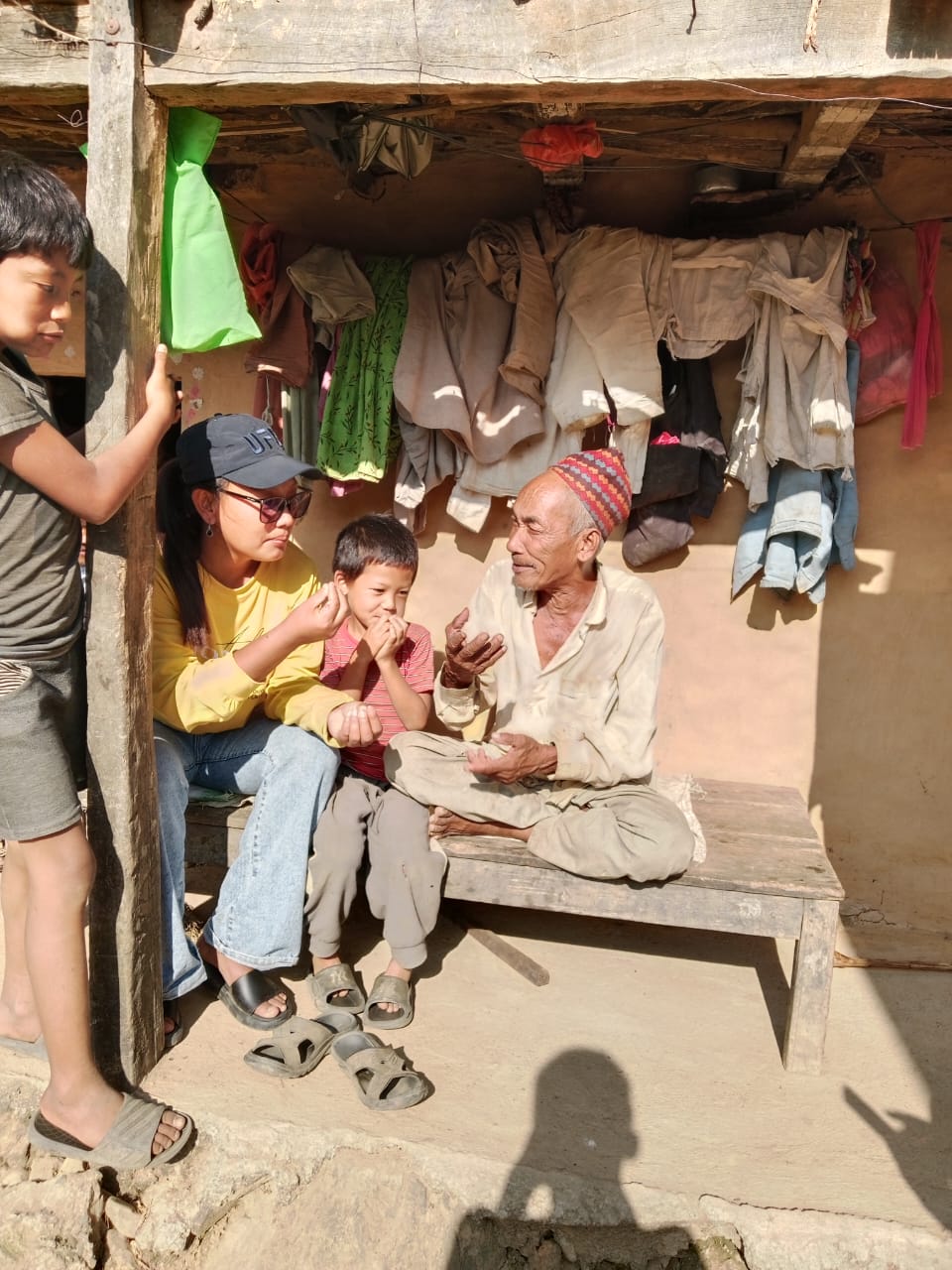
CEPP field workers make numerous home visits to motivate parents and grandparents to send children to school, they also discuss how the home environment can support the child in school tasks.
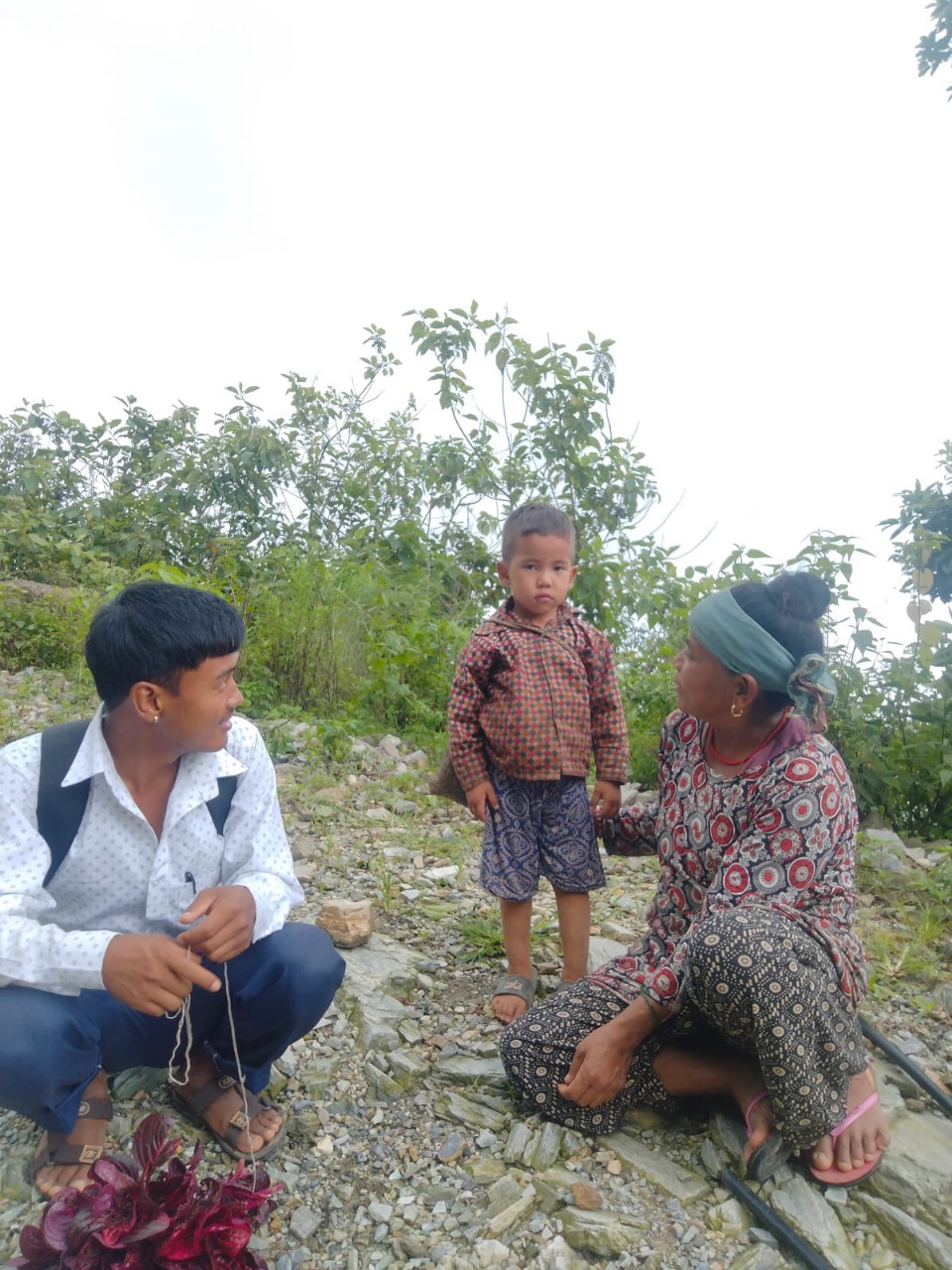
Even during school holidays, the greening motivator visits families to see how the children and the vegetable garden are doing.
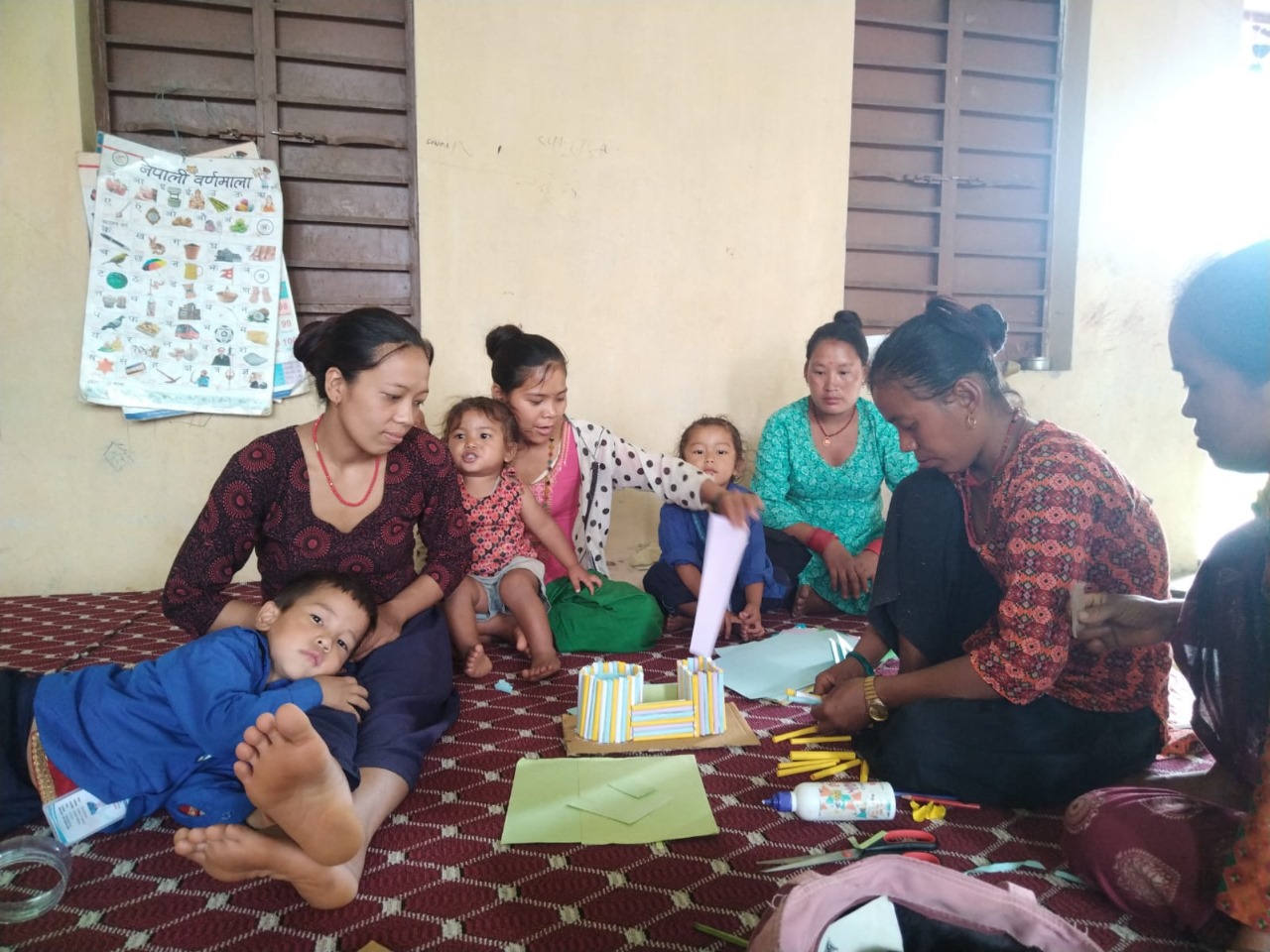
Mothers help the teacher make educational materials for the youngest children.
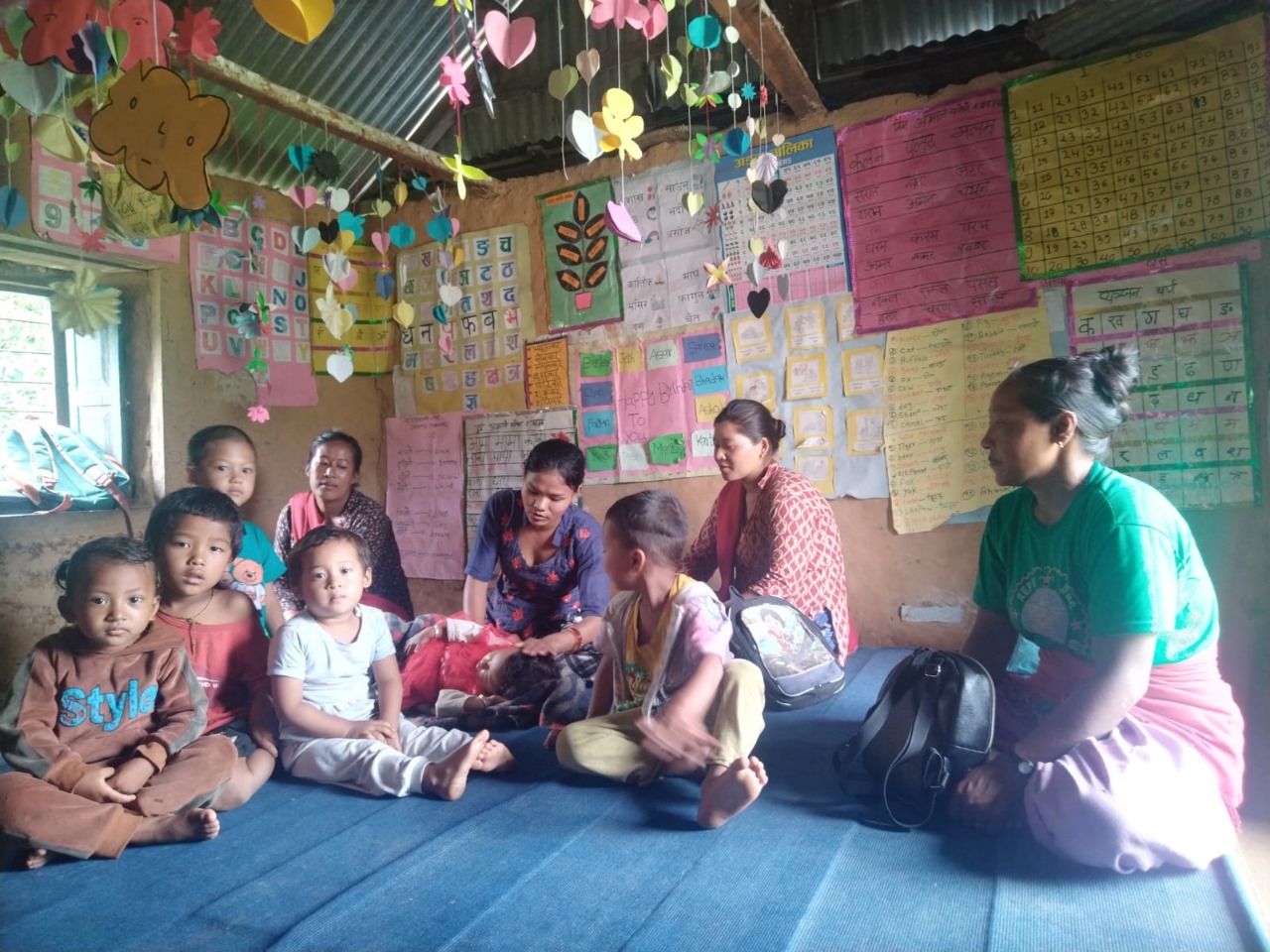
Parents are welcome in the classroom. The walls are didactically decorated and the atmosphere is cheerful. School furniture is often too big an expense. Therefore, CEPP creates one model classroom in each cooperating school for preschoolers or children of class 1 or 2. A first intervention is to install a floor of reclaimed wood, with fitted carpet over it. This keeps dust and cold away.
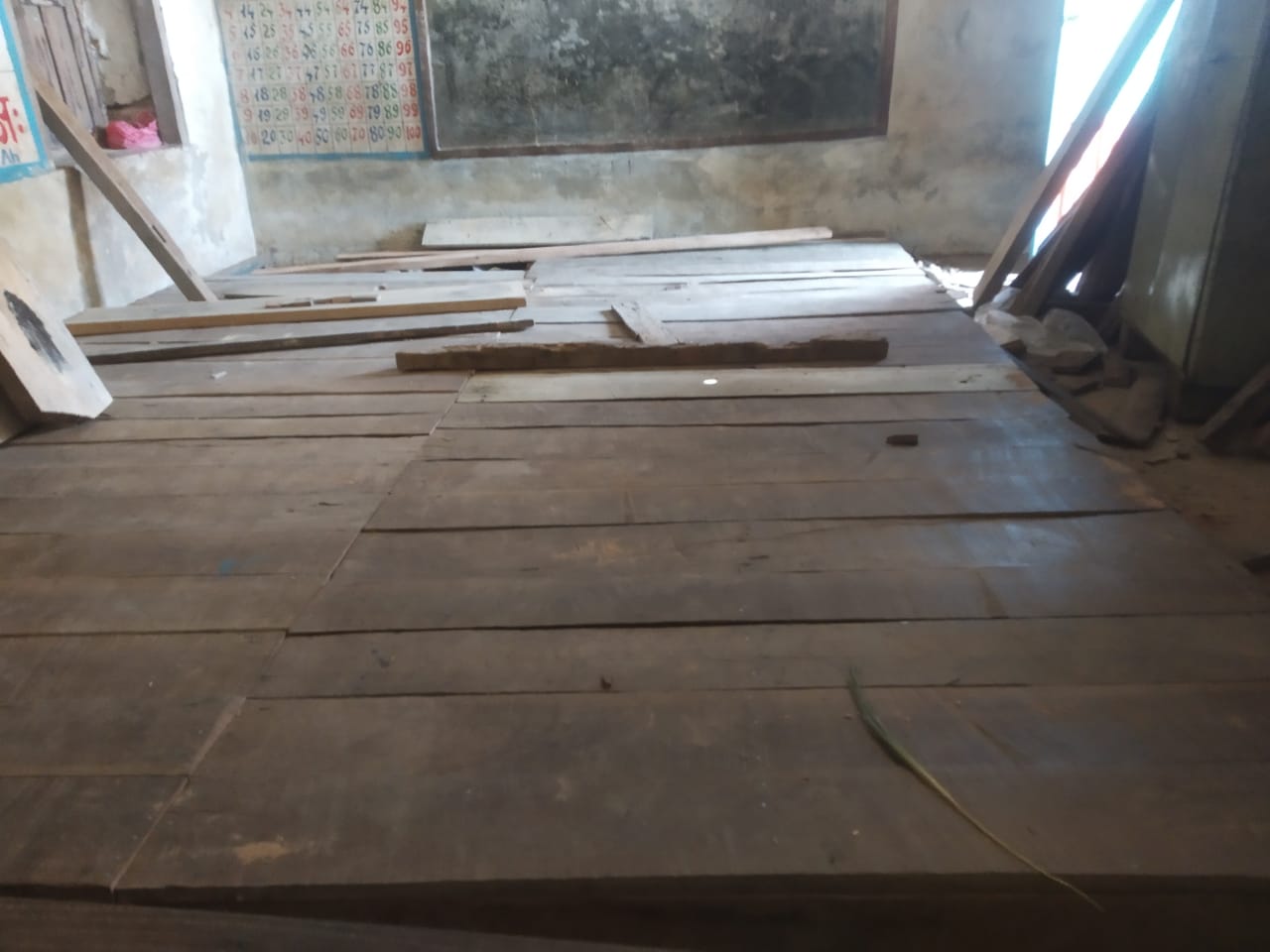
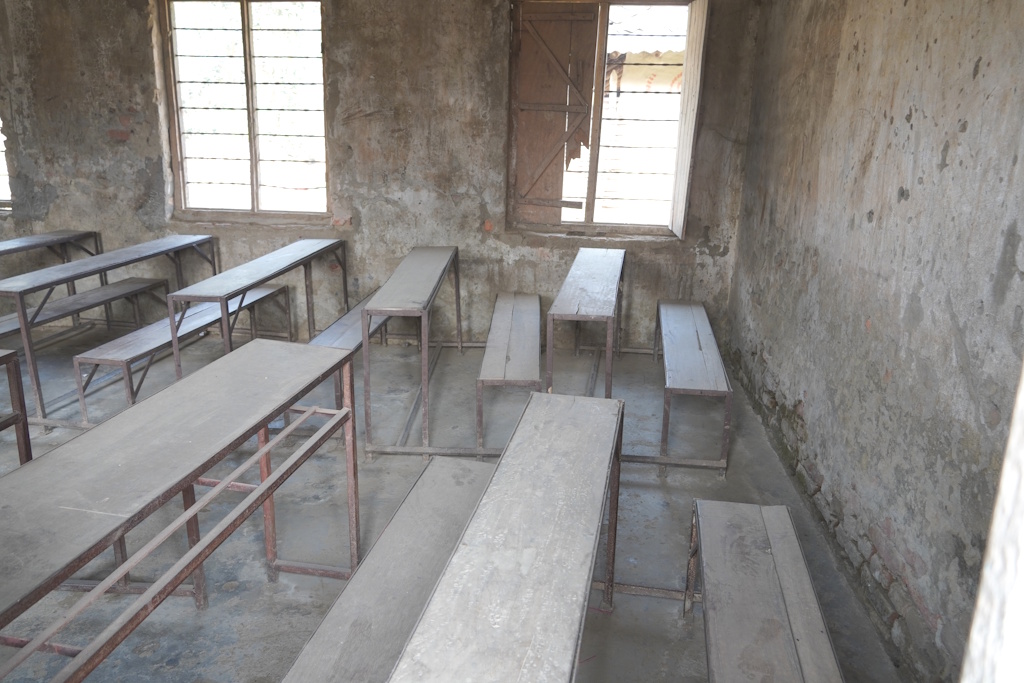
This photo clearly shows how rudimentary the classroom was originally furnished. This is the case in most government schools in these remote rural regions.
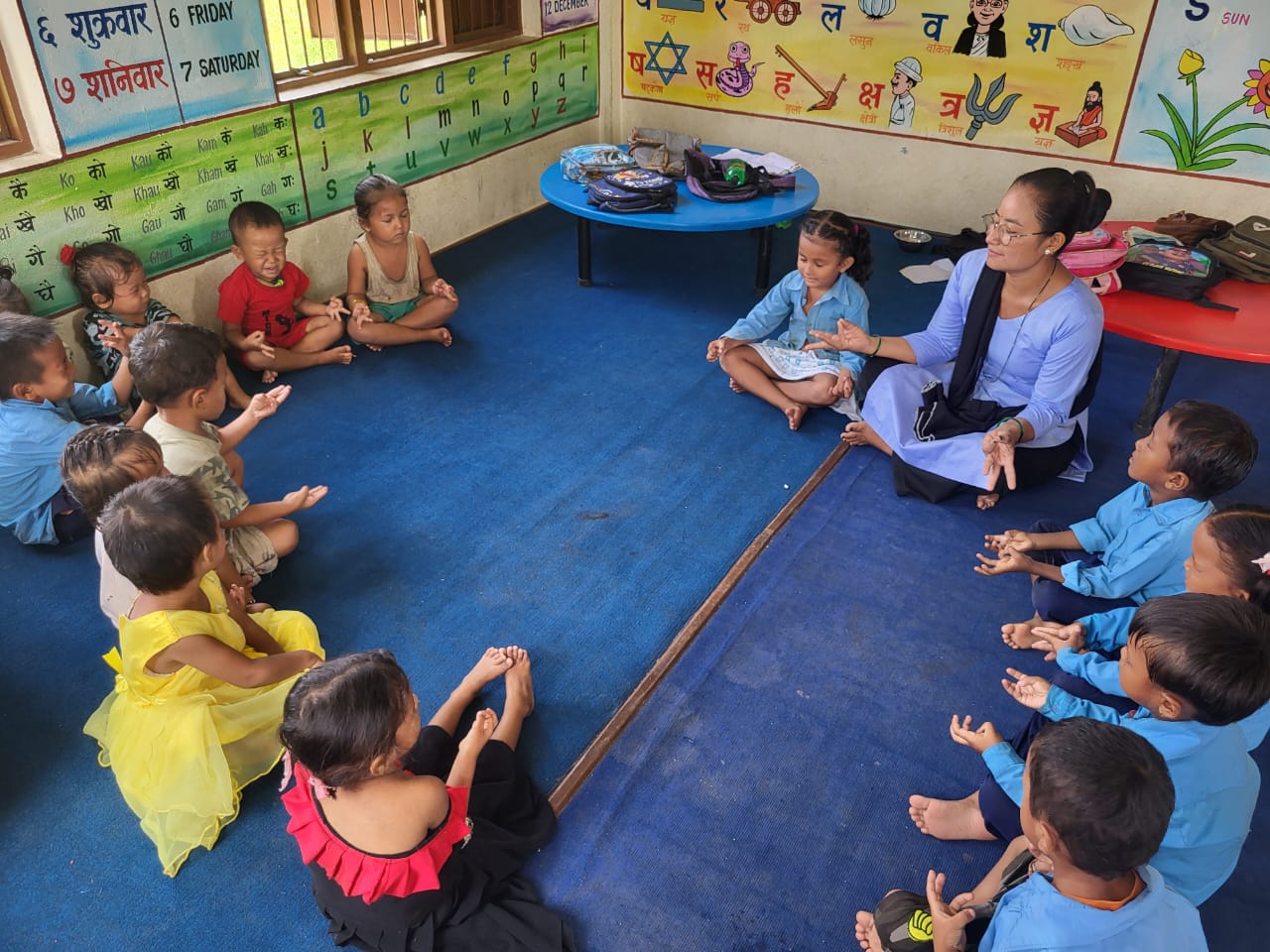
The teacher meditates with the preschoolers before class starts.
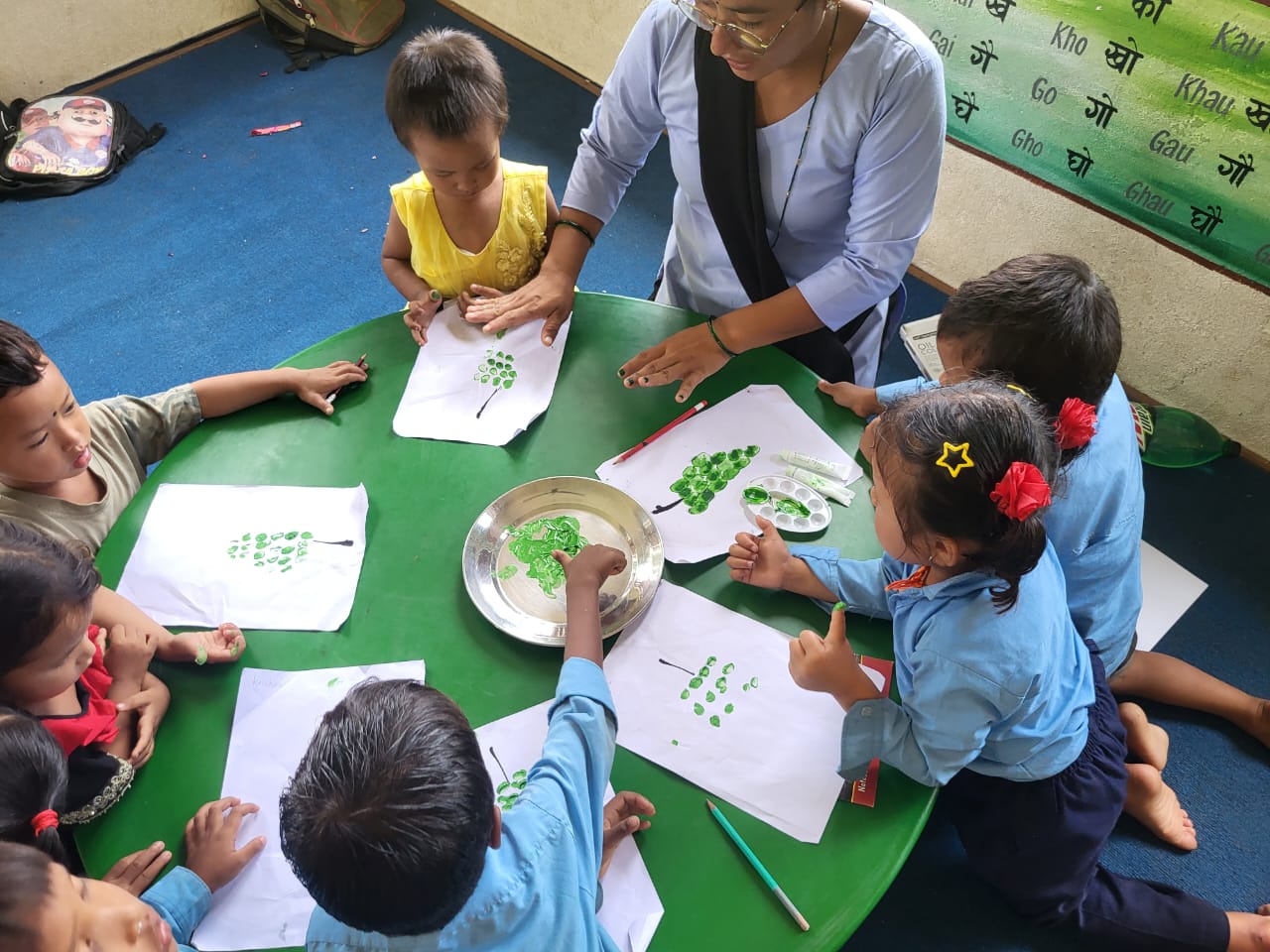
Creative forms of work,
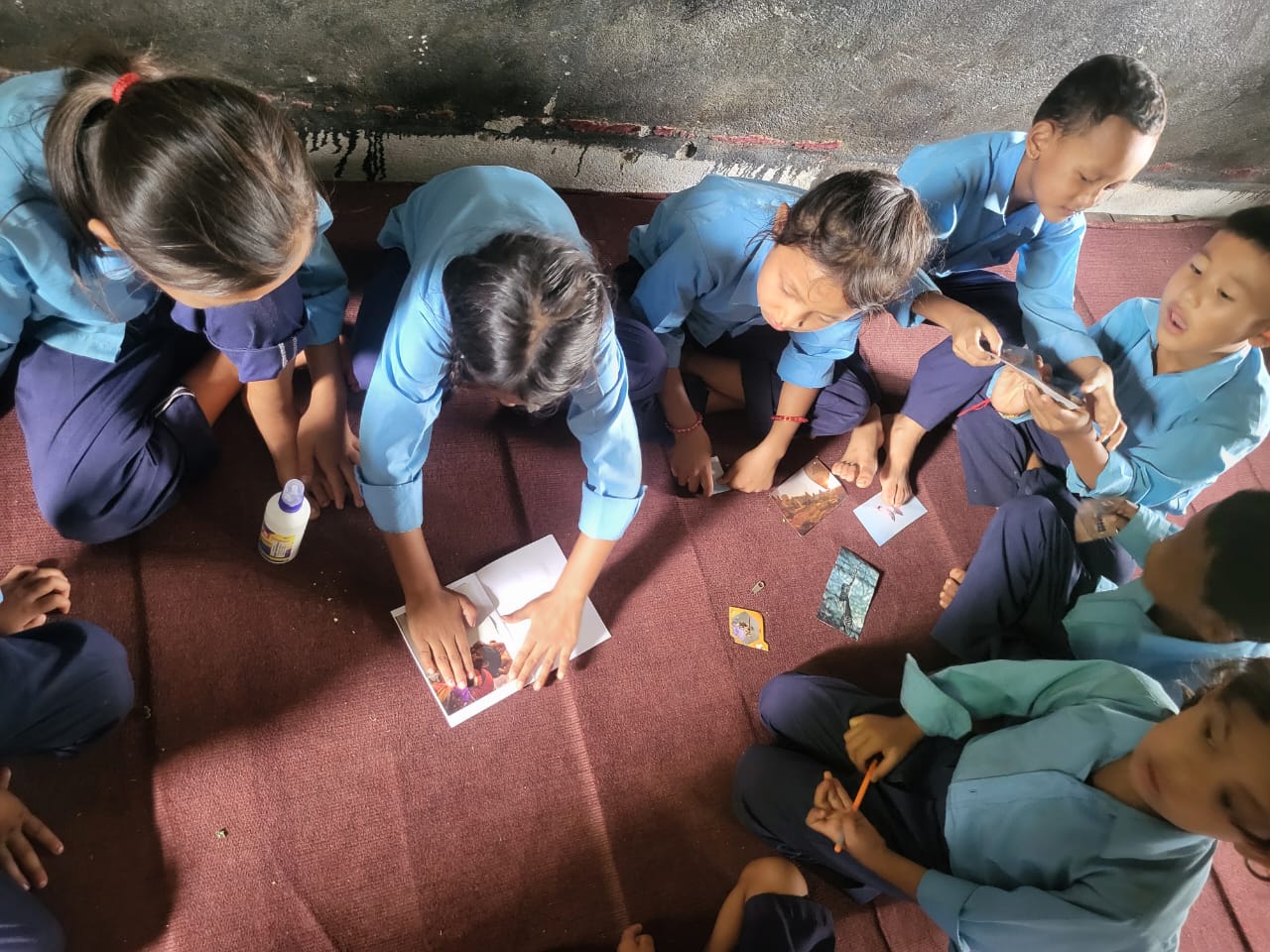
children making their own picture books,
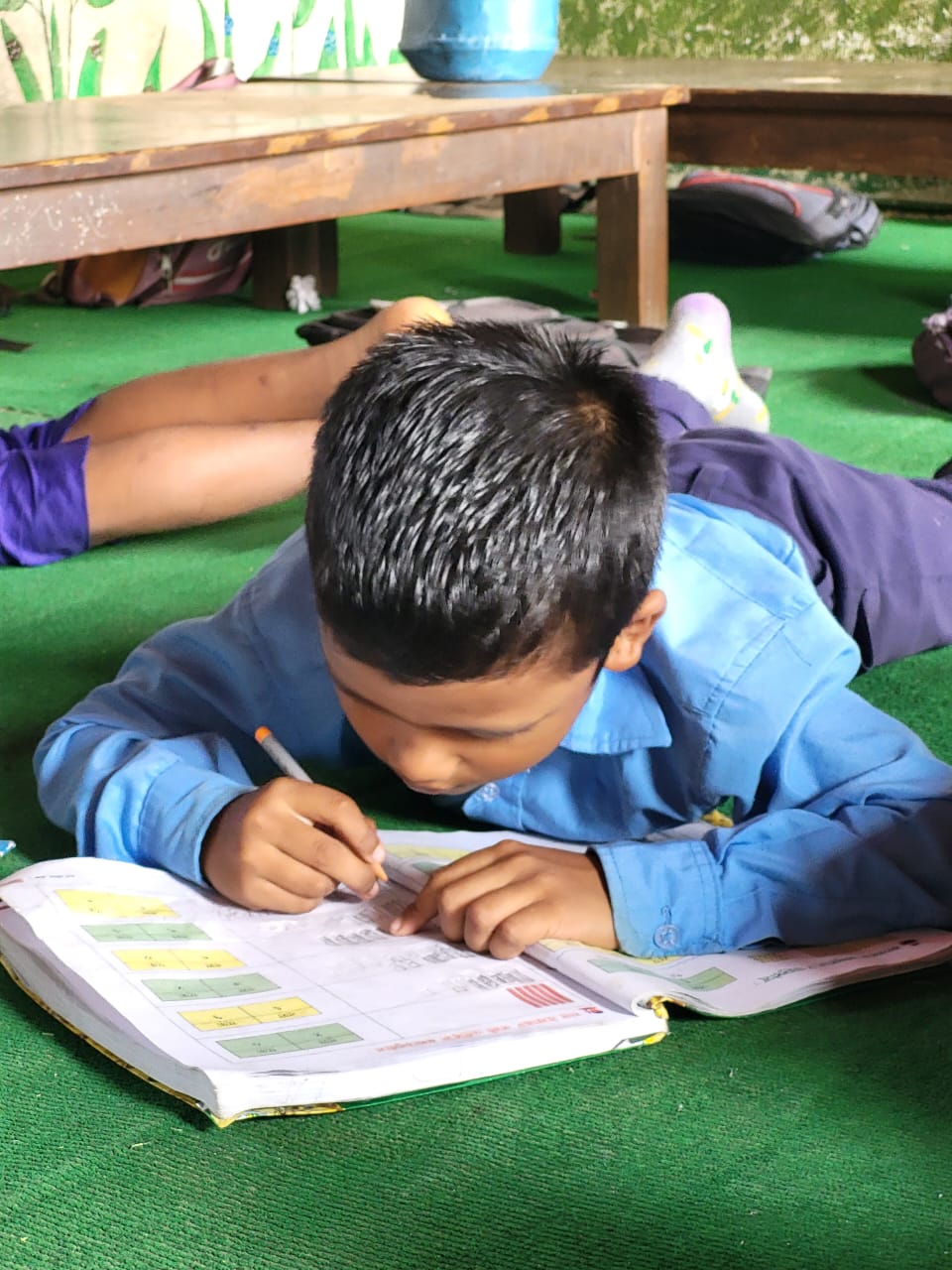
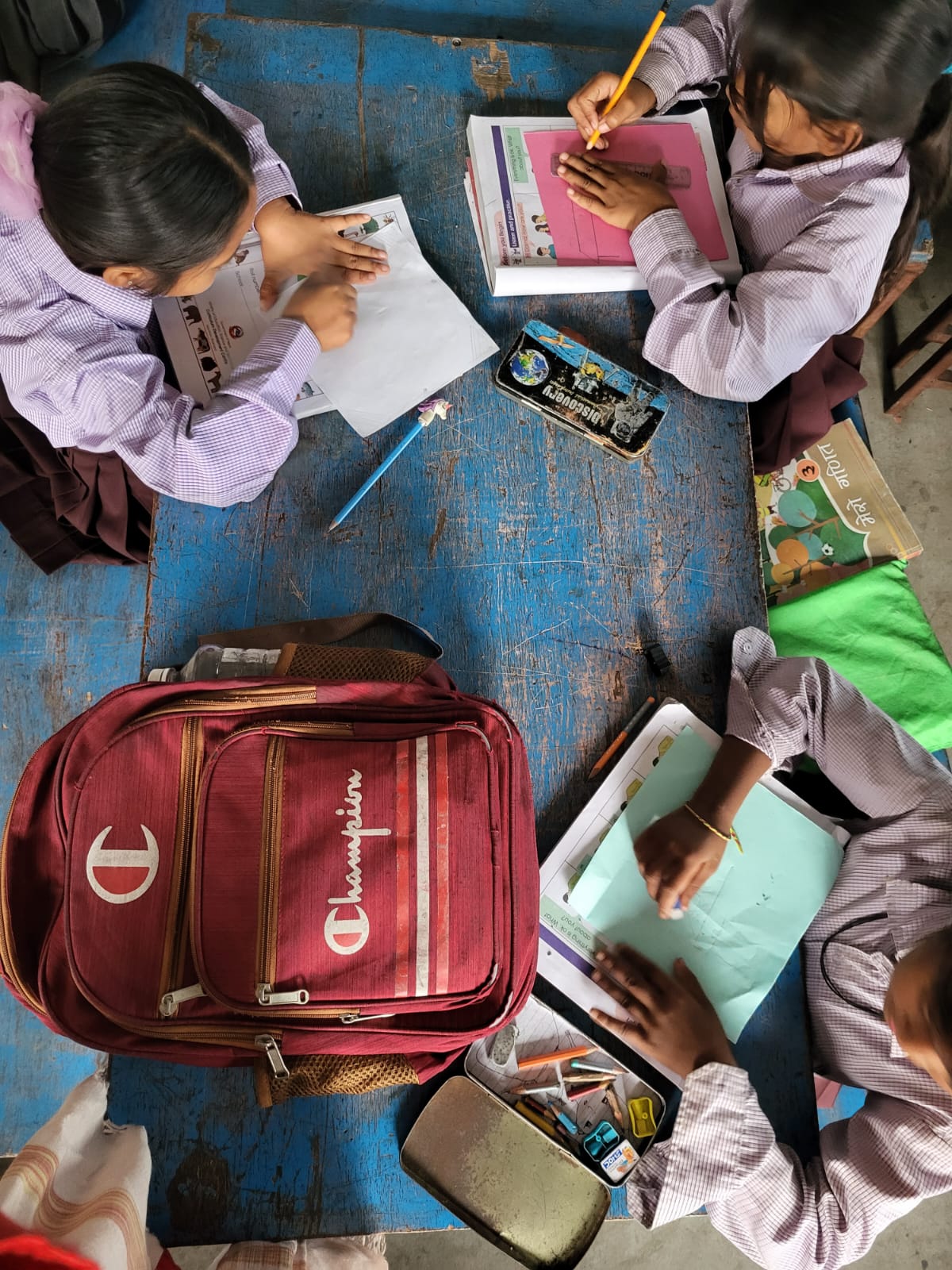
intently doing maths…
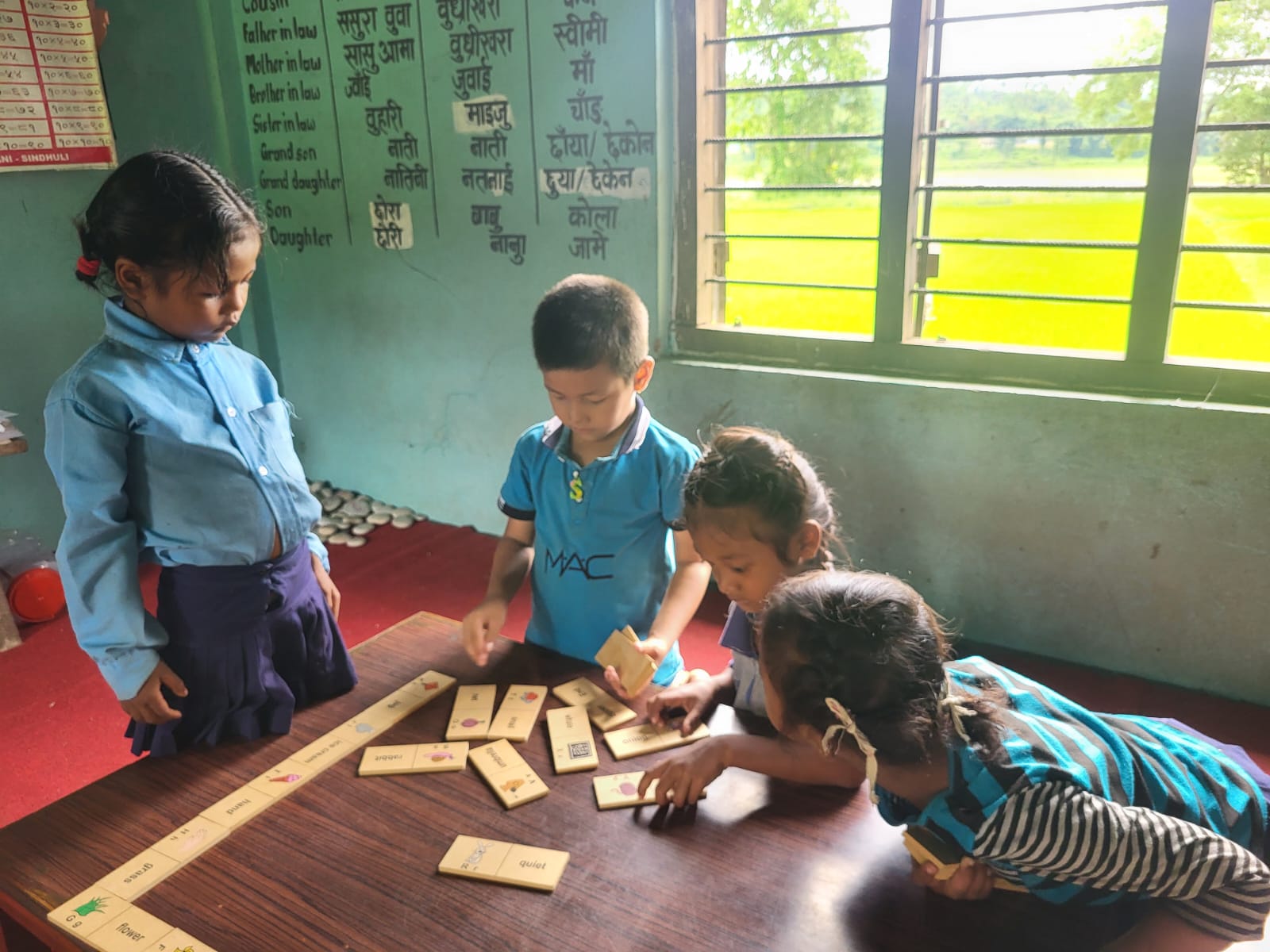
... and playing language games.
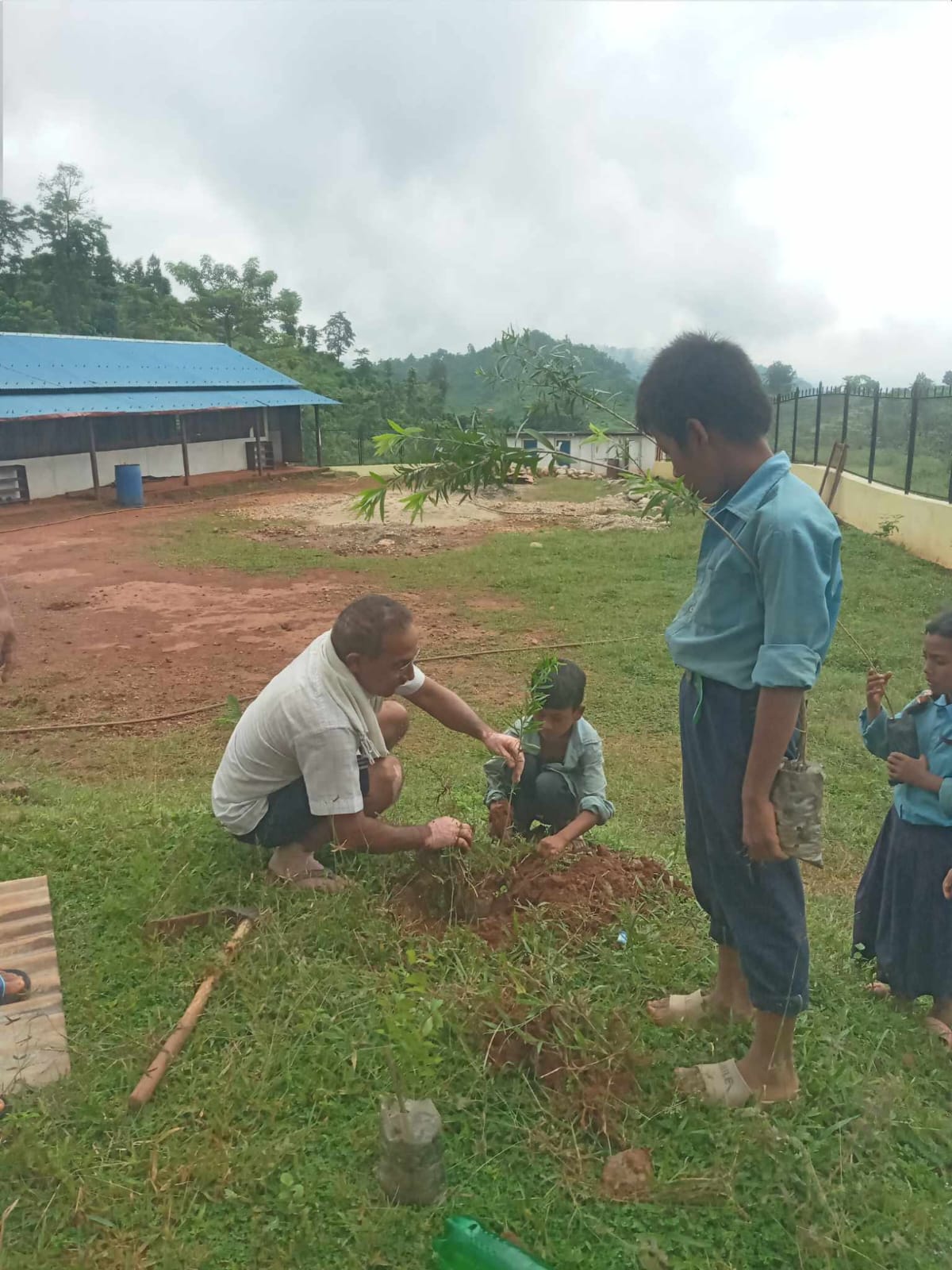
With the youngest children, CEPP plants shade trees in the school grounds.
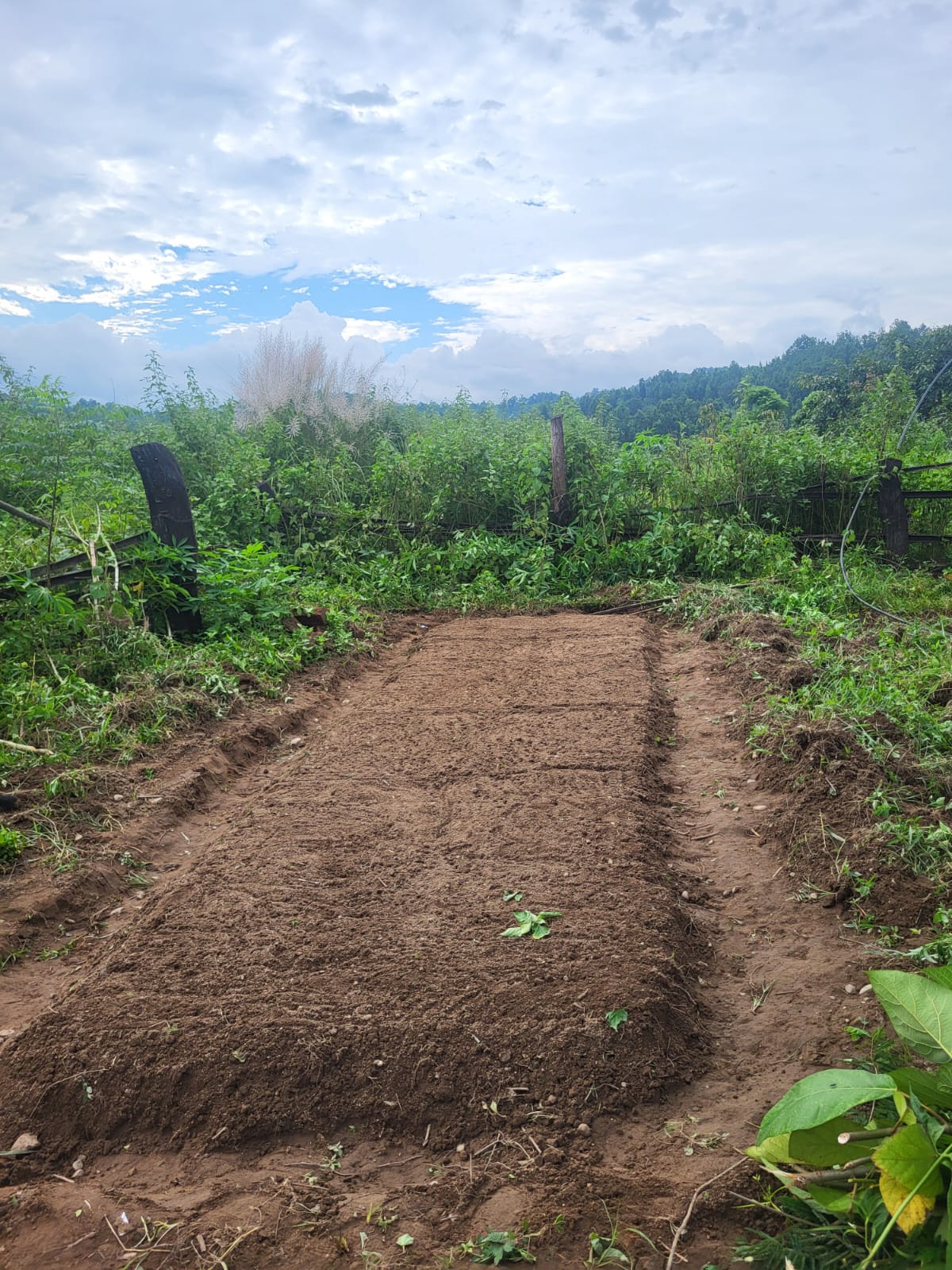
On this vegetable bed, the children will soon sow and plant cabbages, tomatoes, cauliflower and spinach. Of course, none of this can happen without an offer of continuing education to teachers, parents and the school management committee.
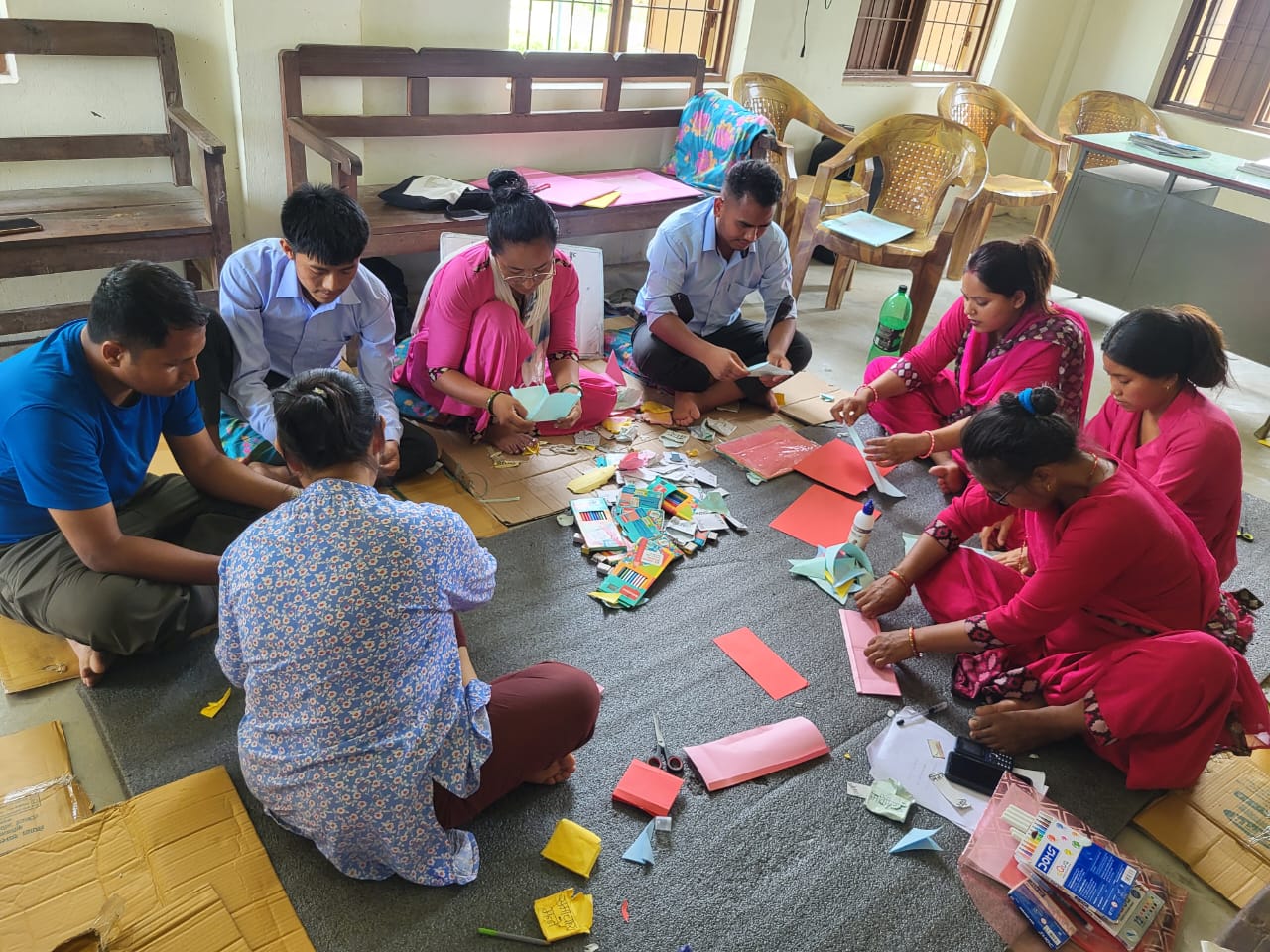
CEPP organises workshops for teachers, including on motivation and on how to make your own educational materials for young children and use them in the classroom. /em>
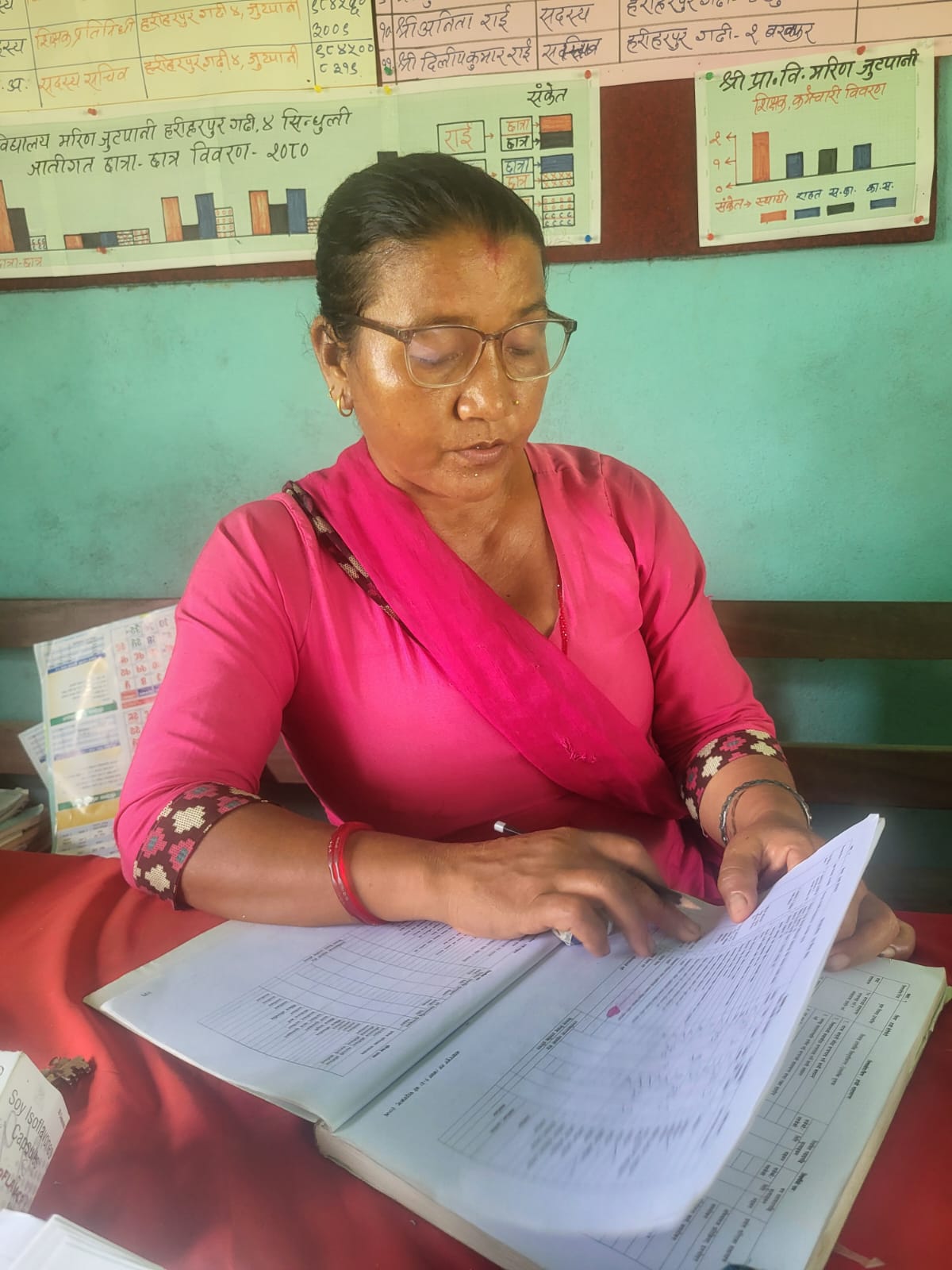
Teachers receive support from CEPP in monitoring pupils. After all, these systems of continuous assessment are new and imposed by the government.
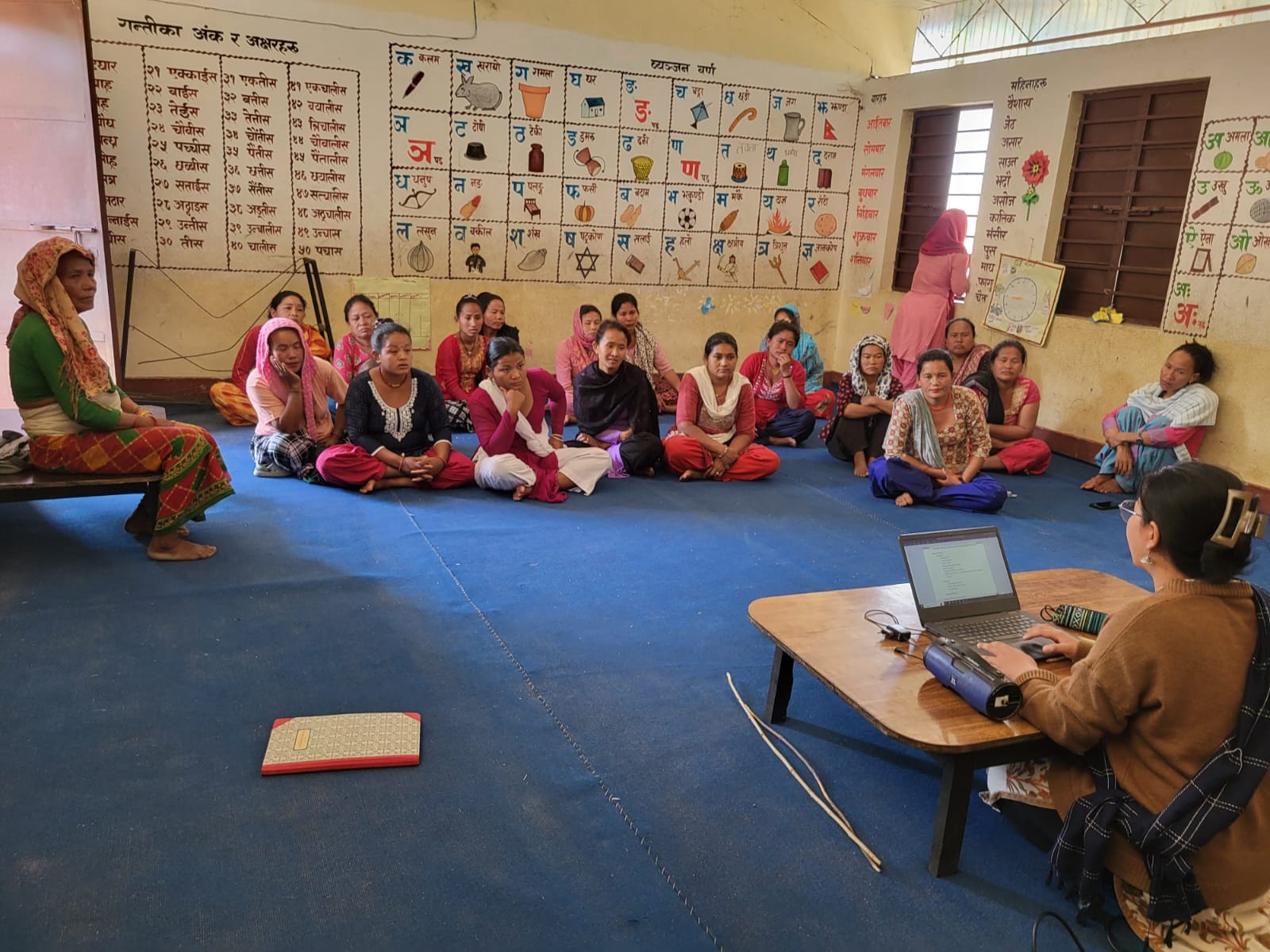
Training for parents is also indispensable. Mothers are central.
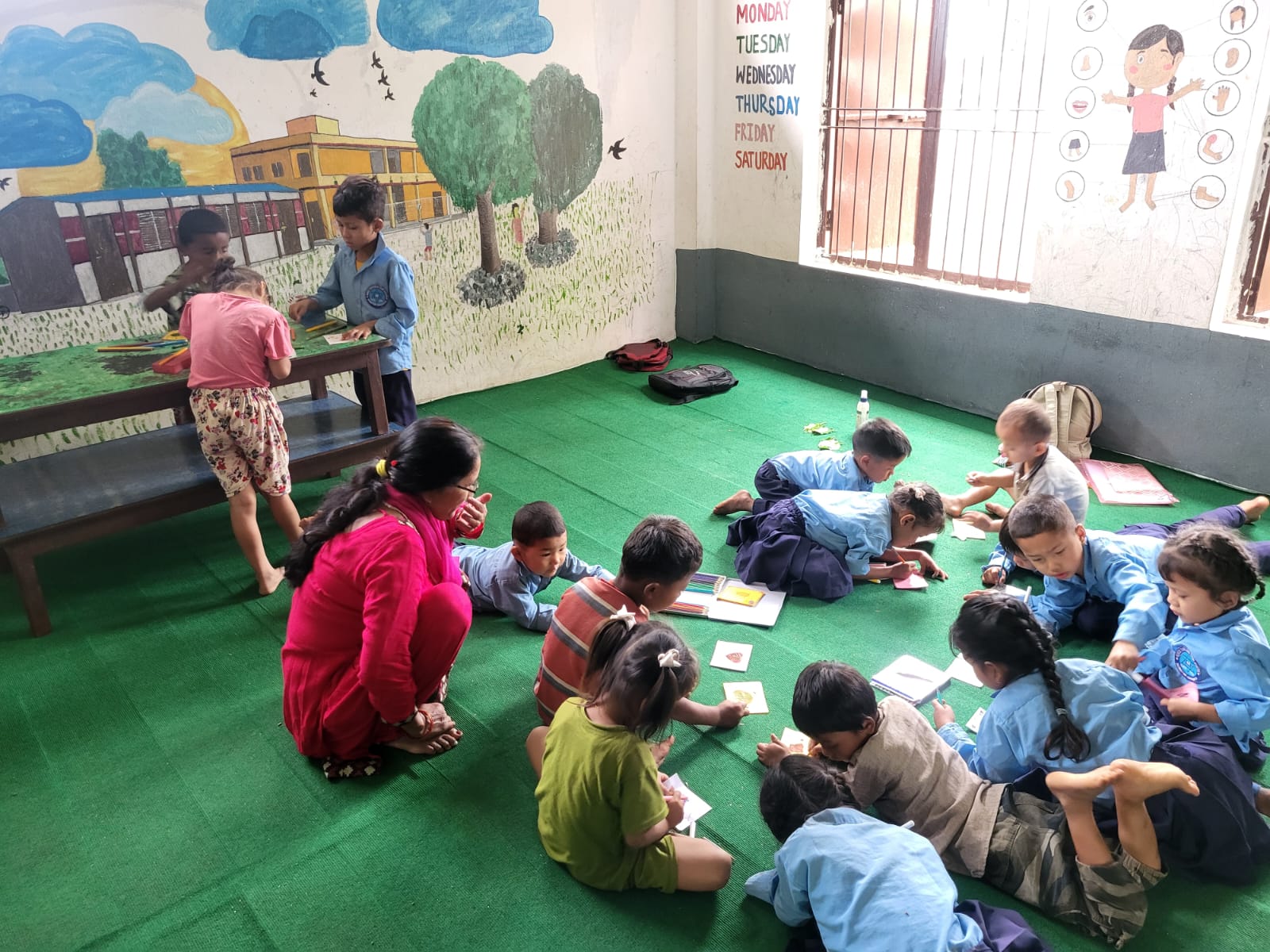
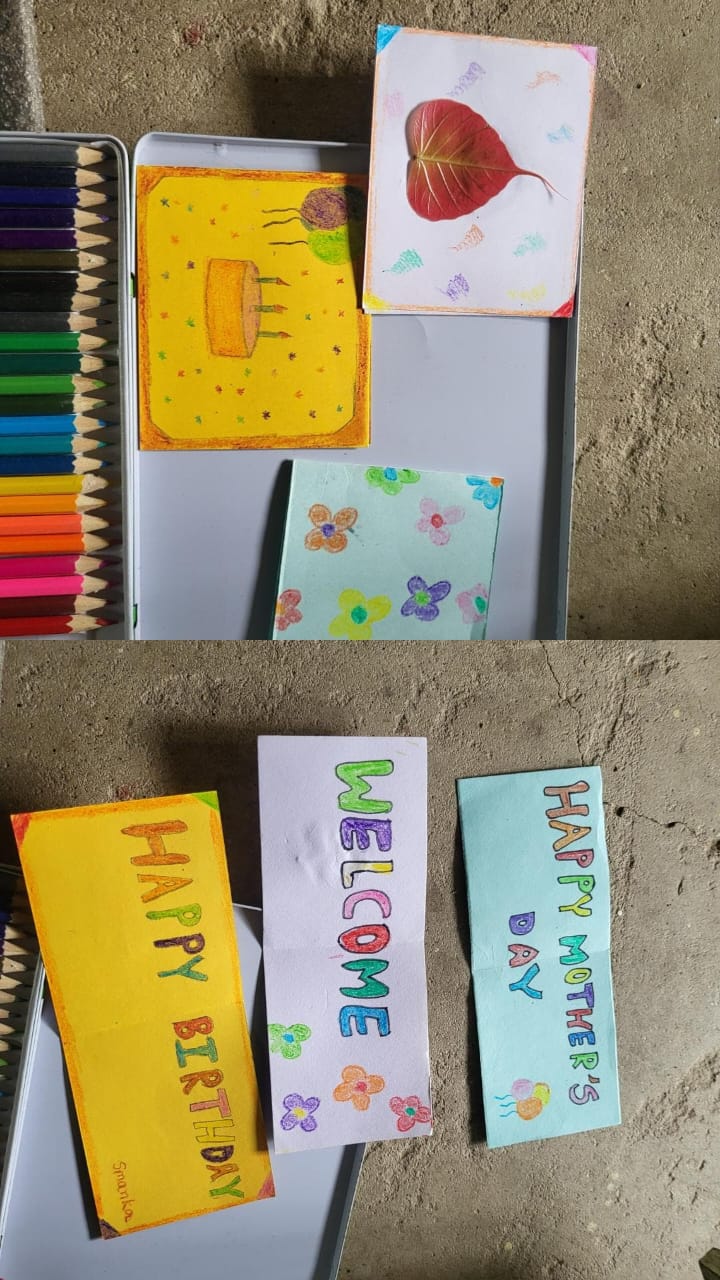
Here, children from Class 1 and 2 make cards for Mother's Day.
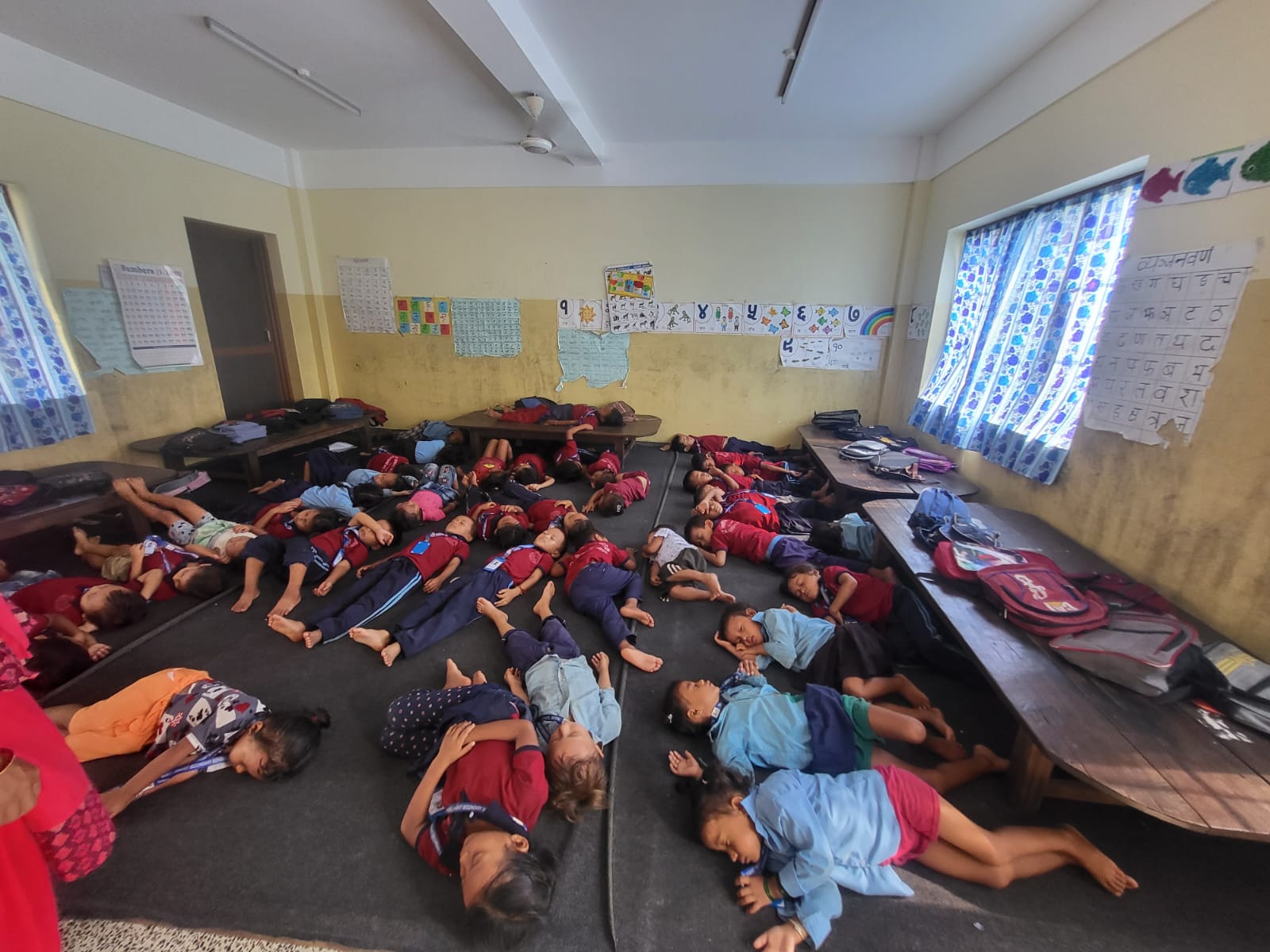
Afternoon nap: young children still need a lot of rest.
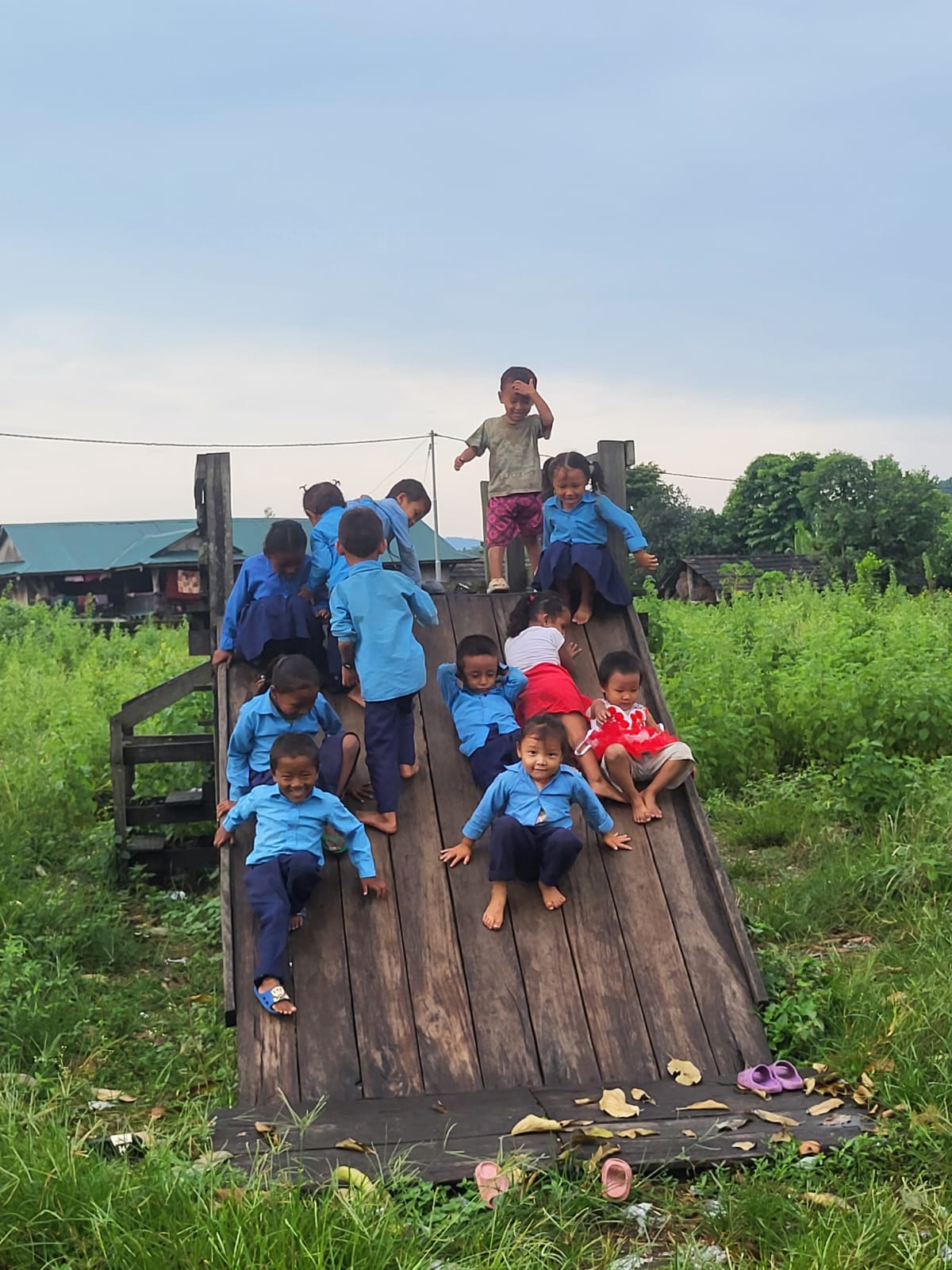
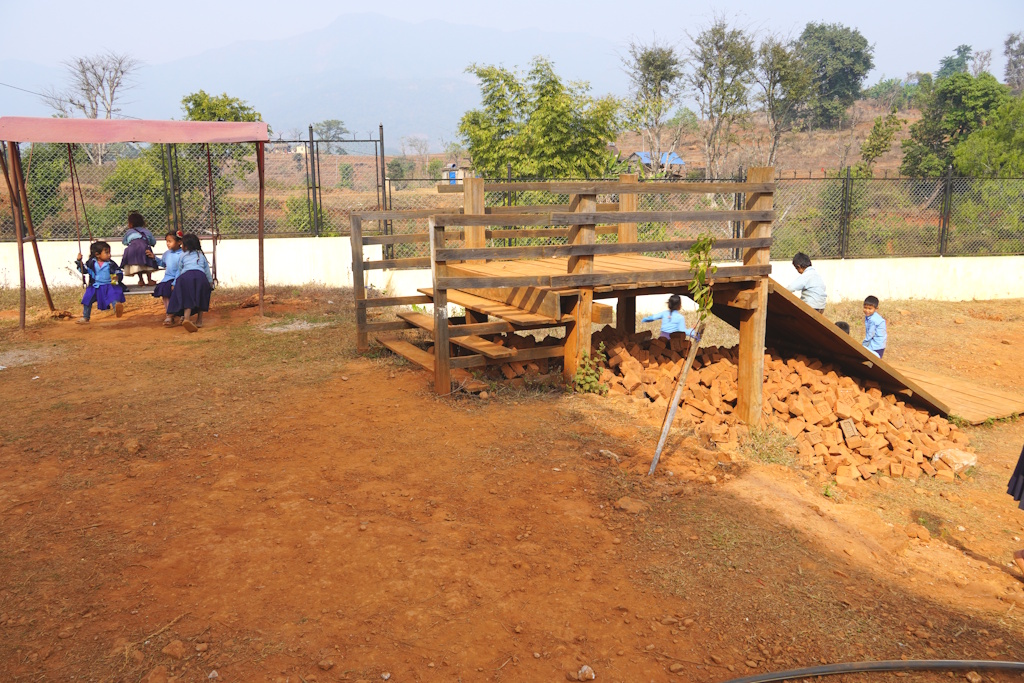
Together with parents and teachers, CEPP also provides a natural playground in each participating school: a safe area with playground equipment made of recycled wood. What would the children think of that?
The photos in this article were taken by Smarika Limbu, CEPP's education officer for Sindhuli District and by Amarmaya Lama, education officer for Makwanpurgadhi. We hope they give you an idea of the motivation and efforts of the schools, students and their parents, to work together with CEPP to make primary education child-centred and take it to the next level.
Your support is welcome to the account number BE32 2200 7878 0002 in the name of BIKAS vzw, with the mention ‘From School to School’.
Thank you!
Paul Beké and Carine Verleye
August 2024
A picture paints a thousand words
News from Sindhuli and Makwanpurgadhi, two districts where CEPP, the Centre for Educational Policies and Practices works with rural primary schools.
The photo selection illustrates the diverse areas in which they work.
Child-centred education
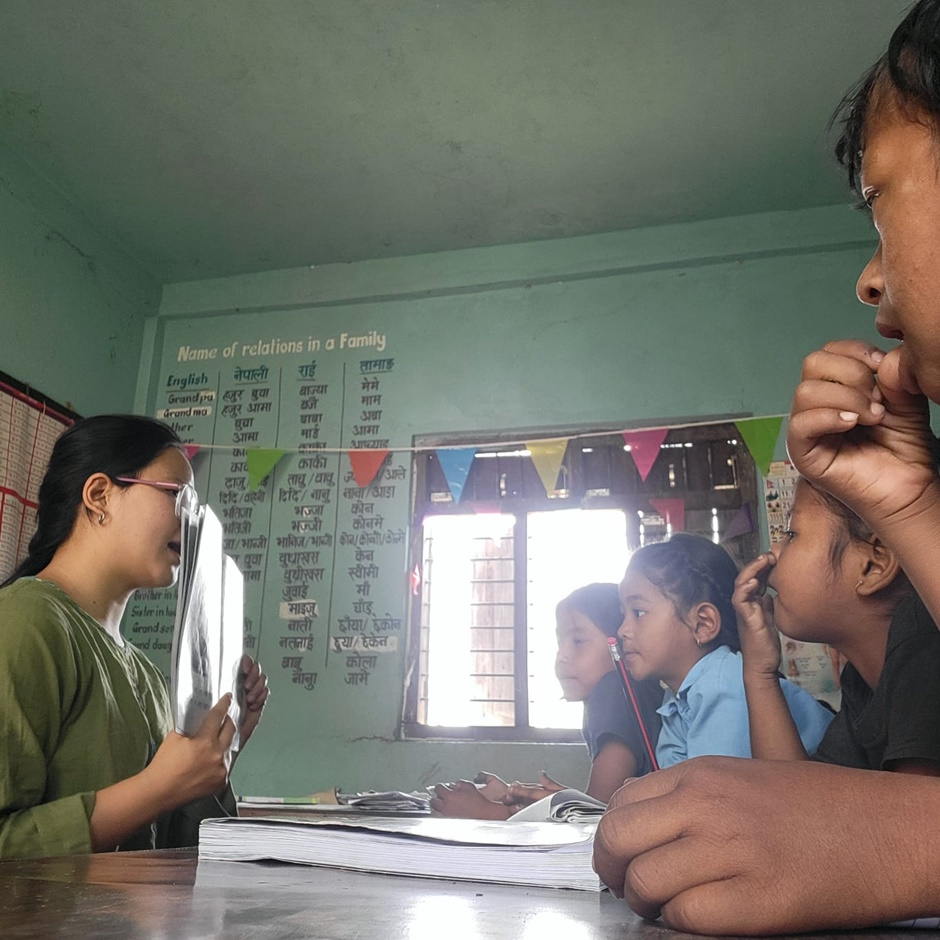
Smarika Limbu, education officer for Sindhuli District, reads a story to children at the primary school in Jutepani.
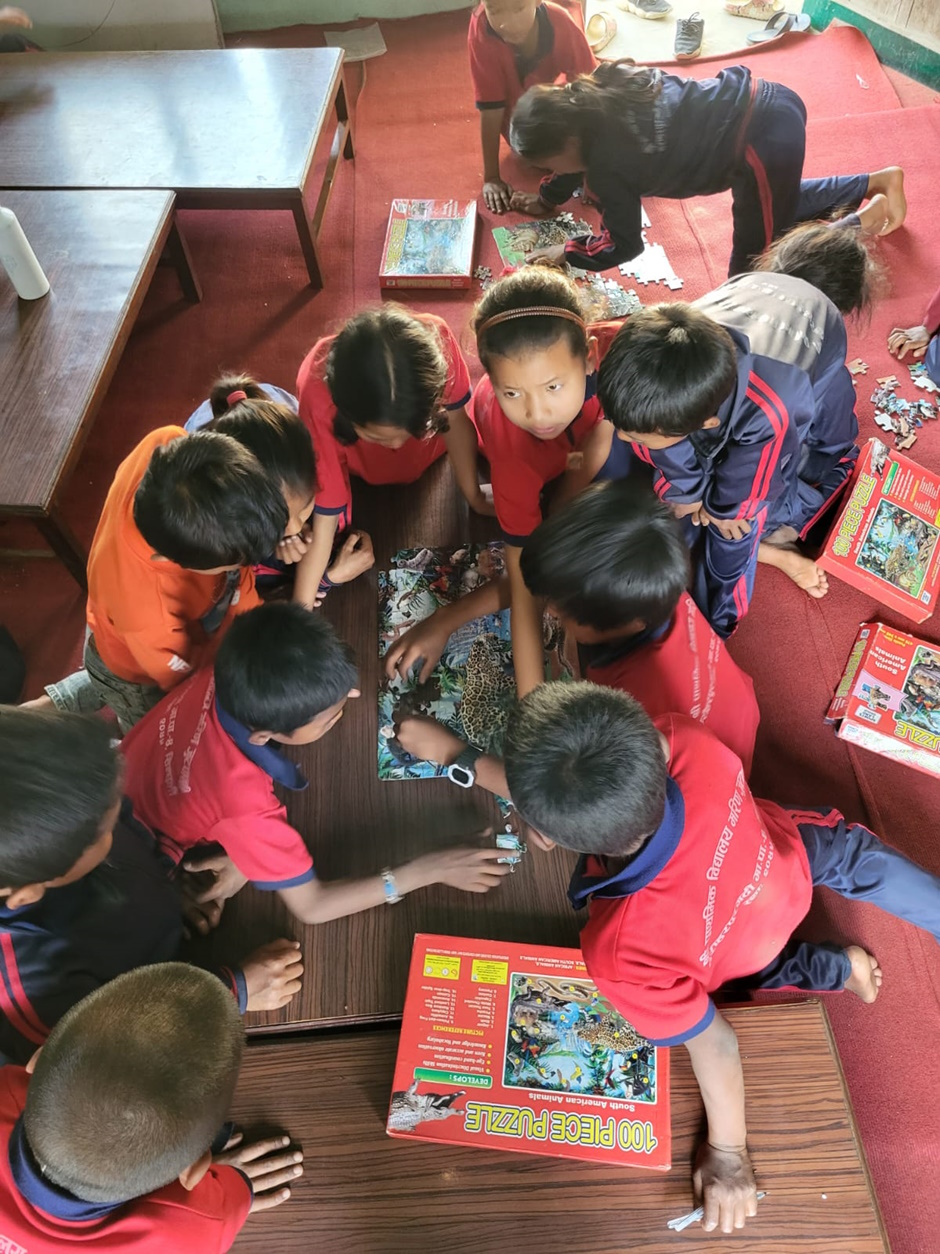
Puzzles are virtually unknown in Nepal. They stimulate attention, patience, perception and small motor skills. And puzzling together is also just plain fun!
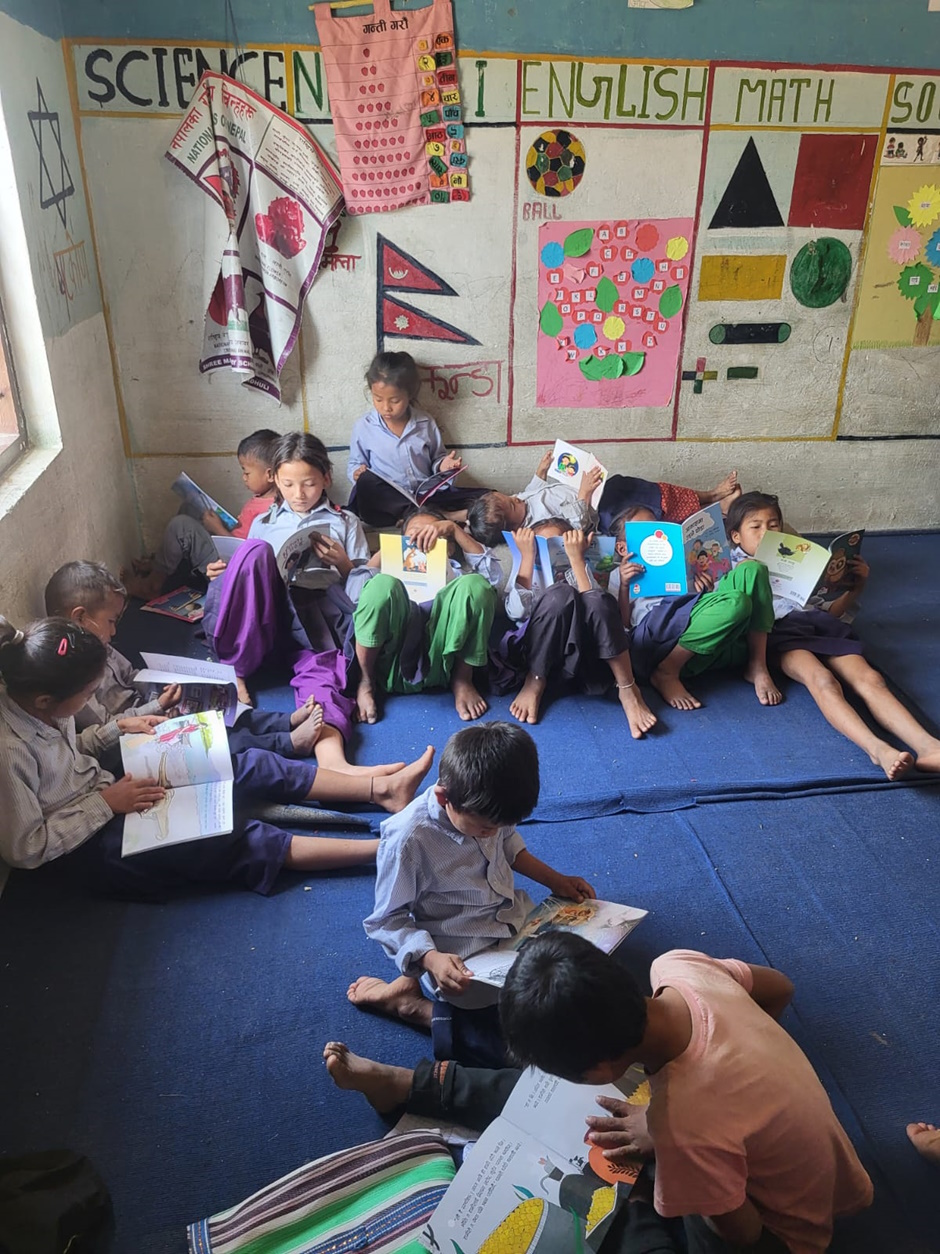
Manakanama school, Sindhuli, at break time. Now that there is more and more electricity in Nepal, electricity can also go out. Then the children read picture books, which is even more fun than watching TV!
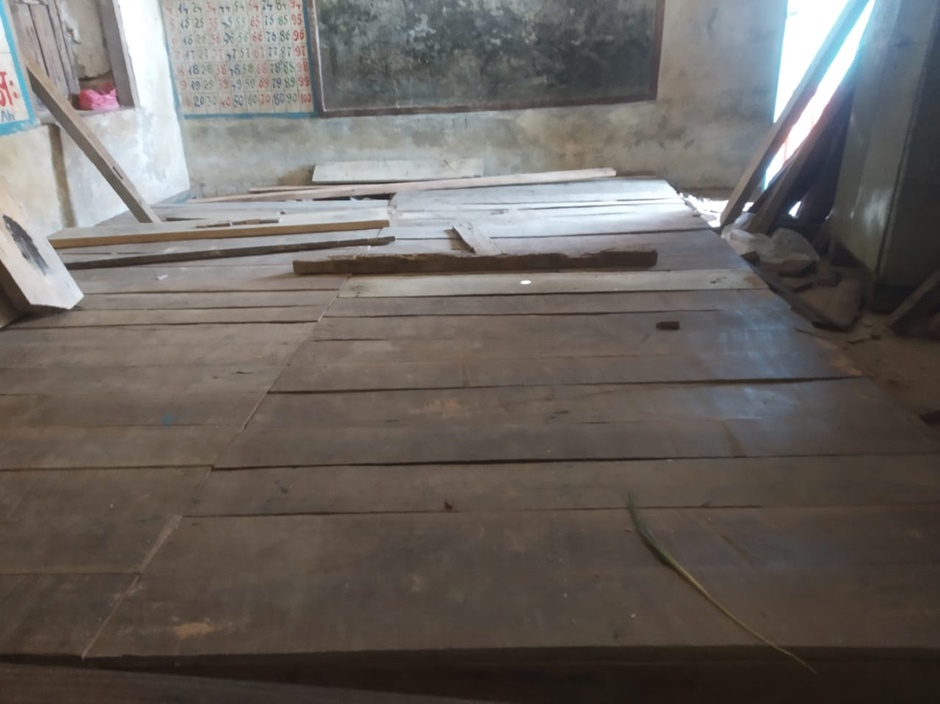
CEPP aims to set up a kindergarten or first grade classroom as a model classroom in every participating school in the catchment area. The first step is a wooden floor, usually with reclaimed materials, to protect children from cold and dust.
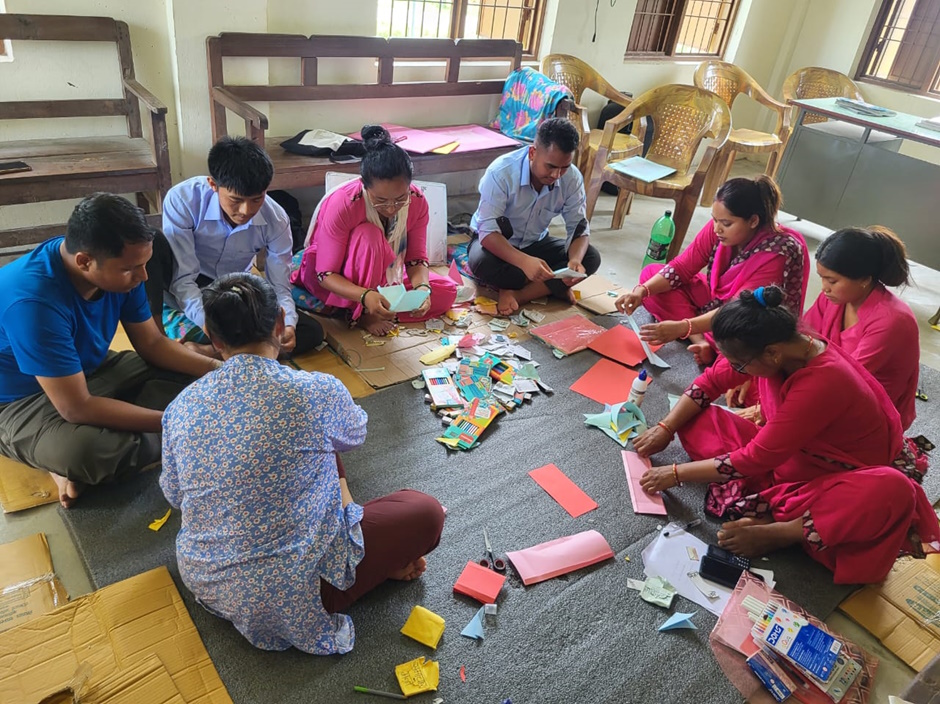
Training for teachers around daily activities. Teachers create materials to support the welcome talk, daily programme, weekly calendar....
Formation of parents
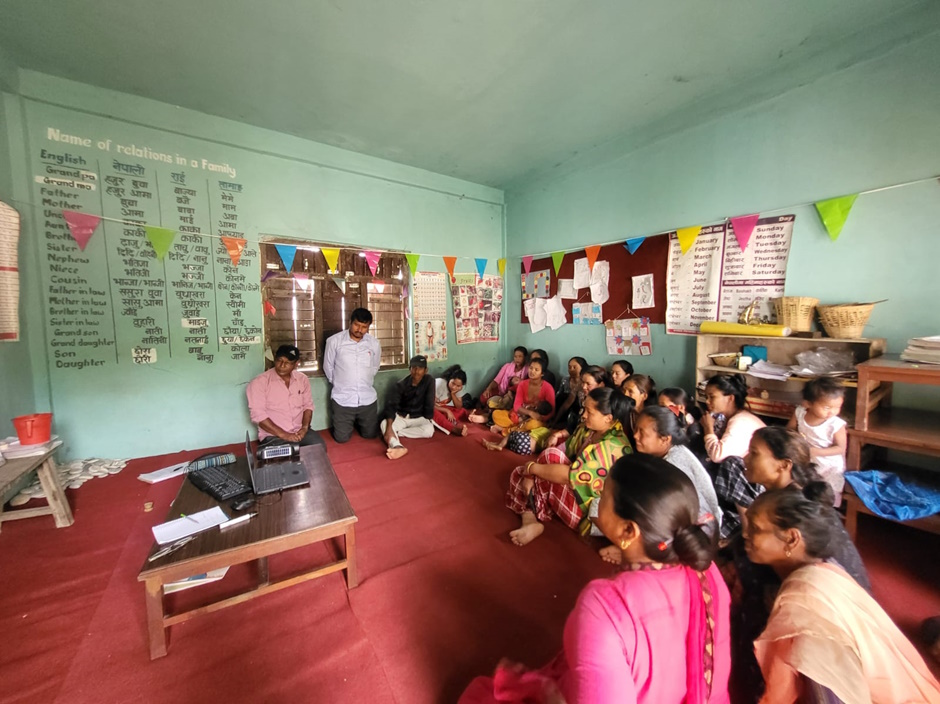
CEPP informs parents in Jutepani, Sindhuli, about the curriculum of kindergarten and first grade.
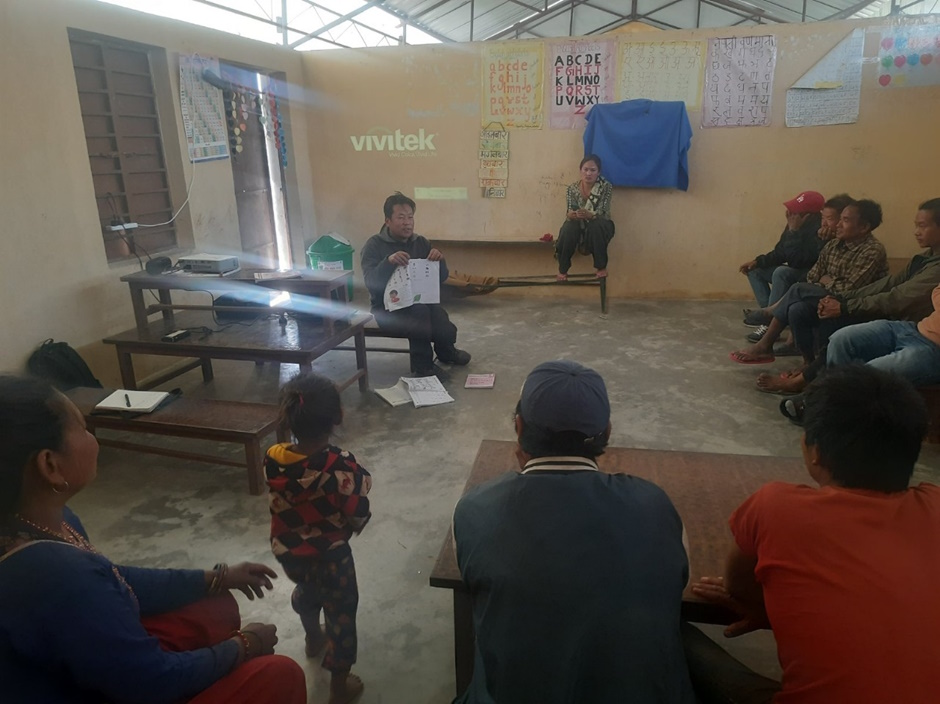
Michael Rai, general coordinator for all areas of operation of CEPP, informs parents at Gaurishankar School, Makwanpurgadhi, about the primary school curriculum and how they can encourage their children. Gaurishankar is a small school. Without it, the children would not get an education as the other schools are too far away.
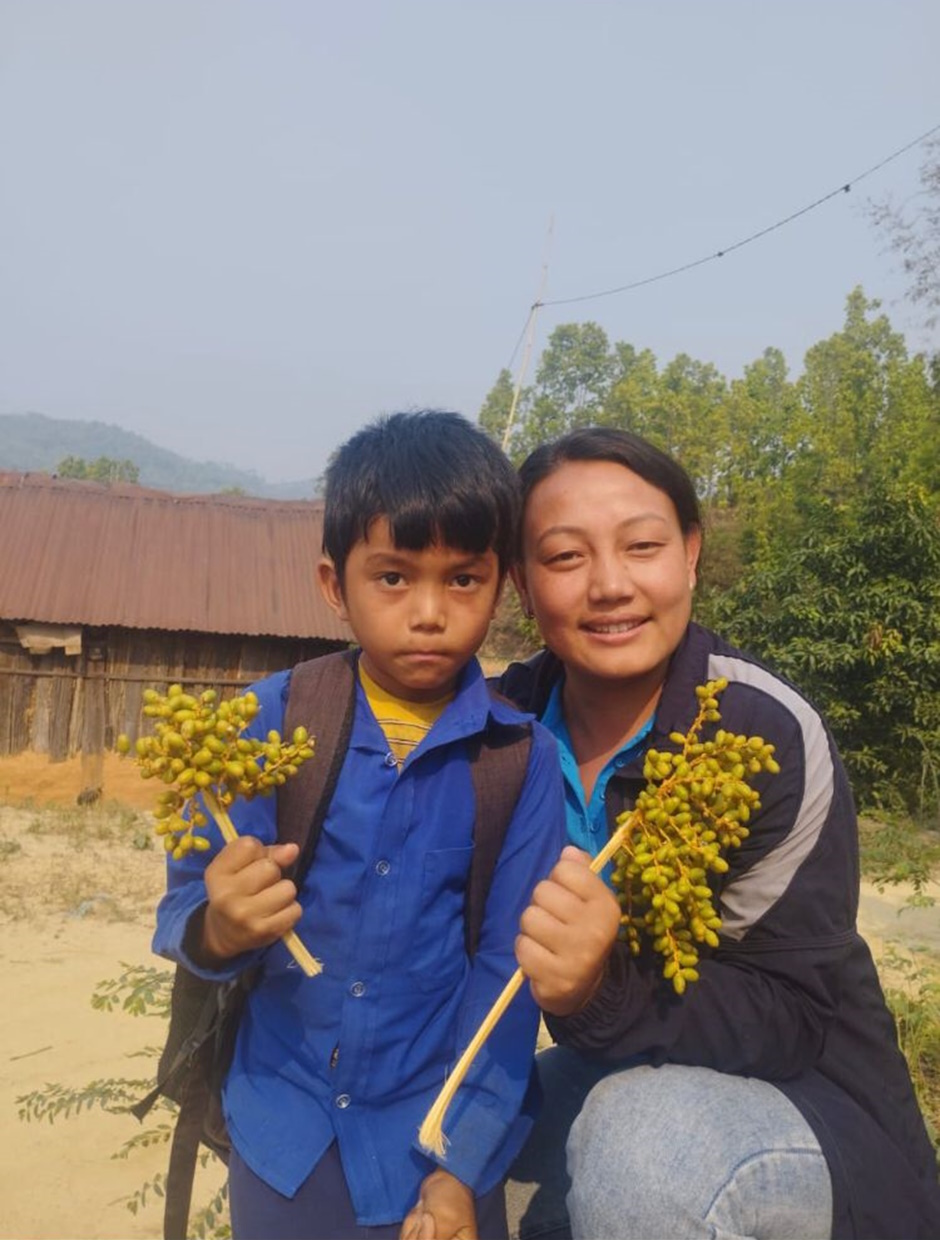
Amarmaya Lama, brand-new coordinator for Makwanpurgadhi, in this photo familiarises children with traditional, often forgotten crops in Nepal, such as amaranth and quinoa.
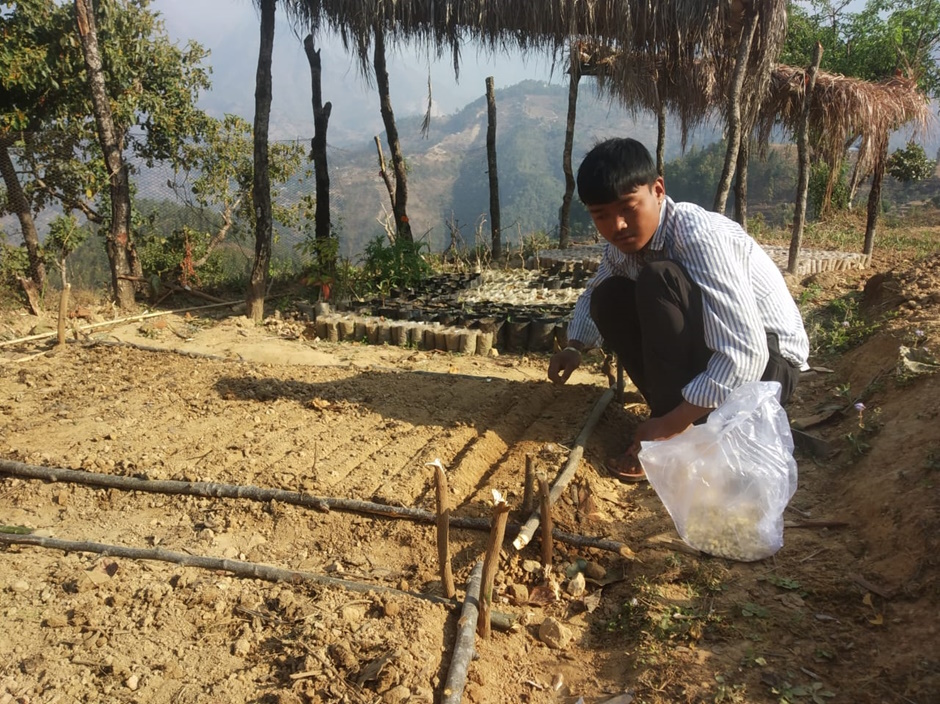
Karnas Thing, responsible for the ecological component of the programme in Makwanpurgadhi, plants coffee in CEPP's plant nursery.
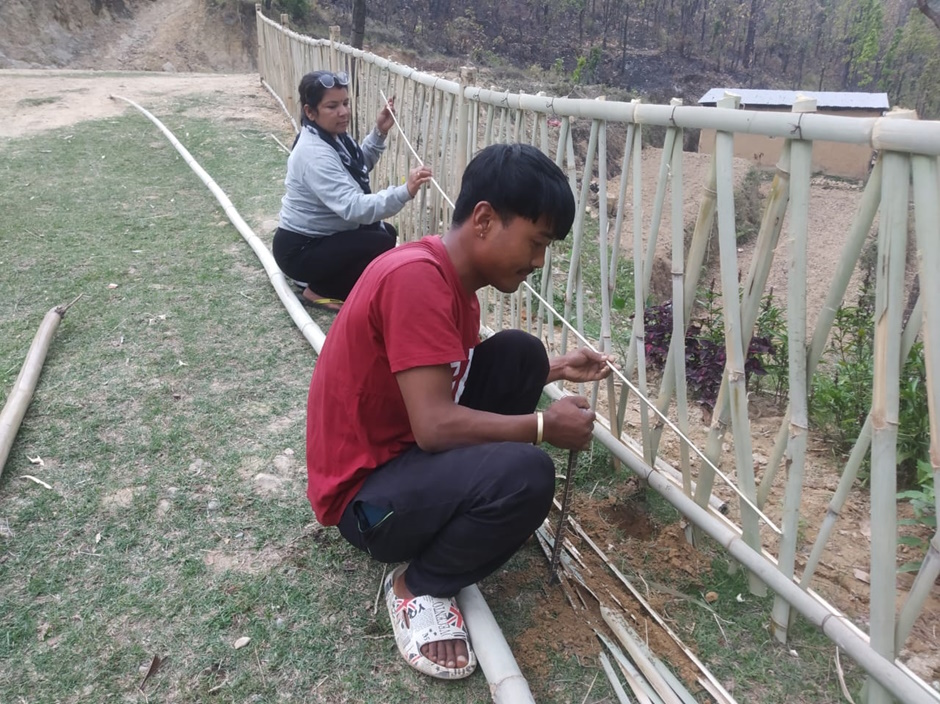
Karnas and Lila Upreti make a fence to protect the plant nursery from wandering cattle. Lila is an education officer at Makwanpurgadhi. Karnas and Lila also make numerous home visits to encourage families' involvement in education.
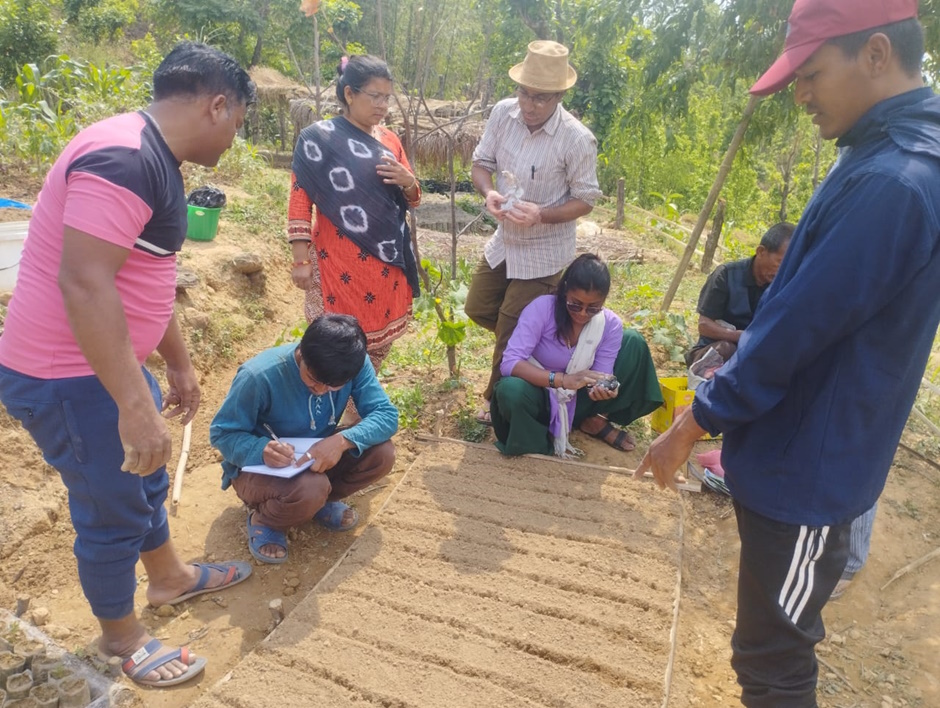
The man with the straw hat is Rishi Adhikari, ecological officer within CEPP. Here he gives training on sustainable agriculture to CEPP's team.
Health
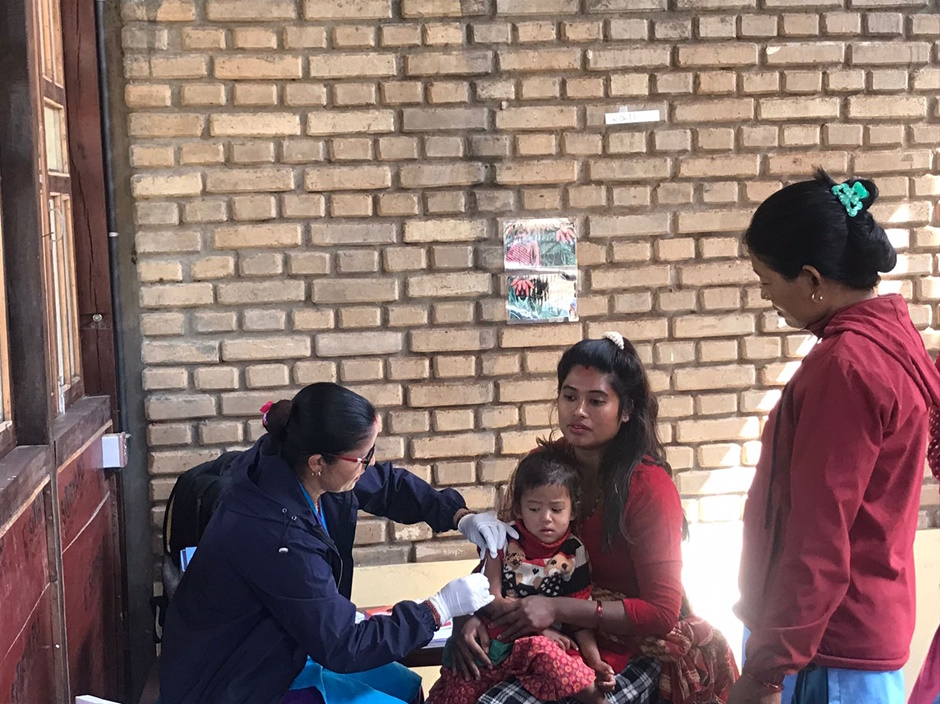
Vaccination against measles at Kalidevi School, Chap, Makwanpurgadhi. The classrooms built in collaboration with the local community, KULeuven's Department of Architecture and Bikas are also used for the common good.
This is just a small selection of the pictures we receive from Nepal via WhatsApp every week. Those images allow us to stay strongly involved in the project and exchange pedagogical insights and tips. We hope they will also give you an idea of what the project stands for.
Thank you for your interest! Would you like to help support the work of CEPP? Any contribution is welcome on account number BE32 2200 7878 0002 of Bikas npo, with the mention From School to School.
In the next magazine, we would like to talk about CEPP's focus on the youngest children, in kindergarten and primary schools, and about their special attention to adolescents in the upper classes.
See you then!
Paul Beké and Carine Verleye
Photos by Amarmaya Lama, Smarika Limbu and Michael Rai.
Cooperation and self-determination
"Fundamental to our operation is the vision of development - for us it is a process of making individuals aware of their situation and their willingness to change, in the way they want or are able to. This is no different from education. For us, education means a process of helping people recognise and use their potential for themselves and the wellbeing of the community so that life can be lived to the full."
Teeka Bhattarai, CEPP project director.
February 2024
What a privilege to work with our partners in Nepal again!
This is something we have been really looking forward to. Our last working holiday was in early 2020... but all this time we have kept in touch and consulted with the Centre for Educational Policies and Practices staff, teachers and village communities. We exchanged emails and photos and news via WhatsApp and, above all, enjoyed preparing activities and prototyping educational materials. So many plans and dreams...
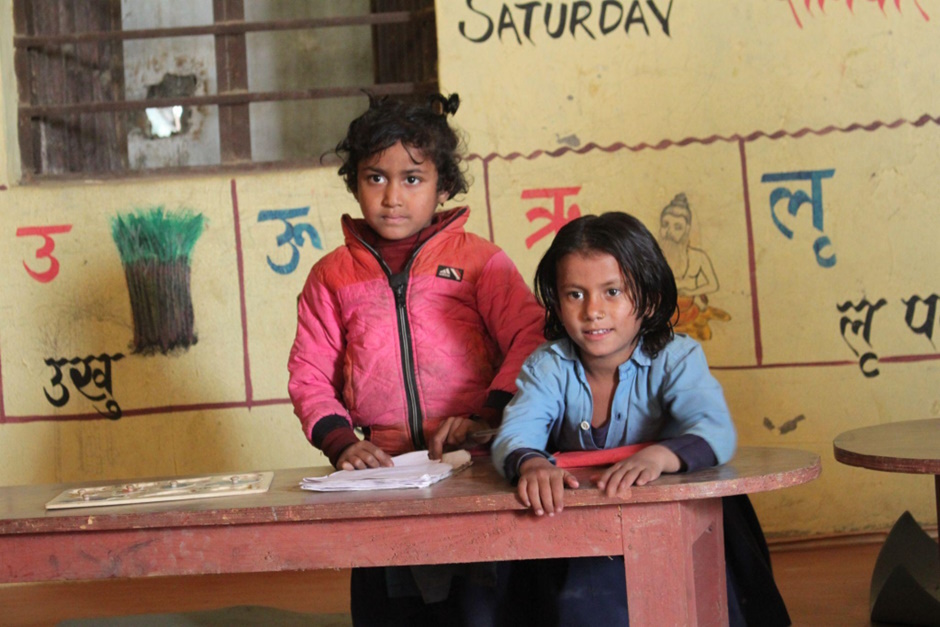
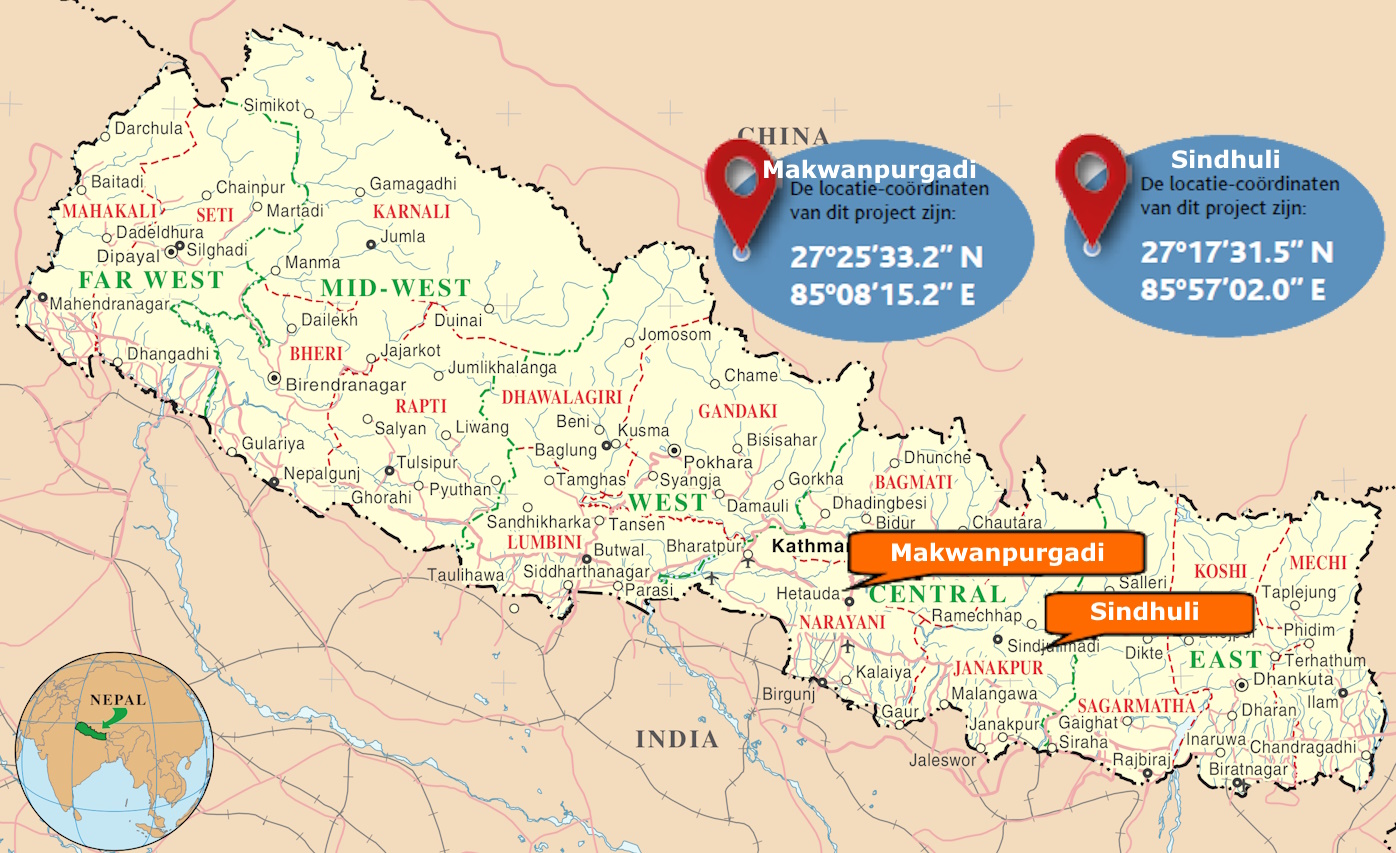
We will work with all CEPP staff between 1 February and 2 March, in all working areas - Madesh province in Terai, Bagmati + Sindhuli district in Makwanpur, Makwanpurgadhi, i.e. in the alluvial plains and transition to the Middle Hills and in Rasuwa in the high Himalayas. Different local conditions, cultures, climate zones and challenges everywhere.
The situation at the start of cooperation between the local communities and CEPP is weak in several domains.
We often have to deal with the politicisation of public education - head teachers are not infrequently political appointees with sometimes little commitment to the school and a lot of self-interest. Teachers received at most six months of pedagogical training, but usually much less or even nothing at all. They express a strong need for training.
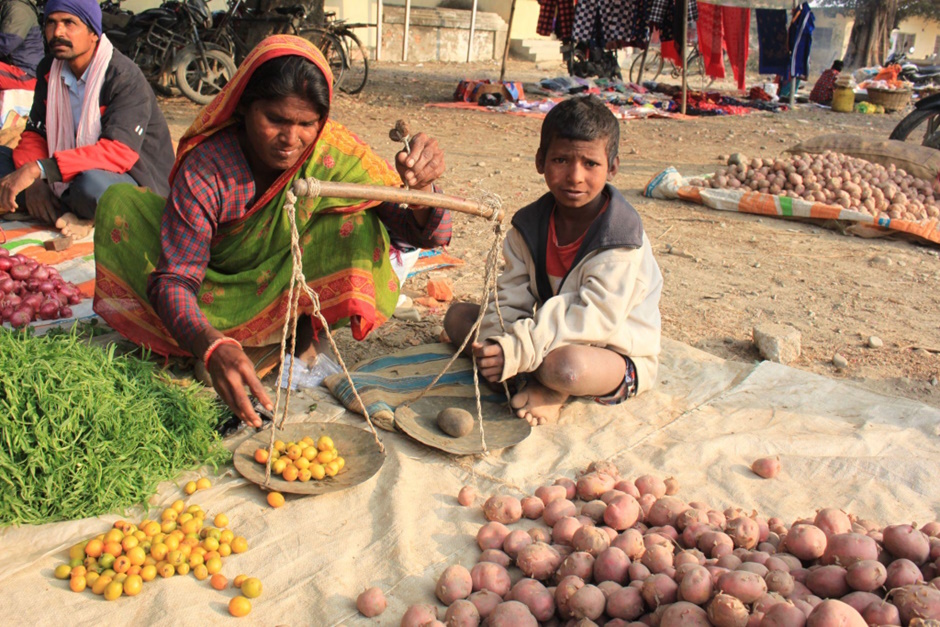
Parents are aware of the importance of education but are rarely educated themselves, belong to an economically weak group and do not know their rights well. The government now recognises that memorisation is no longer enough, that Nepali society needs creative people who can respond to the new challenges, such as the opening up of the interior through road construction, the flight to cities and migration abroad.
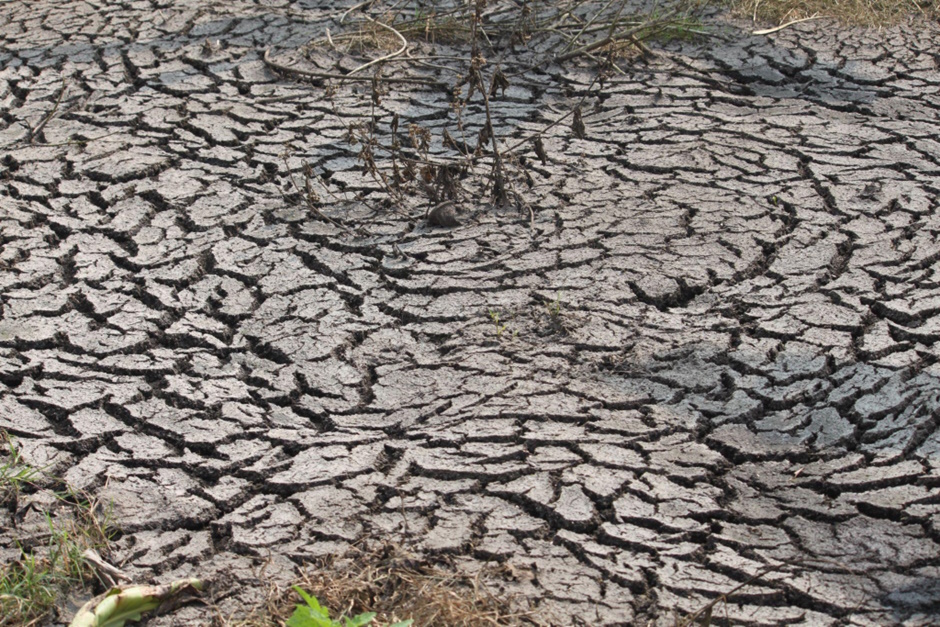
On the ecology front, we face the impact of climate change and changing attitudes towards agriculture - traditional techniques of terracing and crop diversity are being lost and people are turning away from manual labour.
In addition, the commercial exploitation of natural resources is reaching a peak - hydroelectric plants, dams and gravel extraction are disrupting the natural course of rivers.
Why choose the easy when the hard can also be done?
Quote from Hanna and Jonathan, trainees at Luca School of Arts, Ghent, and an inspiration to us throughout the working period.
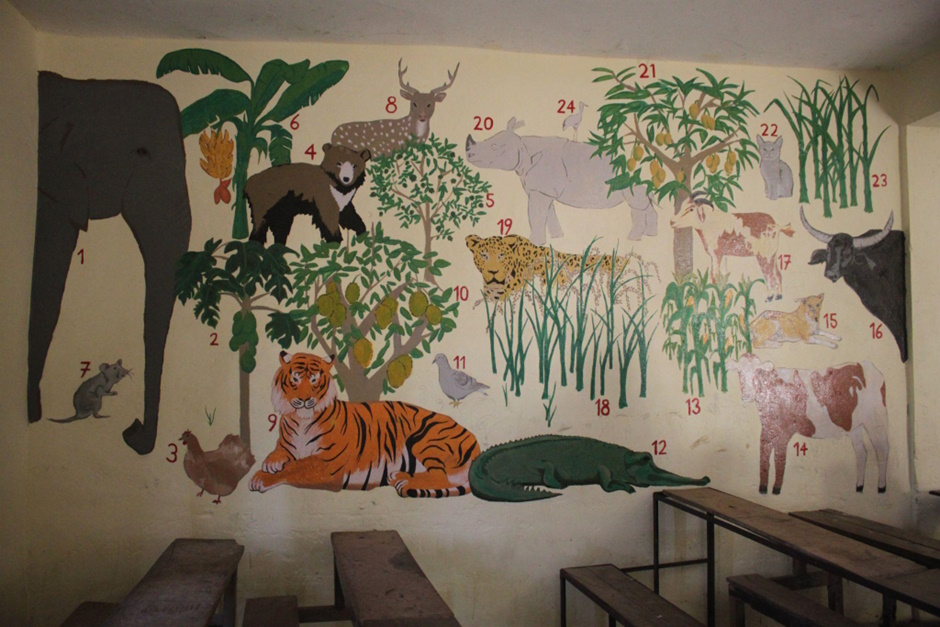
This painting was done by Hanna and Jonathan in a classroom.
Our cooperation
During our stay in Nepal, we spent 26 days from 8 to 8 working intensively with all CEPP staff, both the support team in Kathmandu and the field workers. Our use of time consisted of
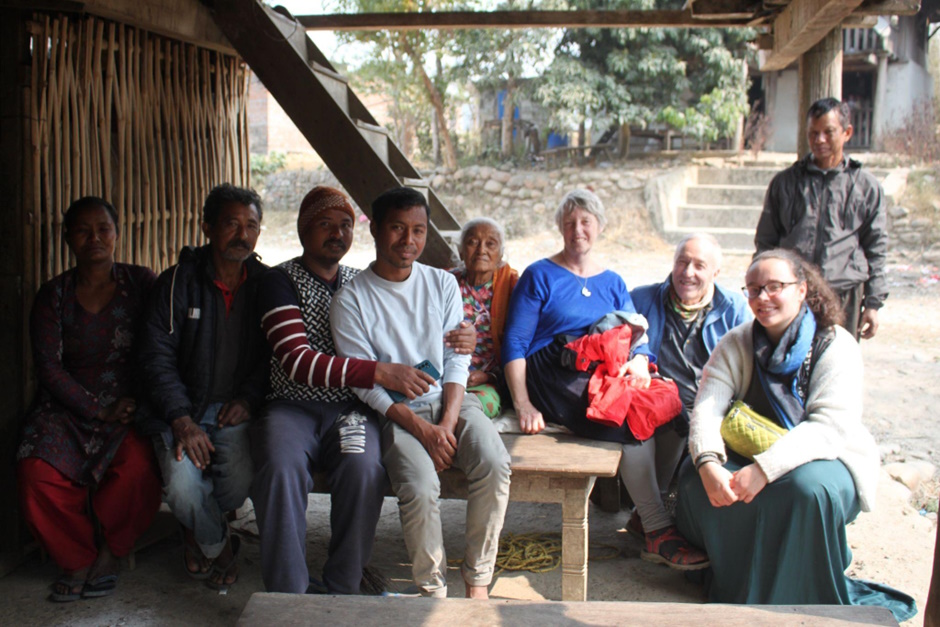
One day of 4 to 8 hours of transport - by jeep, bus, motorbike or on foot - to a new area, getting to know the local team and community. Here we meet Dilip and his family, whom we have known since our first formation in 2014. In the right corner is Bir Bahadur from CEPP. We are there with Loïse, Belgian intern and feel completely at home in this village.
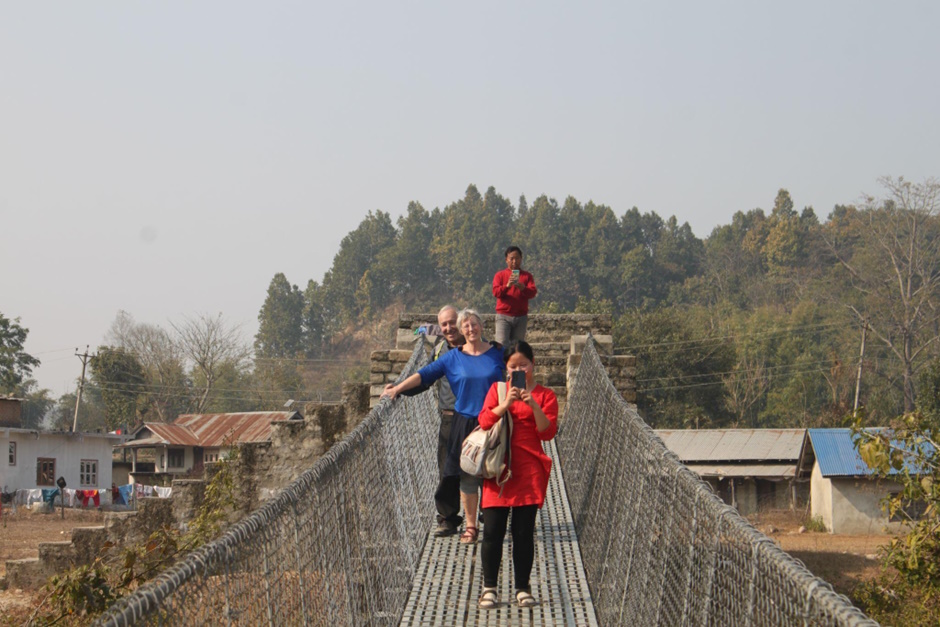
One day of cooperation with the local team of greening officer, parent motivator, teaching/learning officer and coordinator, exploration of village and plant nursery, introduction to parents and local government. Here we walk across a suspension bridge with Smarika, education officer in Sindhuli and Dhan, who is the umbrella coordinator for guiding the schools in all working areas .
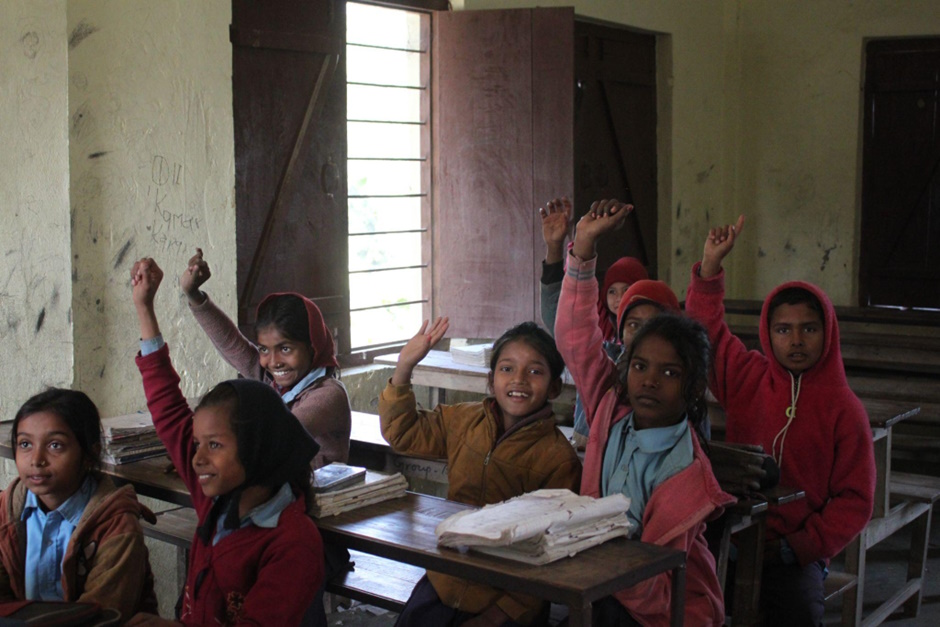
One day visit to three or four schools, with an activity in kindergarten, class 1, 2 and 3 and a motivational talk in upper classes, teachers' wish everywhere + consultation with management, parents and teachers and formation of the CEPP team.
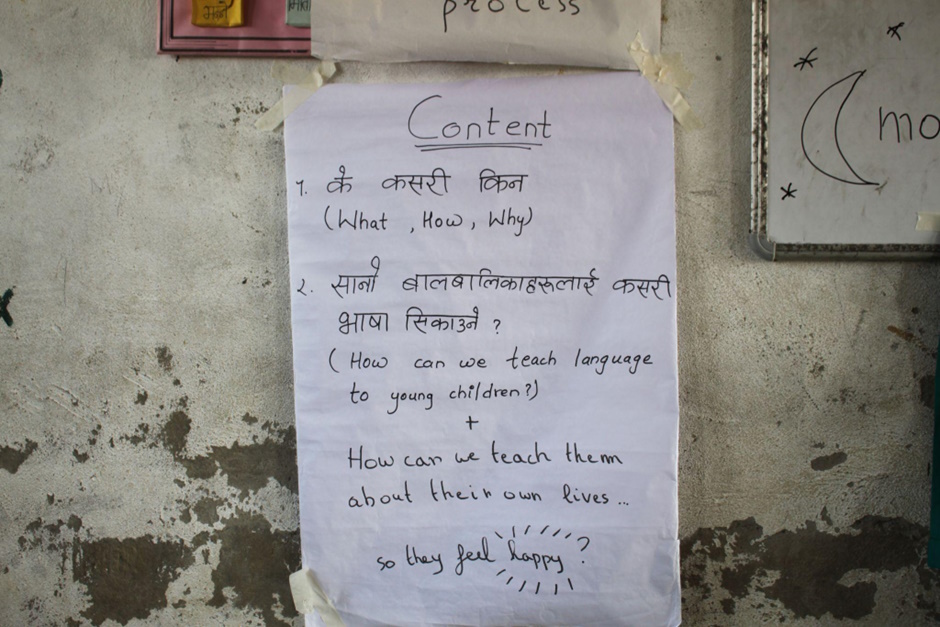
One day of effective intensive and practical training for preschool and grade 1 to 4 teachers from all schools in the working area, with the theme Ke kasari kina - the what, how and why of pedagogy. This is followed by a follow-up discussion with management and teachers and formation of the CEPP team. We always emphasise that we don't know better. Nepali people know their children best! We want to share our experience with them and support them to change their lives as they see fit.
We repeat this programme five times, corresponding to the number of working areas of CEPP.
The team
Like ourselves, CEPP people do not take a day off on Saturdays and we certainly do not work from 9 to 5, but from 8 to 8 at least.
Teeka Bhattarai is the project officer and supports the whole team.
Michael Rai is the overall coordinator of the fieldwork and is active in all sub-areas.
Dhan Bahadur Rai is the new education coordinator for all areas, acts as our guardian angel, accompanying us in all formations and taking on more and more responsibility. Rishi Adhikari is the general ecological officer and an authority on climate change. He always keeps smiling and has excellent contact with the local green volunteers. We work together in 3 of the 5 working areas. We share as many skills as possible with Smarika Limbu and Dev Chepang, local education officers; they take over activities at the second formation and we act on their suggestions.
We are also working with Bijaya Subba, Arati Thapa, Shikshya in the office in Kathmandu, with Bir Bahadur Rai, coordinator in Sindhuli and Bagmati and with Sobha and Abdesh, field workers in Madesh.
The main managers of the project are highly skilled and experienced people by Nepali standards, who could actually do easier and perhaps better-paid work elsewhere.
They are all strong in their own areas and exceptional in intrinsic motivation, although high workloads due to staff turnover and job insecurity are a problem.
Our teacher trainings
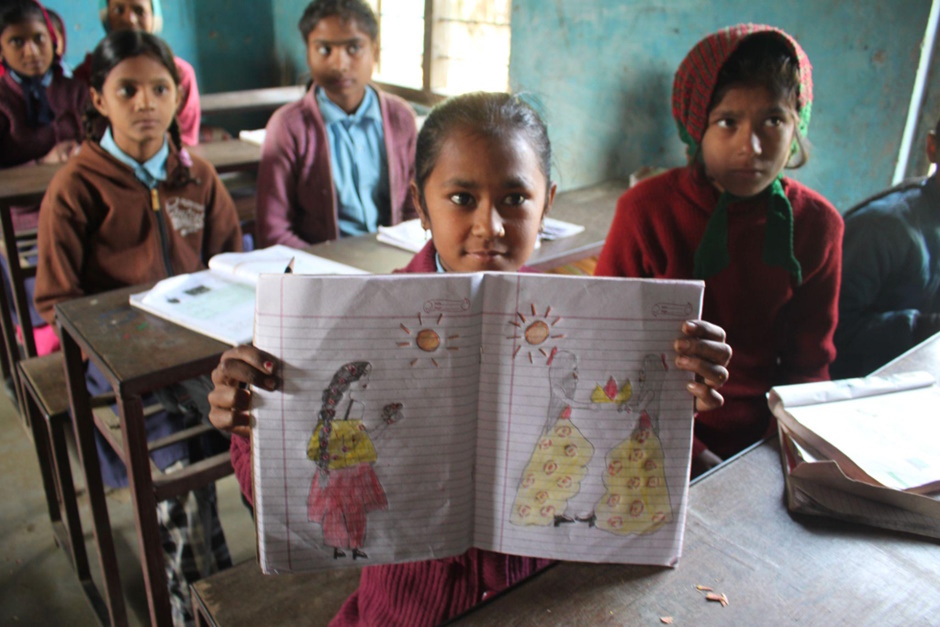
We want to start from the children's world and value their creativity and talents.
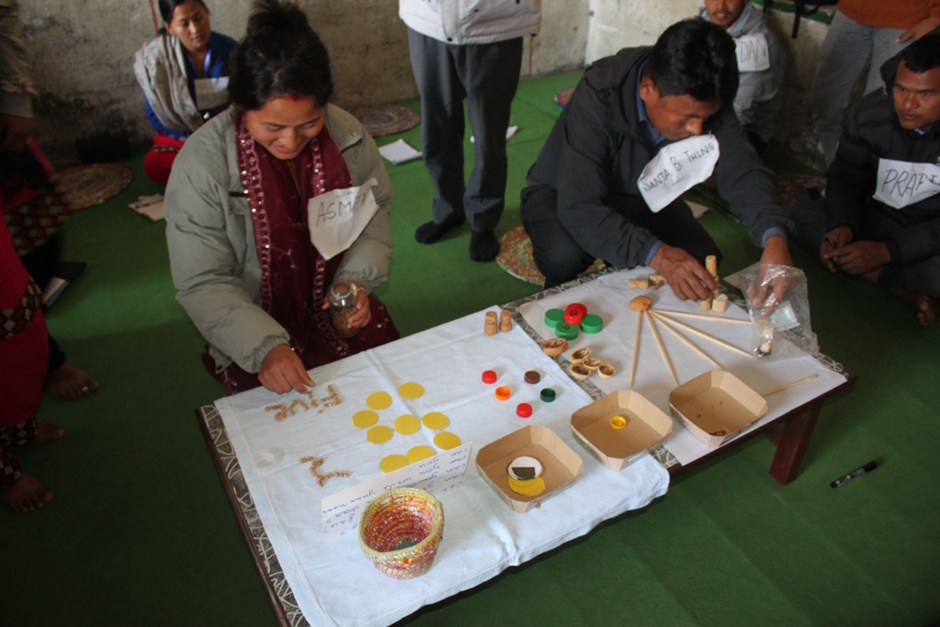
Teachers are visibly happy when they can use their imagination. We offer simple and local, no-cost materials and invent assignments, such as Can you make five?
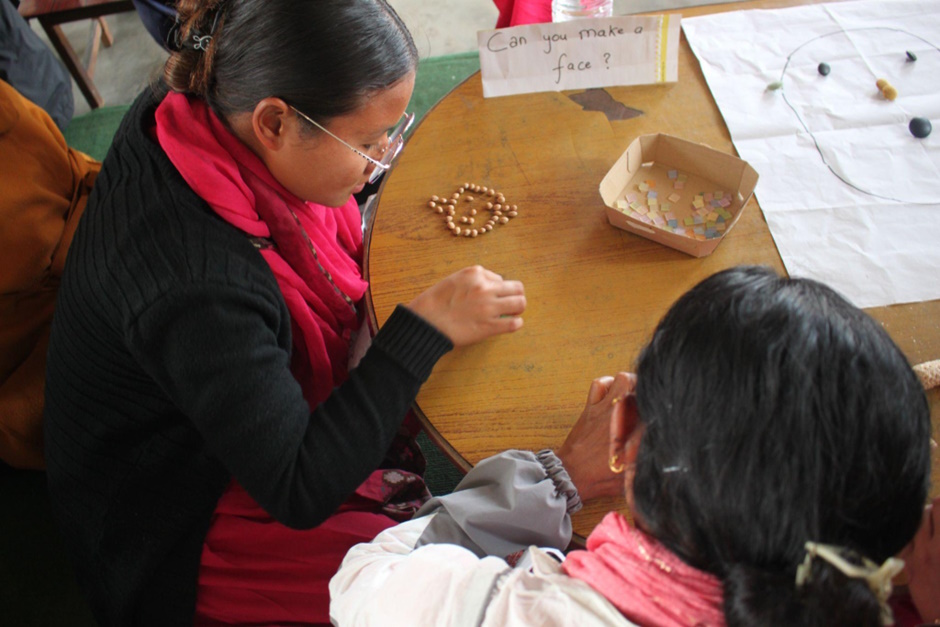
Can you make a face?
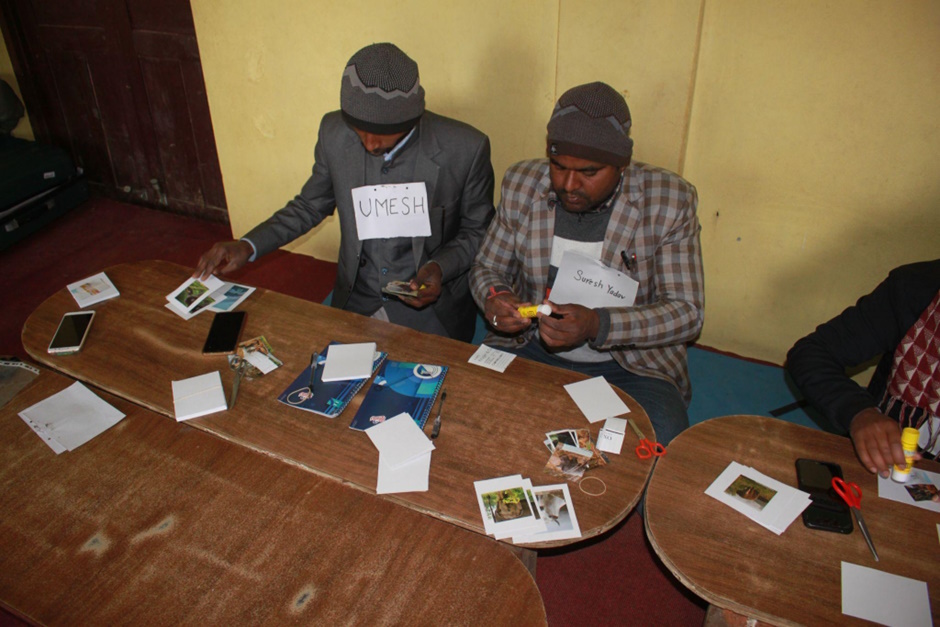
Full of concentration, teachers create their own didactic materials, such as memory games.
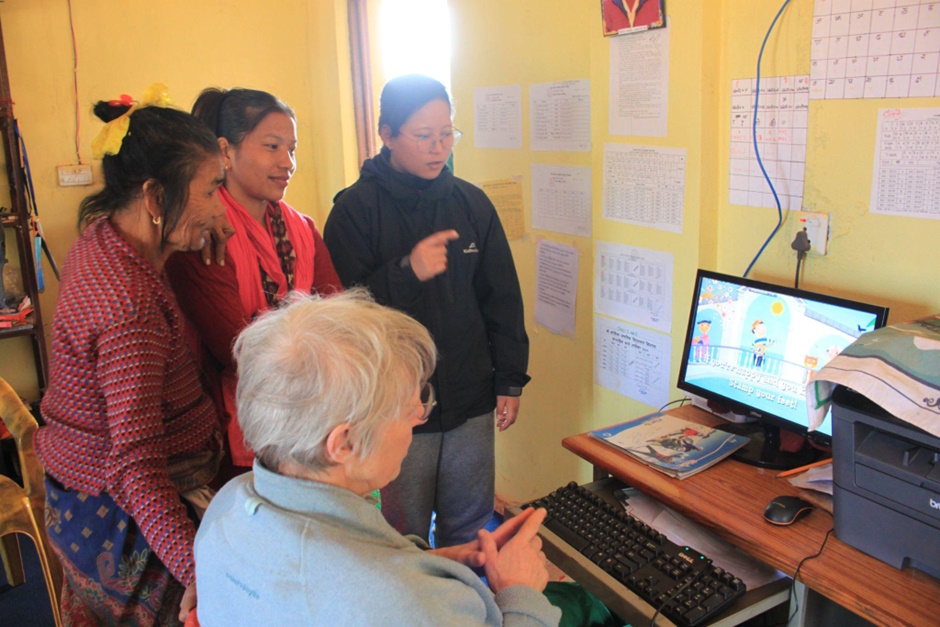
Digital education for teachers is also part of the package.
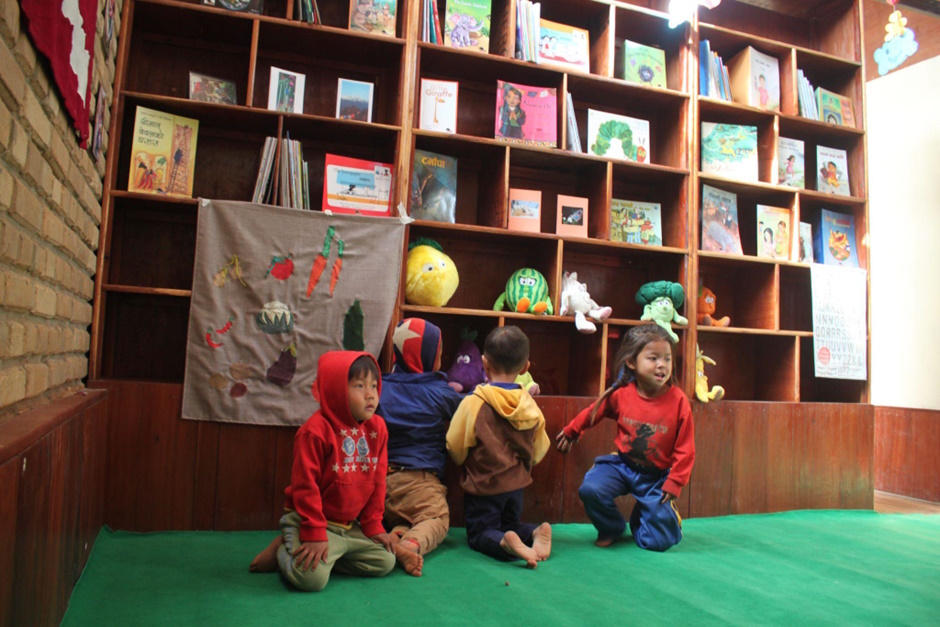
In Kalidevi, together with the teachers, we set up a library with only picture books in Nepali and English. The room also functions as a kindergarten classroom.
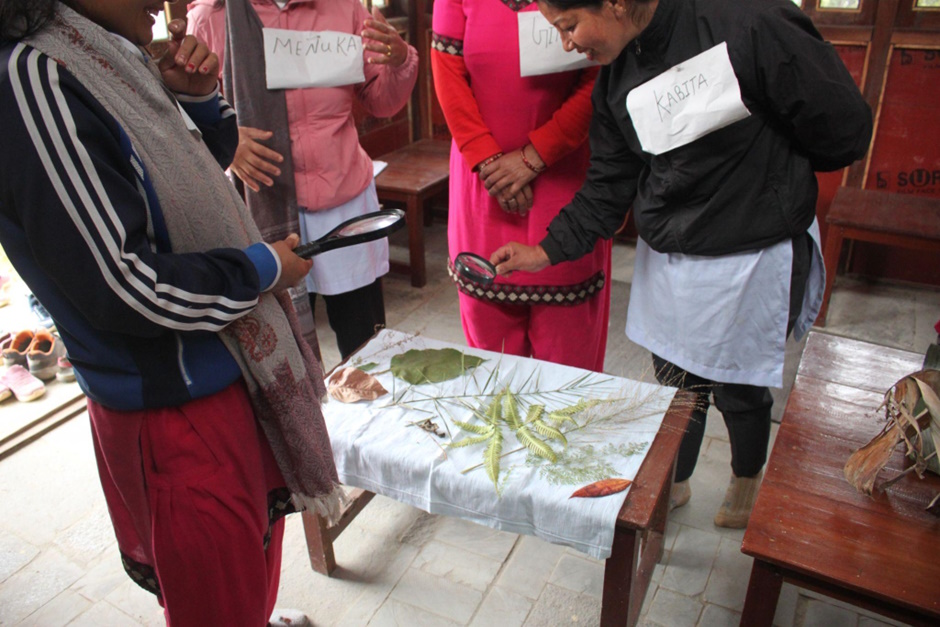
Teachers collect materials for a nature table / display table. It is one of the ways to teach children about their own environment and make education child-centred.
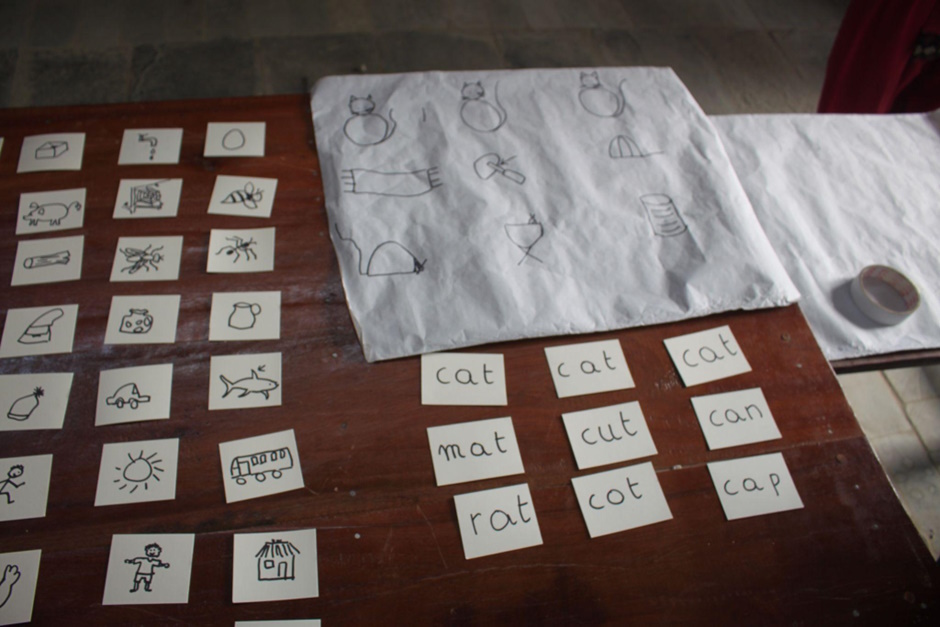
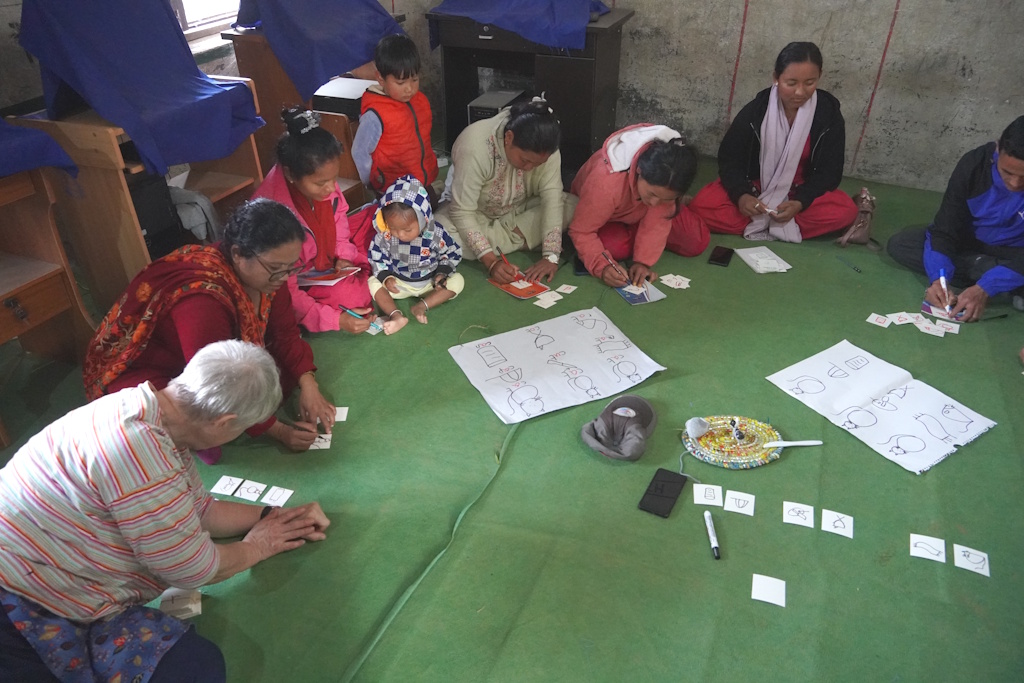
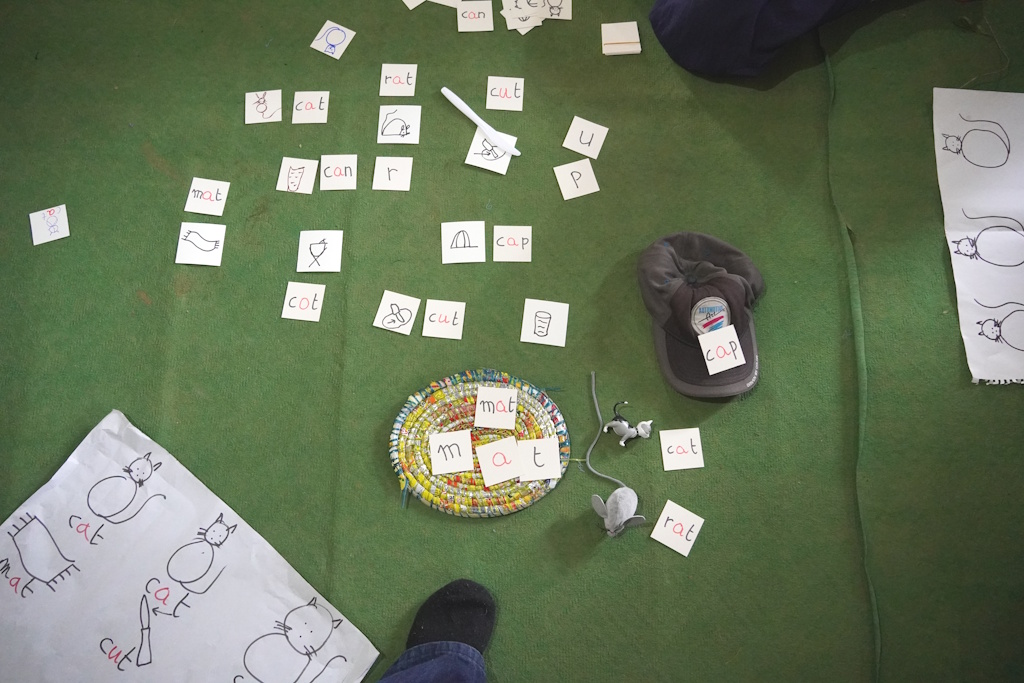
Three-letter words are a way to make learning to read easier. We make simple drawings to go with the words. Without exception, the teachers take a picture of it! Then they make their own cards.
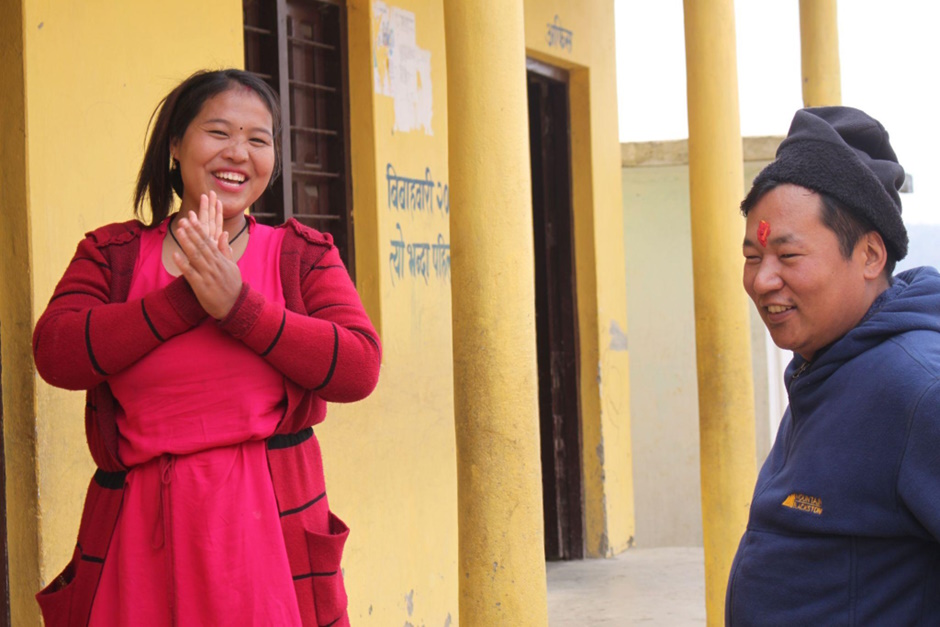
After the formation, we visit all the schools supported by CEPP in a particular area. Here, Michael Rai accompanies us.
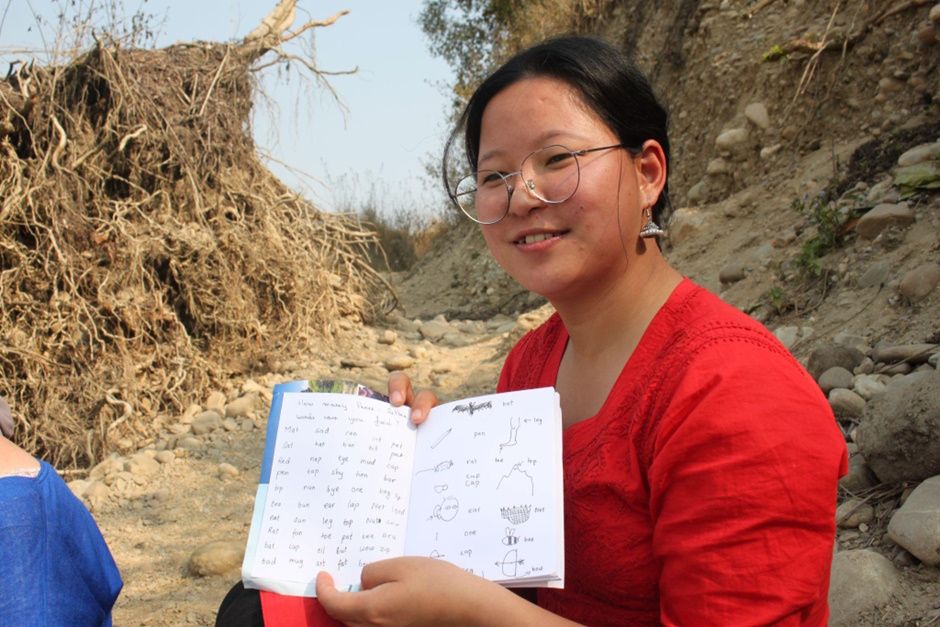
In a notebook, Smarika notes everything she finds interesting about the teacher trainings.
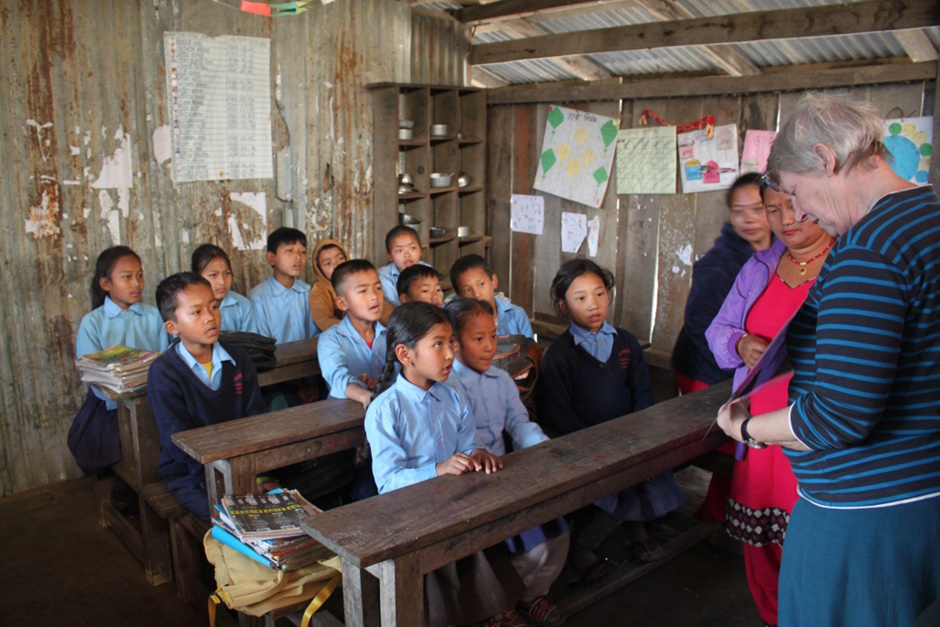
We often go from class to class with the teachers and organise activities together such as teaching an English song or reading a picture book aloud.
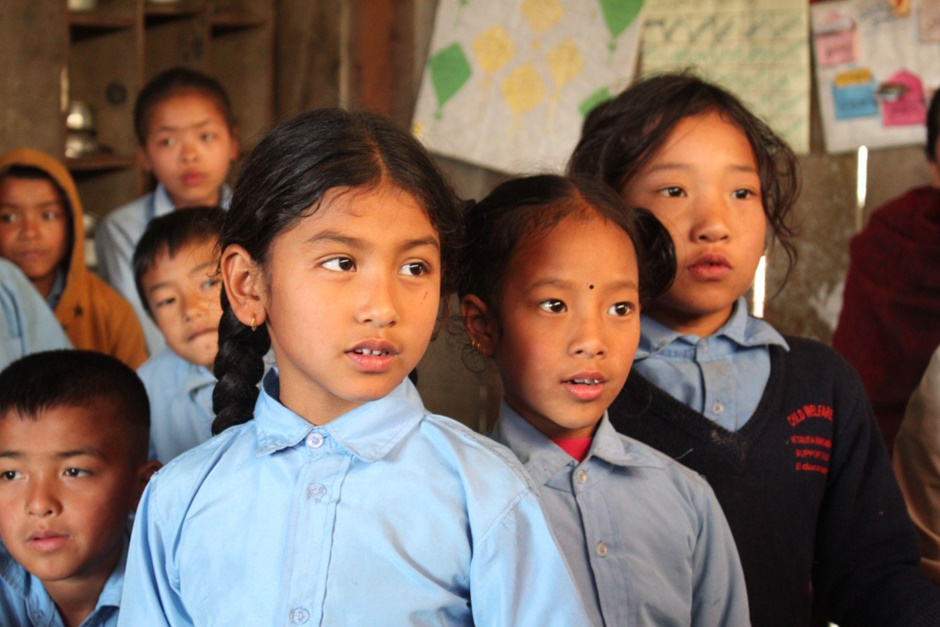
The children's enthusiasm is then our greatest reward.
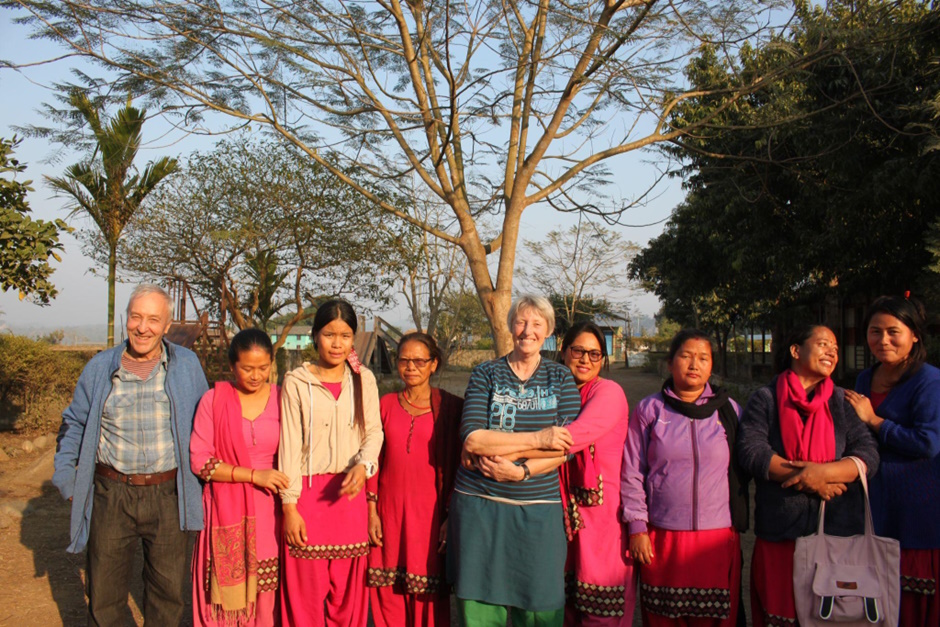
And teachers' friendship...
Do you also find the operation of the Centre for Educational Policies and Practices valuable? Donations are welcome on the account number BE32 2200 7878 0002 of BIKAS npo, with the mention From School to School.
Thank you very much!
Paul Beké and Carine Verleye
Update February 2024
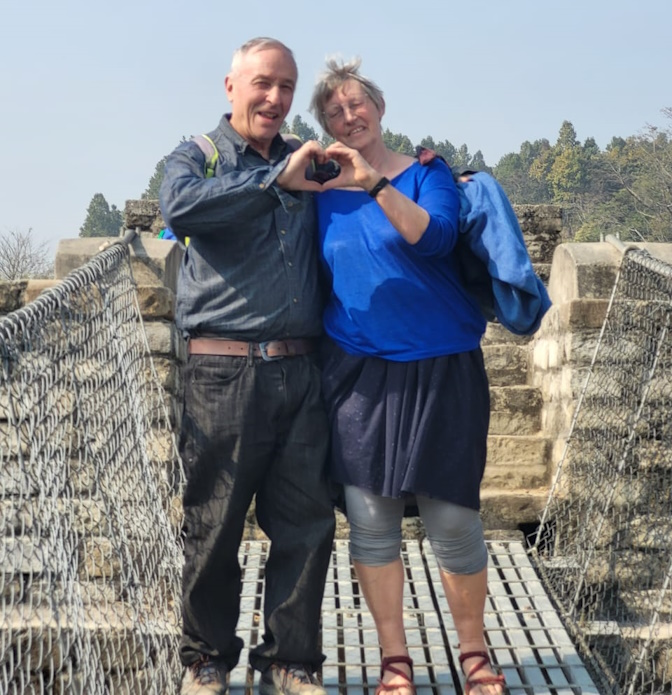
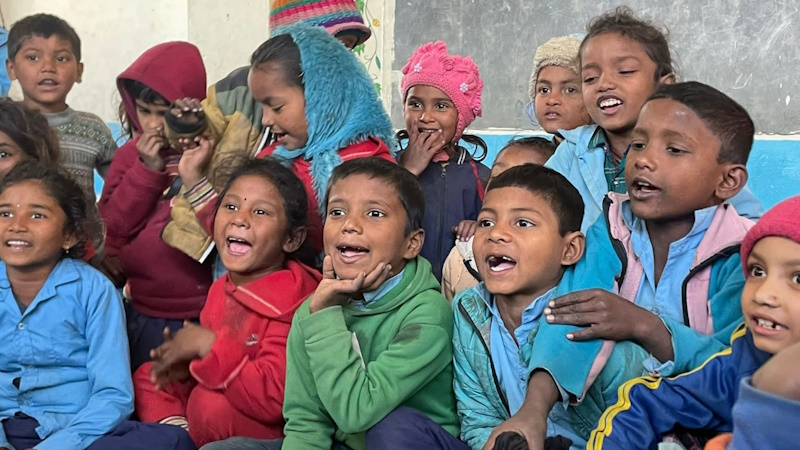
Carine Verleye and her husband Paul Beké were on a working visit to Nepal during the month of February. They sent us these photos. In the next magazine, Carine will report in detail on their visits to schools and their consultations with teachers, supervisors and parents.
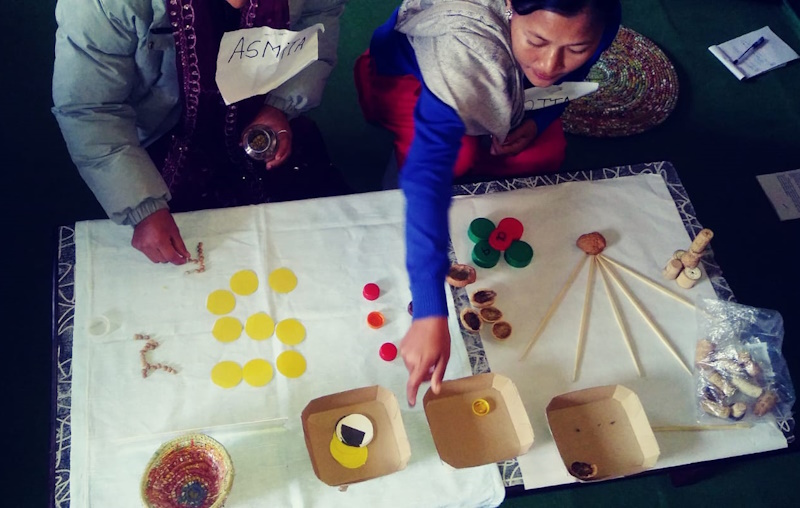
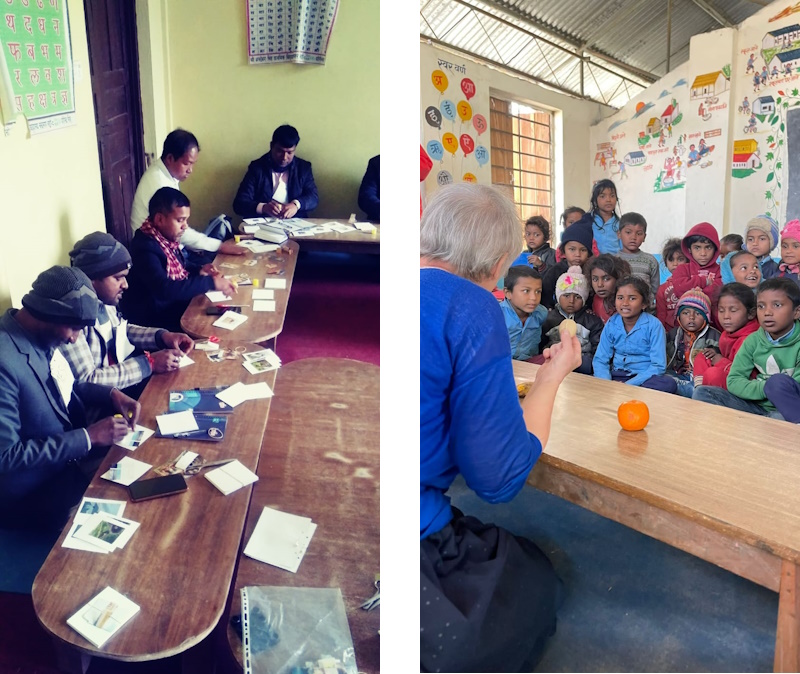
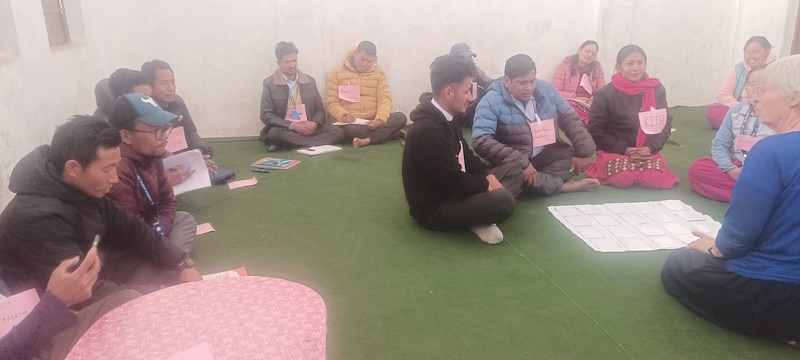
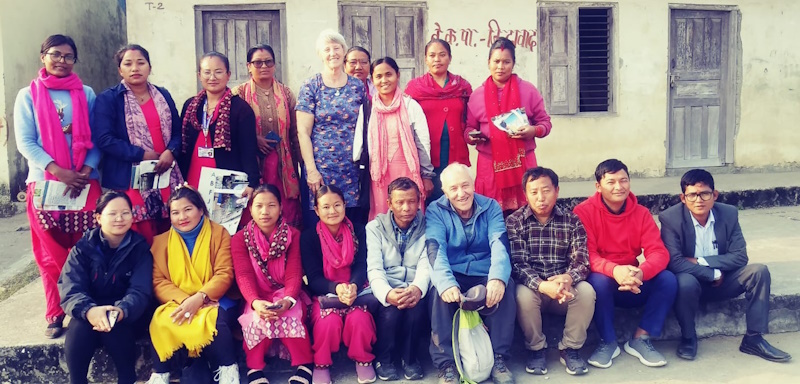
A, b, c and so much more
December 2023
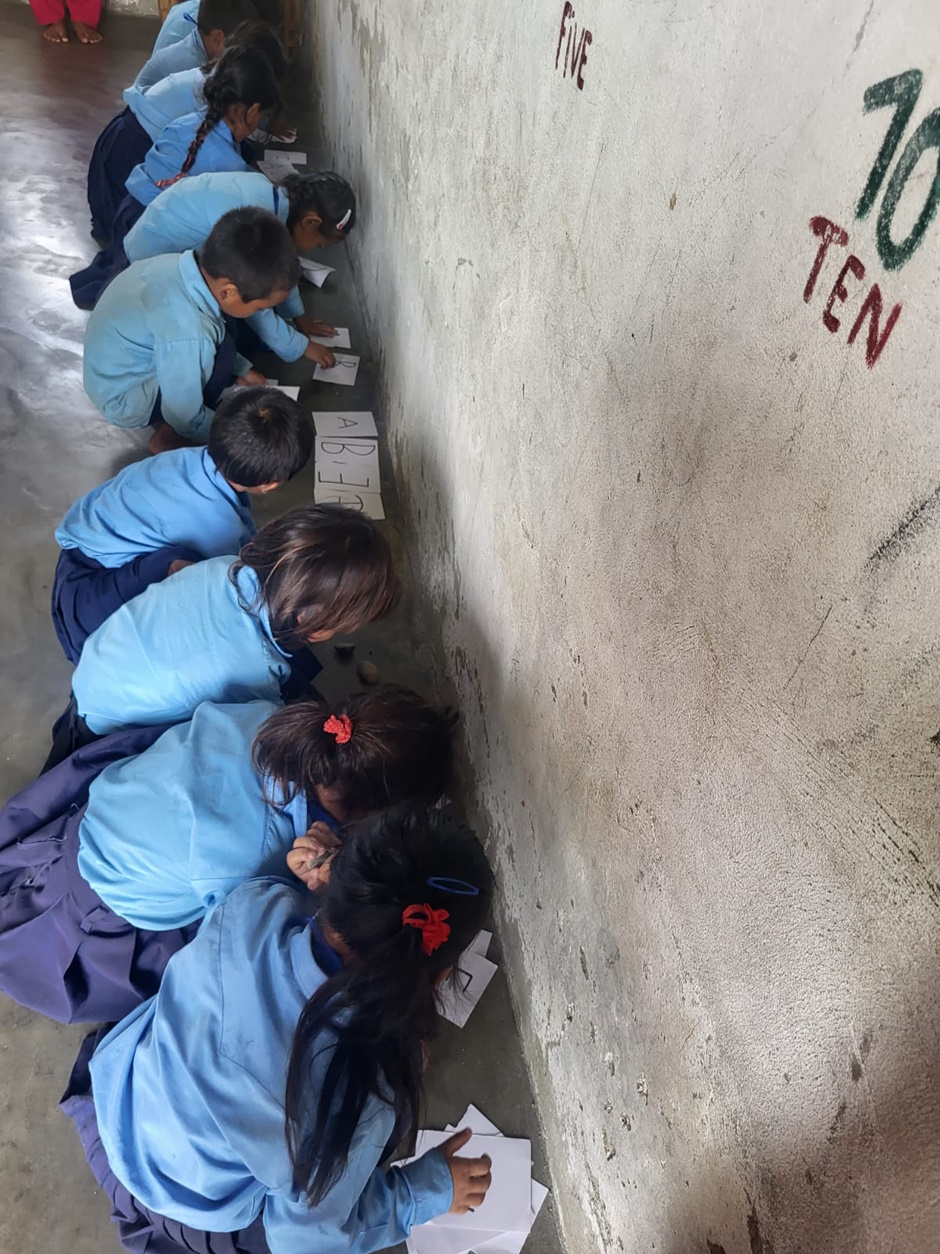
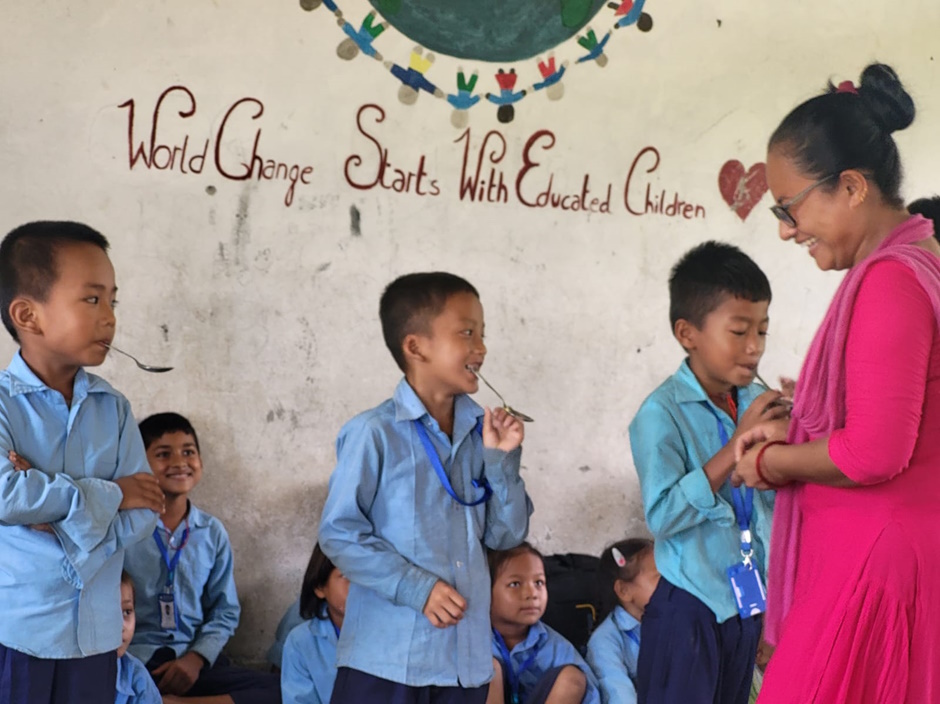
September 15 is Children's Day in Nepal. Smarika Limbu, educational officer of CEPP, gives an activity that the children enjoy in all classes from first to fifth grade in Janjyoti School, Hakpara, Sindhuli District. In the second grade, the children learn to put a thread in a needle, in the 3rd grade they have a spoon race (you can see it in the picture at the top of this article), in the 4th grade they play a memory game and in the 5th grade they indulge in a musical chair dance! The first grade children put cards with the letters of the alphabet in the right order.
In addition to improving the quality of education, our Nepalese partners are also strongly committed to improving and greening the school environment.
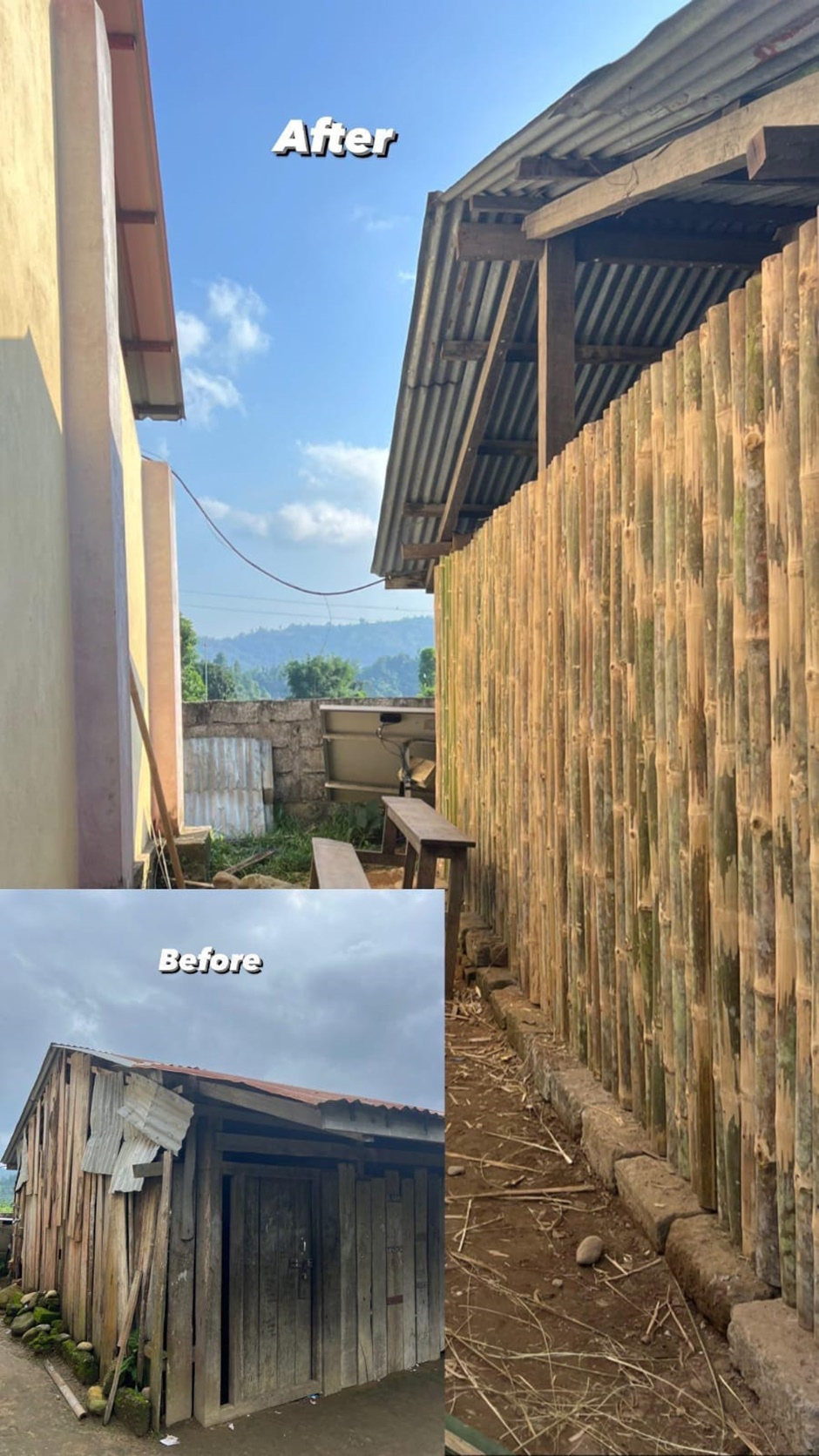
This is what a school building in Devihit looked like before it was repaired and renovated. Find the seven differences!
When it comes to subject didactics, there is not so much expertise in Nepal. Via Whatsapp, we therefore collaborate with the field workers of the Centre for Educational Policies and Practices: we exchange experiences and ideas.
Smarika: Share your ideas with me too. I would benefit a lot from them. We: I think this way of communicating is interesting for both of us. I don't claim to know better. Your reality is not my daily reality.... But by now we have built up some experience 'in the field' :)) I think it would be helpful if you clearly state what specifically you want to discuss.
Smarika: I want to connect the textbook and the curriculum, which will help them understand their course, enhance their creativity as you said and make the classroom environment more joyful.
We: Which textbook Smarika? English? Because I can't read Nepali.
Smarika: The textbooks of all subjects. But we can start with English.
We: Maybe we can start with English for class 1 and/or 2 and/or 3. Which chapter have the schools reached now? I can also see the textbooks on the internet, with OLE Nepal
Smarika: We can start with the first grade. Most teachers have not started the book yet because they thought children need to know the alphabet before they can start the book.
We: I always advise not even starting with the book. Start naturally: sing a simple English song to the children so that they enjoy hearing another language and become interested. Repeat the same song often and gradually make them sing along.
Some clarification: The Nepalese government is heavily committed to digitalisation. For instance, there is a supportive learning platform called OLE Nepal, which stands for Open Learning Exchange Nepal. Among other things, the website offers support for the subject of English. Here you can see an example for the first Unit of the English textbook for the first grade:
https://epaath.olenepal.org/subjects.html?sub=english&lang=en&grade=1
The Nepalese government is also increasingly pursuing English-medium education, i.e. the use of English as the language of instruction. This is already often the case for urban public schools, but unfeasible for rural public schools, partly because few teachers have a (good) command of English. Teaching everything in English is impossible for them. Even practising letters poses a problem.
We have therefore produced a document called How to get familiar with the alphabet’, which offers a few tips:
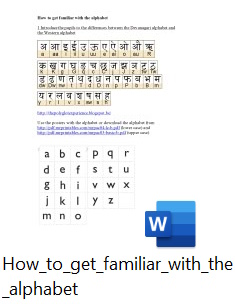
We observed that children learn to read the alphabet as early as nursery school, i.e. the teacher indicates the letters on a poster in the right order and names each letter, and then the children repeat the letter. However, if you show the children a card with the letter p, for example, they have to name the whole alphabet on the poster letter by letter before they can say the letter p. Sometimes 5th-grade children cannot write or read their names in the Western alphabet. That's not so easy either! One difficulty is that English texts can be written in different fonts and then some letters look very different. Our script also has lowercase and uppercase letters, which is not the case in Devanagari. And English has no phonetic spelling at all! One sound can be represented by different letters, as in sea and see and one letter can be pronounced differently, as in cow, not, do and so.
These are a few simple tips on initial writing that can easily be transferred from the Flemish situation to the Nepalese situation:
- Walk a letter, e.g. o or m (Let's walk 'o' - do it together)
- Can you draw the letter in the air (Let's draw 'o' in the air)?
- Can you draw it in the air again, but smaller? (Let's make it smaller)
- How small can you get? Can you draw the letter on the blackboard, playground, etc. with chalk? First draw it as big as possible and then make it smaller.
- Put a bucket of water on the table. Ask students to write letters with water.
- Paint letters with clay. Make letters with pebbles, with leaves etc. (Let's write 'o' on the ground, with chalk, with water, with clay, with stones...)
- Write letters on small cards.
We also like to share the following activity:
Read it, make it, write it.
- Give students an alphabet on small, well-mixed cards. The same letters are on an alphabet poster. Then ask them to put each letter on the corresponding letter on the poster.
- If teachers/children know the alphabet, have them recite it or sing it! Then you can ask students to make words. The teacher reads the words aloud. The teacher asks the pupils to read a word, to make it with the letter cards, to write it
Communicating subject content through Whatsapp is a simple way of working, but interesting for us and hopefully motivating for our Nepalese partners.
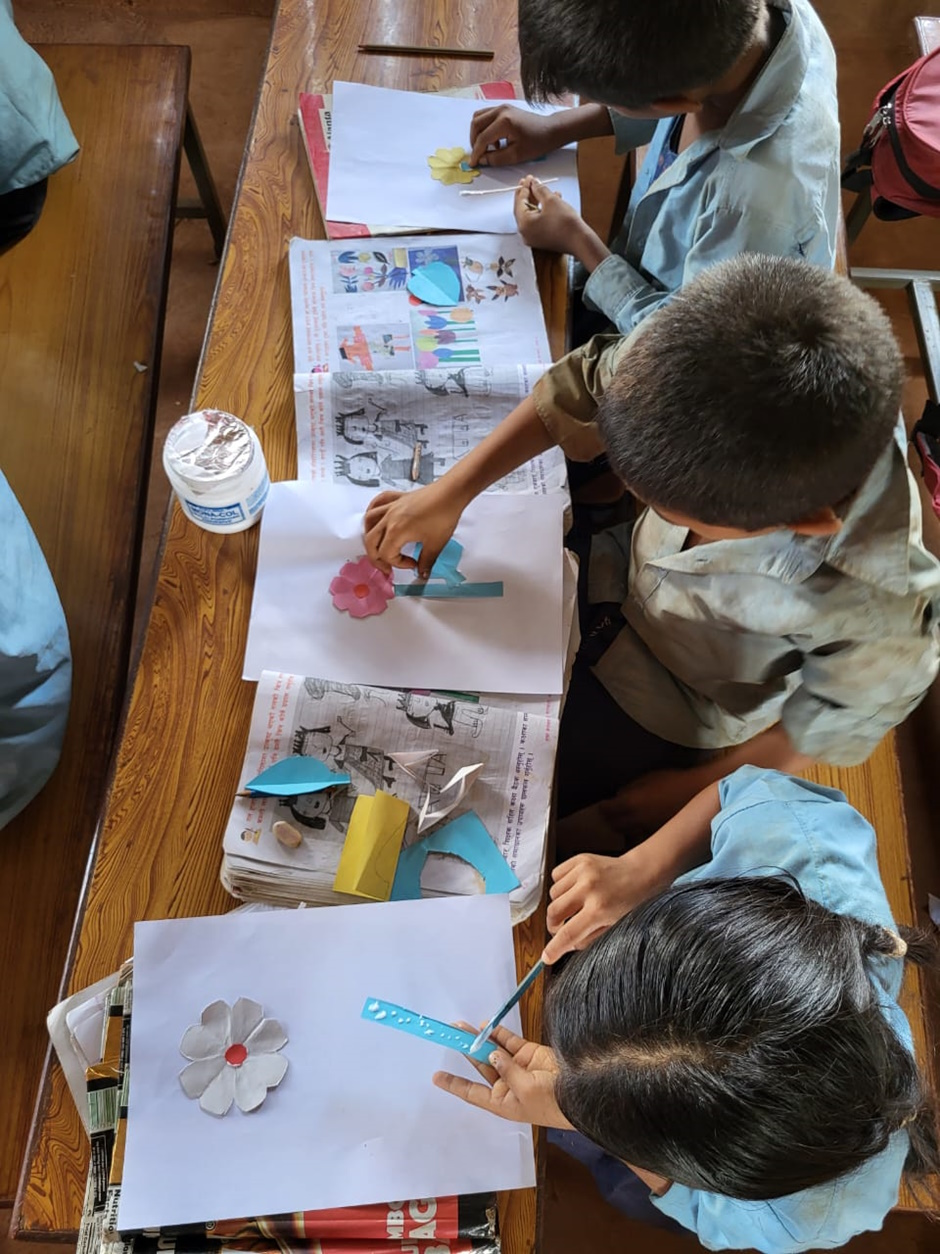
Smarika: We did a craft activity in class 3 and let the children work in the vegetable garden. The teacher taught about 'My school', where through these activities they learnt to decorate their classroom with their crafts and take care of the vegetable garden.
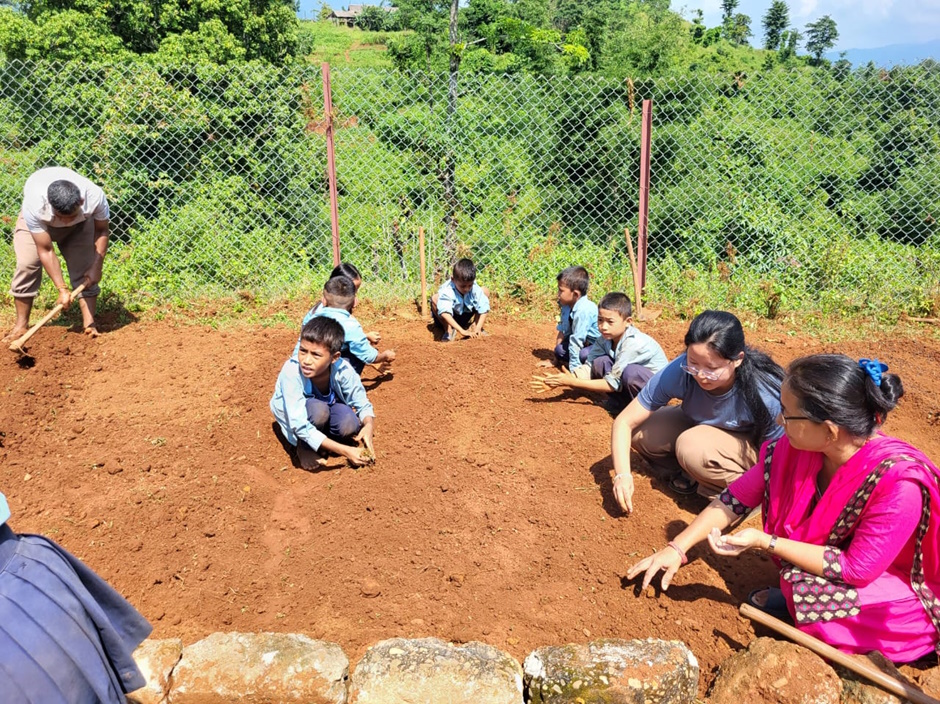
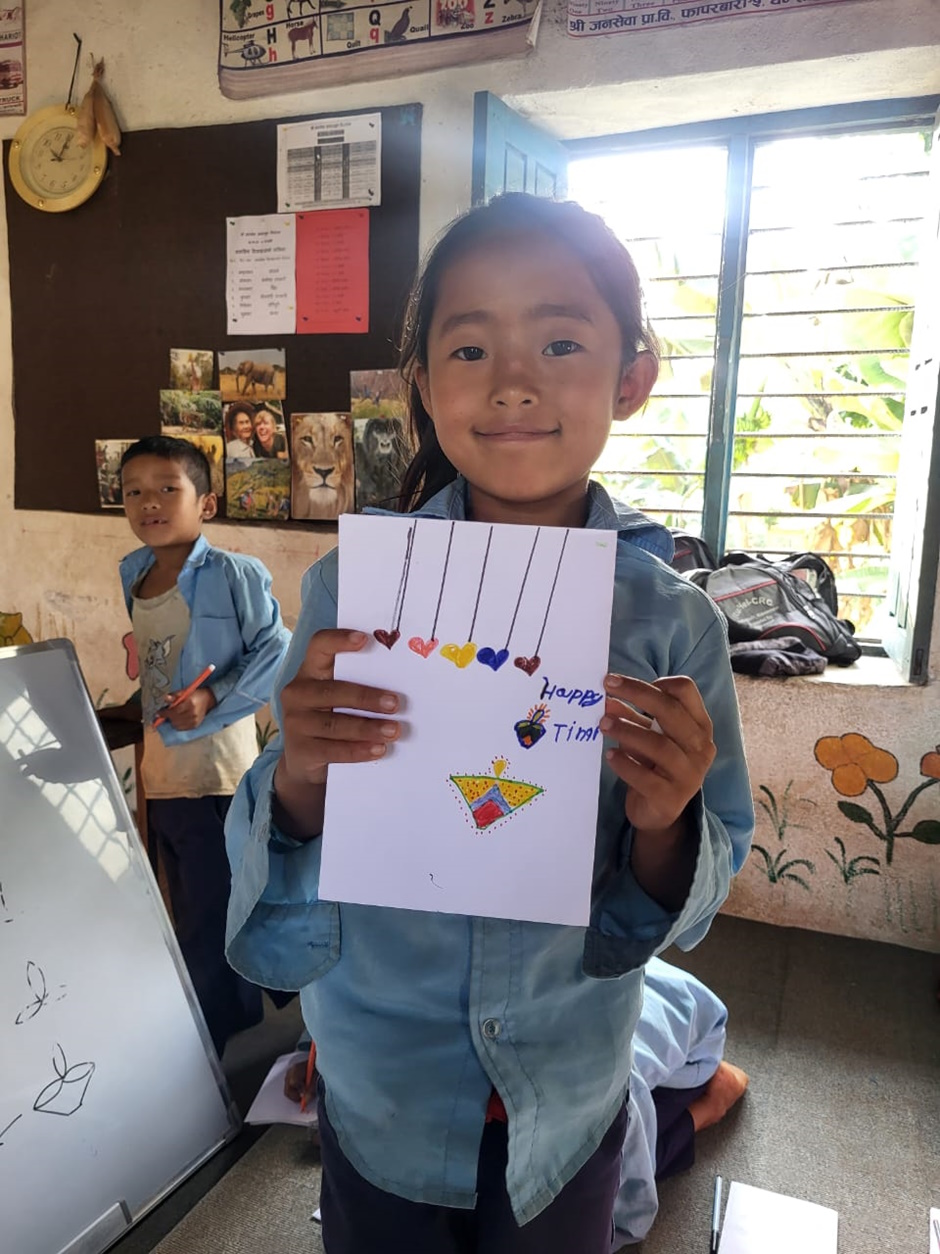
Would you also like to encourage and support them? Your contribution is welcome on the account number BE32 2200 7878 0002 of Bikas npo, please mention From School to School.
Paul Beké, Carine Verleye and Smarika Limbu.
Smarika also took all the photos.
Diary from Sindhuli District
August 2023
Text in italics: Smarika Limbu, pedagogical supervisor, CEPP team member
Photos: Smarika Limbu
Straight text: clarification by Carine Verleye, board member of Bikas
CEPP, the Centre for Educational Policies and Practices, operates in several districts. The newest working area is Makwanpur Gadhi, in Inner Terai: south of Kathmandu and where the plain changes to the hills. We reported on this in the previous edition of the Bikas magazine. Now we turn our attention again to the adjacent district of Sindhuli, where CEPP has been working for several years in various rural government schools with students, teachers, management and local authorities with the aim of improving the quality of primary education.
This time we would like to let Smarika Limbu speak. She is one of the newest team members of CEPP and takes on the responsibility of pedagogical support for these schools.
She regularly sends some photos via Whatsapp for information, along with some explanation. It's like a diary!
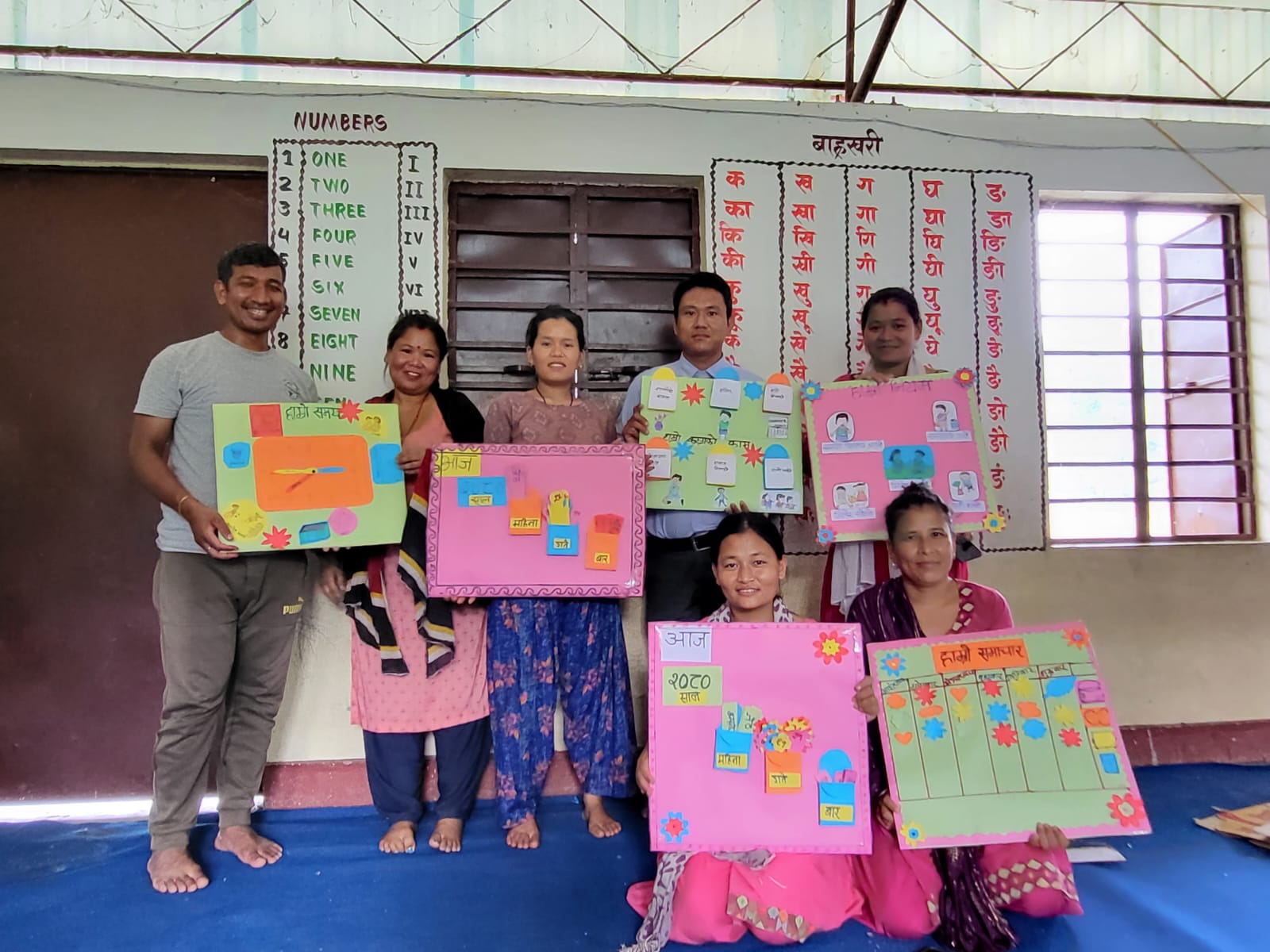
CEPP organizes various practical training activities for teachers. These are accessible to the teachers of various schools in the district and are organized on request and in consultation with the headmasters and local authorities. Smarika follows up and ensures that the acquired knowledge is effectively applied and finds its way into the classrooms in the form of colorful didactic materials made by the teachers themselves.
Some photos from my visit.
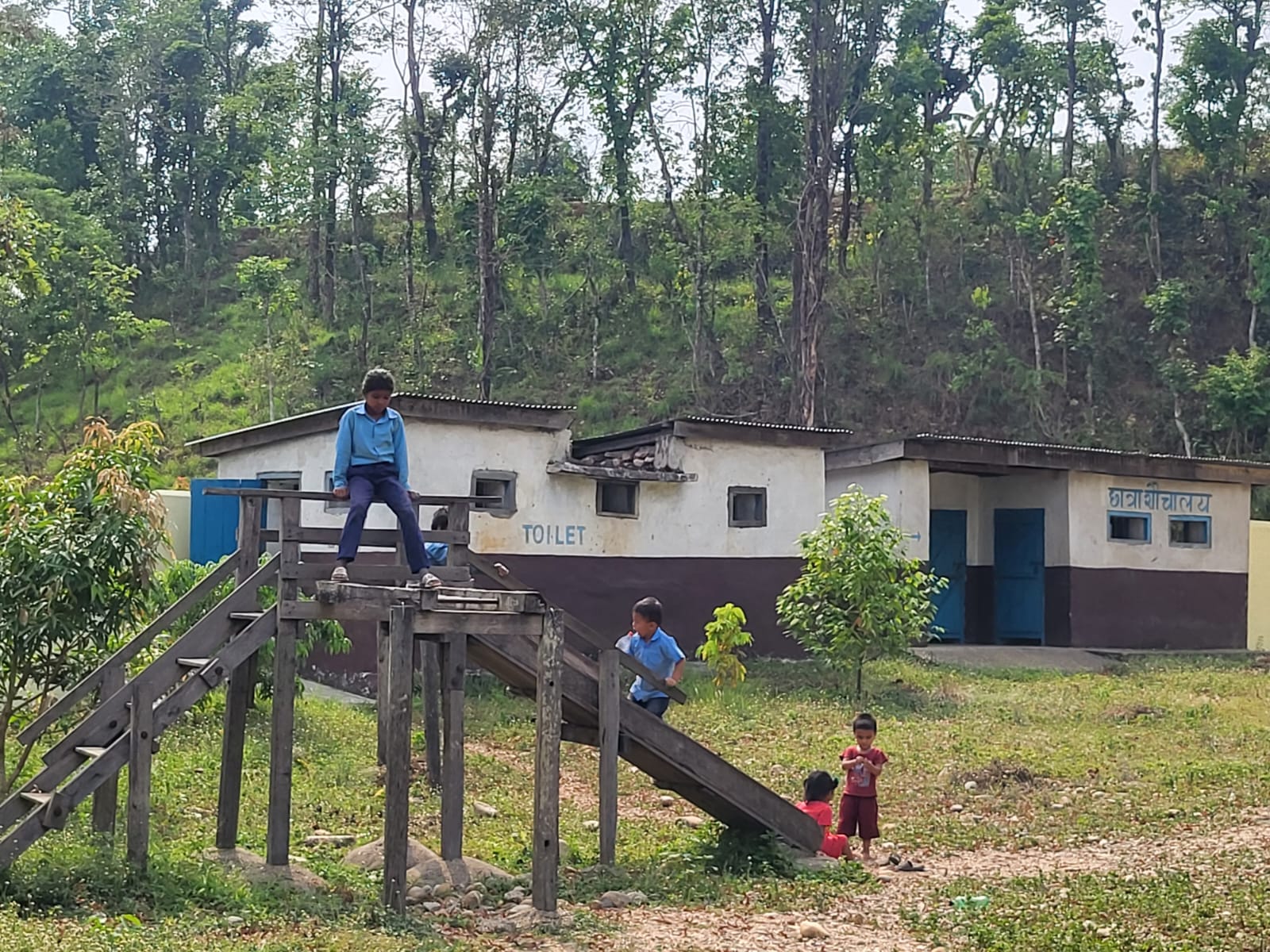
Smarika and other team members regularly visit various villages in Sindhuli District from their local base to motivate the communities. A playground made of recycled wood makes the school even more attractive for the children.
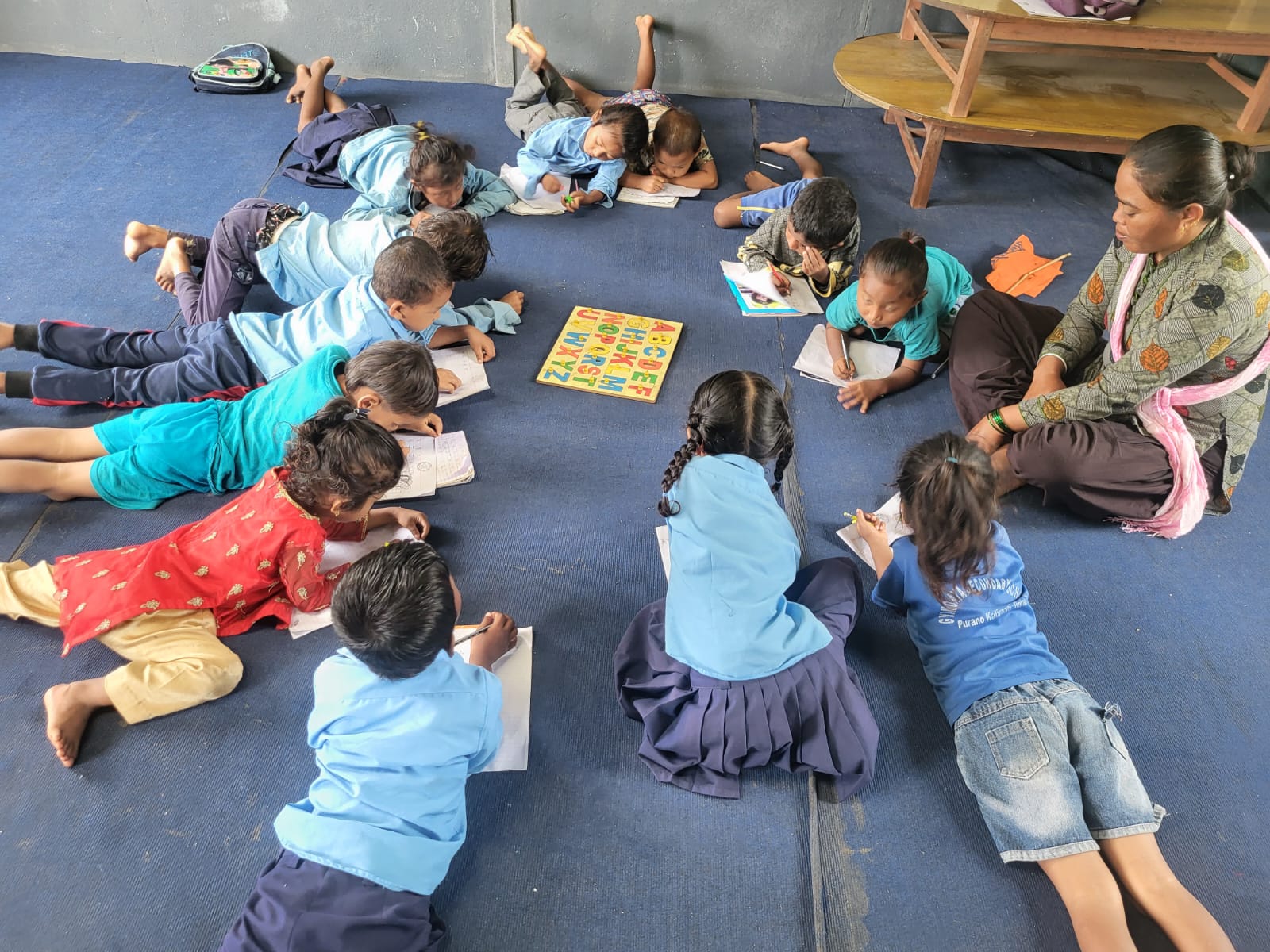
The relaxed atmosphere is striking, a great contrast to the usually strict attitude of many teachers. The children do not sit at school desks, but lie on the carpet (good against dust). Not all of them are wearing uniforms. Purchasing a uniform can be an obstacle to schooling because of its cost and because it is compulsory in some schools.
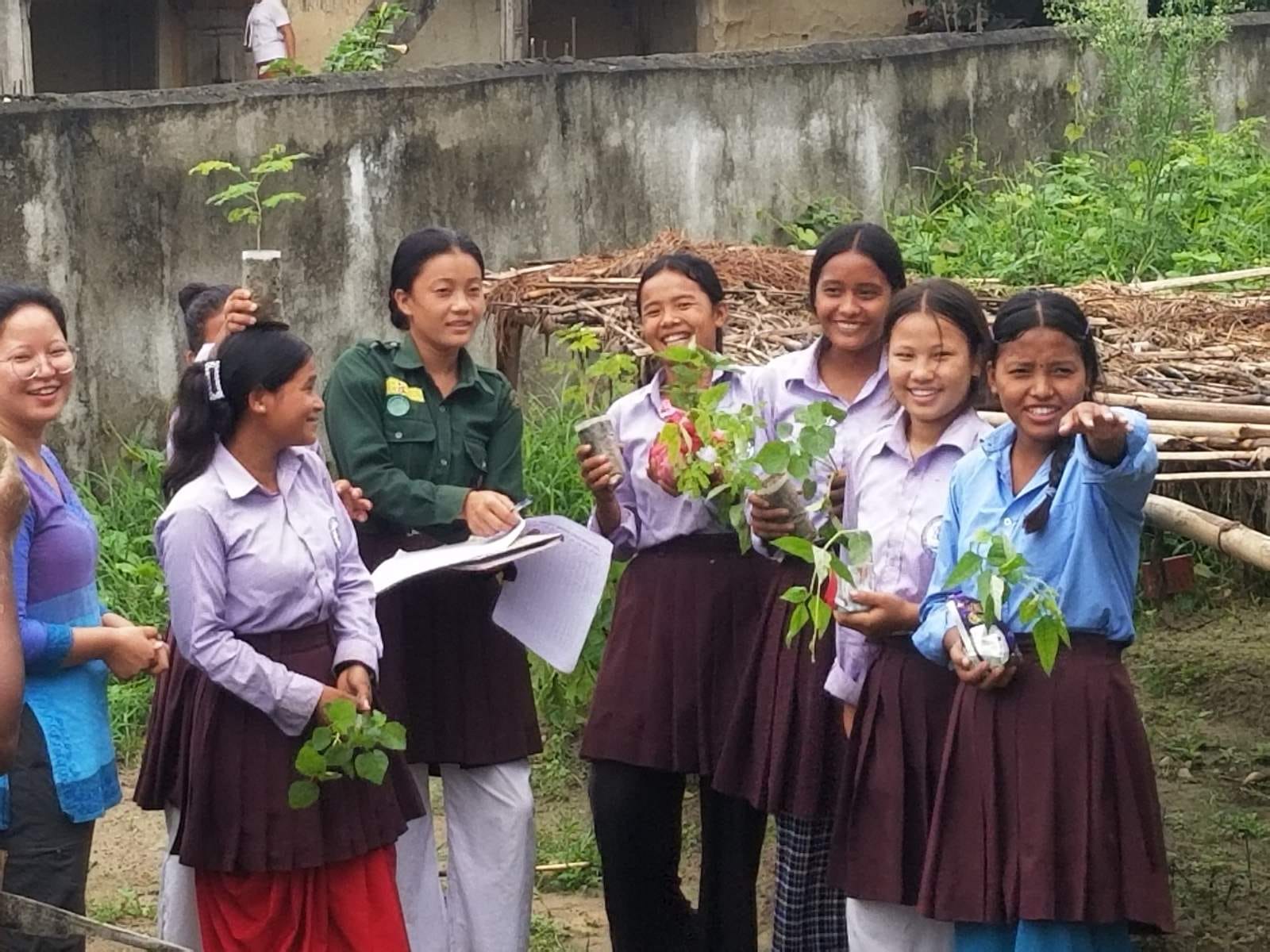
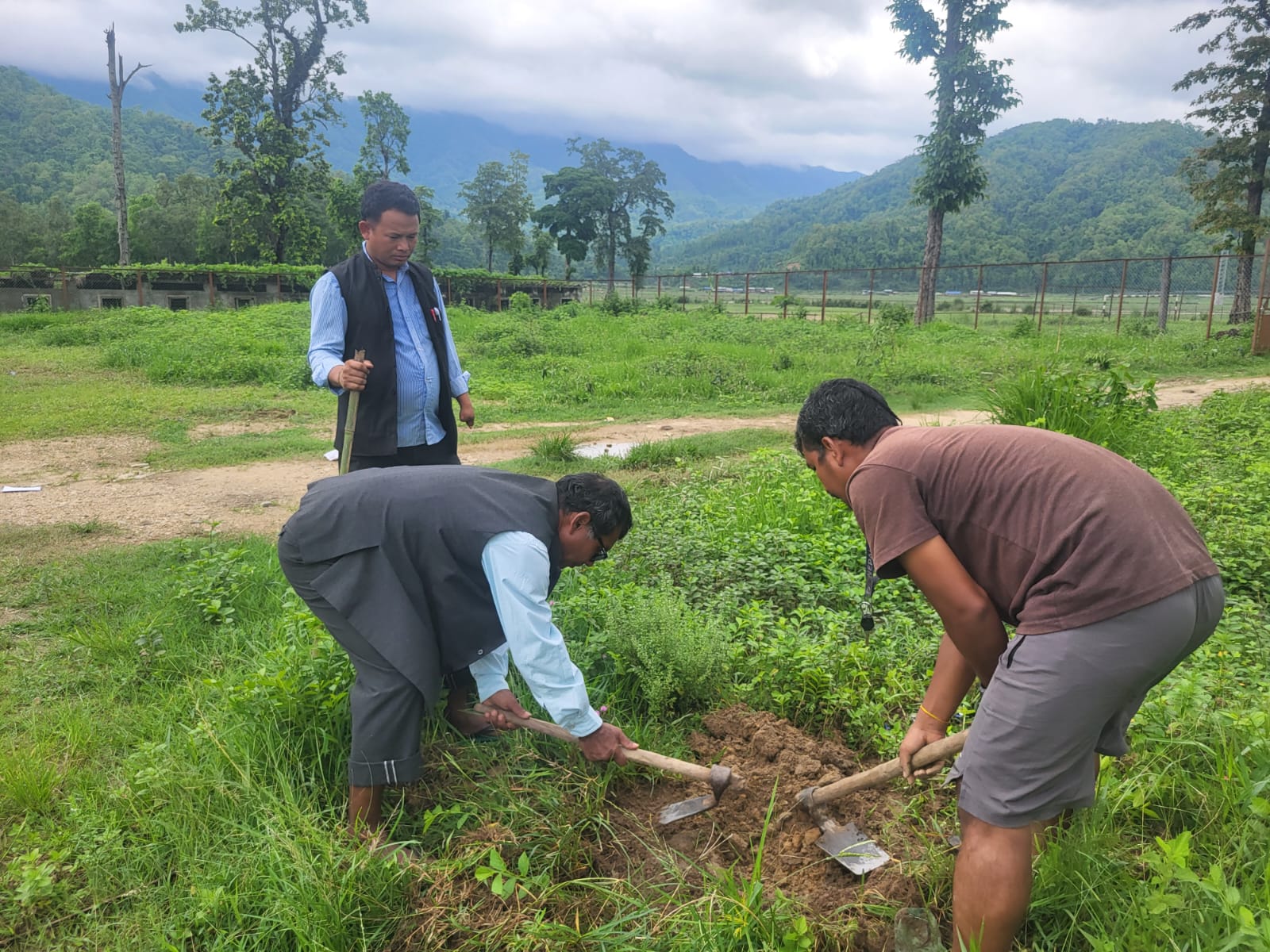
During the dry season the trees provide shade. The school takes care of the plantings together with the parents. Sometimes they are also fruit trees to enrich the children's diet.
Dear readers, underneath you will also find some small films about the activities in Sindhuli
Your support is welcome on the account number of Bikas npo. If you mention “From School to School”, you are directly helping to raise the quality of education in the schools of Makwanpur Gadhi and Sindhuli District. We also consider it as a token of appreciation for this initiative. One family has recently started supporting us with a monthly deposit. That is a formula that guarantees continuity, thank you! A (possibly combined) gift of 40 euros or more is tax deductible.
We wish you a nice Indian summer!
Paul Beké and Carine Verleye
May 2023
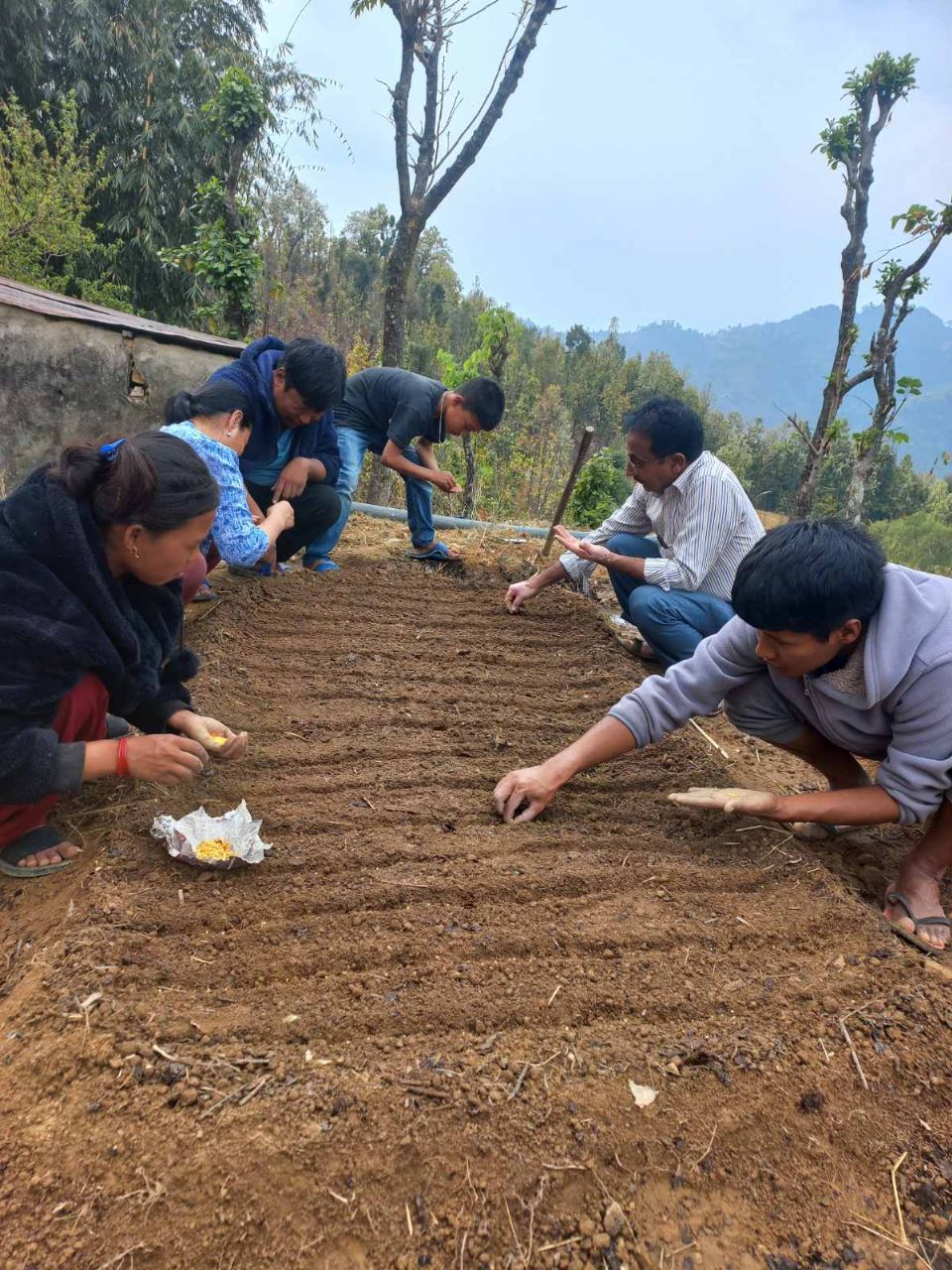
The planting season has begun in Nepal. And so also in Makwanpur Gadhi schools. Since January, the Nepalese Centre for Educational Policies and Practices has been working there with the teachers, parents and students of six government schools, in a brand new initiative. BIKAS supports CEPP in their operation, which aims to improve the quality of primary education in these remote schools and to encourage solidarity within villages. CEPP has named this project, which is a continuation and extension of its support to Kalidevi School in Chapp village (see https://bikas.org/EN/From_school_to_school) PACE Gadhi: Parental Awareness for Children and Environment in Makwanpur Gadhi. Makwanpur Gadhi is a region south of Kathmandu and northeast of Hetauda, one of Nepal’s larger industrial cities, in the transition between the Terai plain bordering India and the high mountains of the Himalayas.
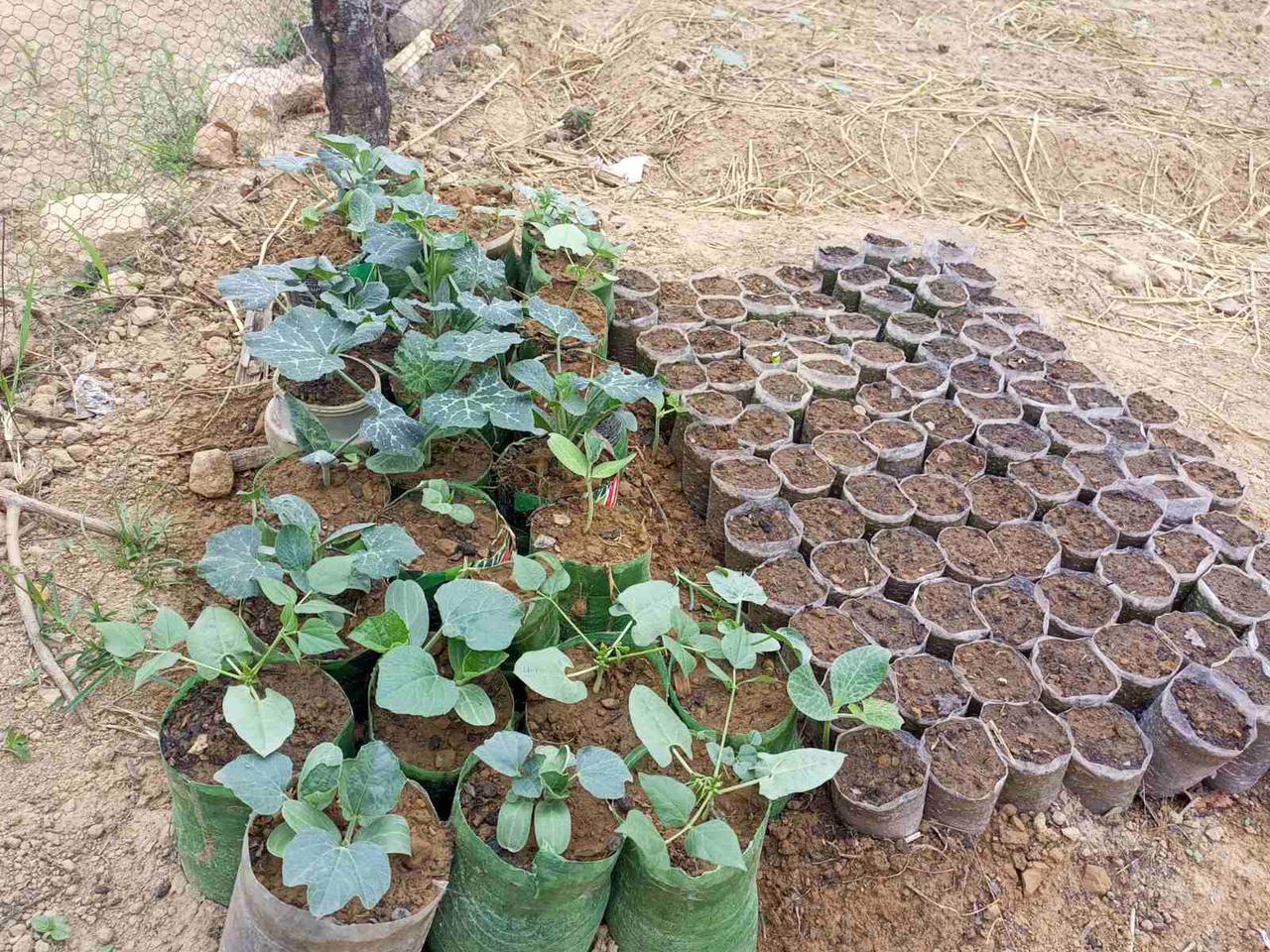
Living conditions are very different according to the geographical peculiarity of a region. Therefore, the Nepali government has now chosen to add a ‘local’ component to school education as well and to teach the children about their own environment. CEPP has found that establishing school vegetable gardens brings the community together. In Makwanpur Gadhi, Rishi Adhikari, permaculturist and Teeka Bhattarai’s long-term environmental associate, is responsible for this component of the project. Growing a wide variety of vegetables, in an ecological manner (i.e. without fertilisers and pesticides), gives hope for a green and healthy future. By working together for the vegetable garden, teachers and parents come to respect each other for their expertise and work ethic. For the children, it is a hands-on experience about agriculture, biology and ecology. And participating parents get planting material to take home to make their family's diet more varied and balanced.
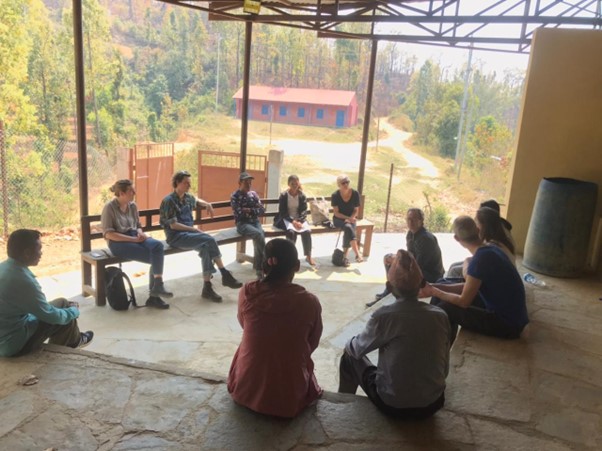
Between 2010 and January 2020, more than 100 students from Flemish colleges did internships in the schools CEPP works with. Students from Luca School of Arts in Ghent, Artevelde Hogeschool in Ghent, Odisee Hogeschool in Brussels, Erasmus Hogeschool in Brussels, the Department of Architecture at KULeuven brought their enthusiasm and practical knowledge to Nepal while simultaneously broadening their view of the world and discovering new perspectives on education. Nepalese pupils and teachers and Flemish students inspired each other and developed a network of solidarity. That exchange fell silent due to the pandemic, but in April 2023, six teachers from Luca School of Arts went on another prospecting trip to Nepal. In the picture, they discuss in the small amphitheatre attached to Kalidevi School with parents, teachers and CEPP staff members to see if the conditions are favourable to organise placements again. An exchange 'from school to school'!
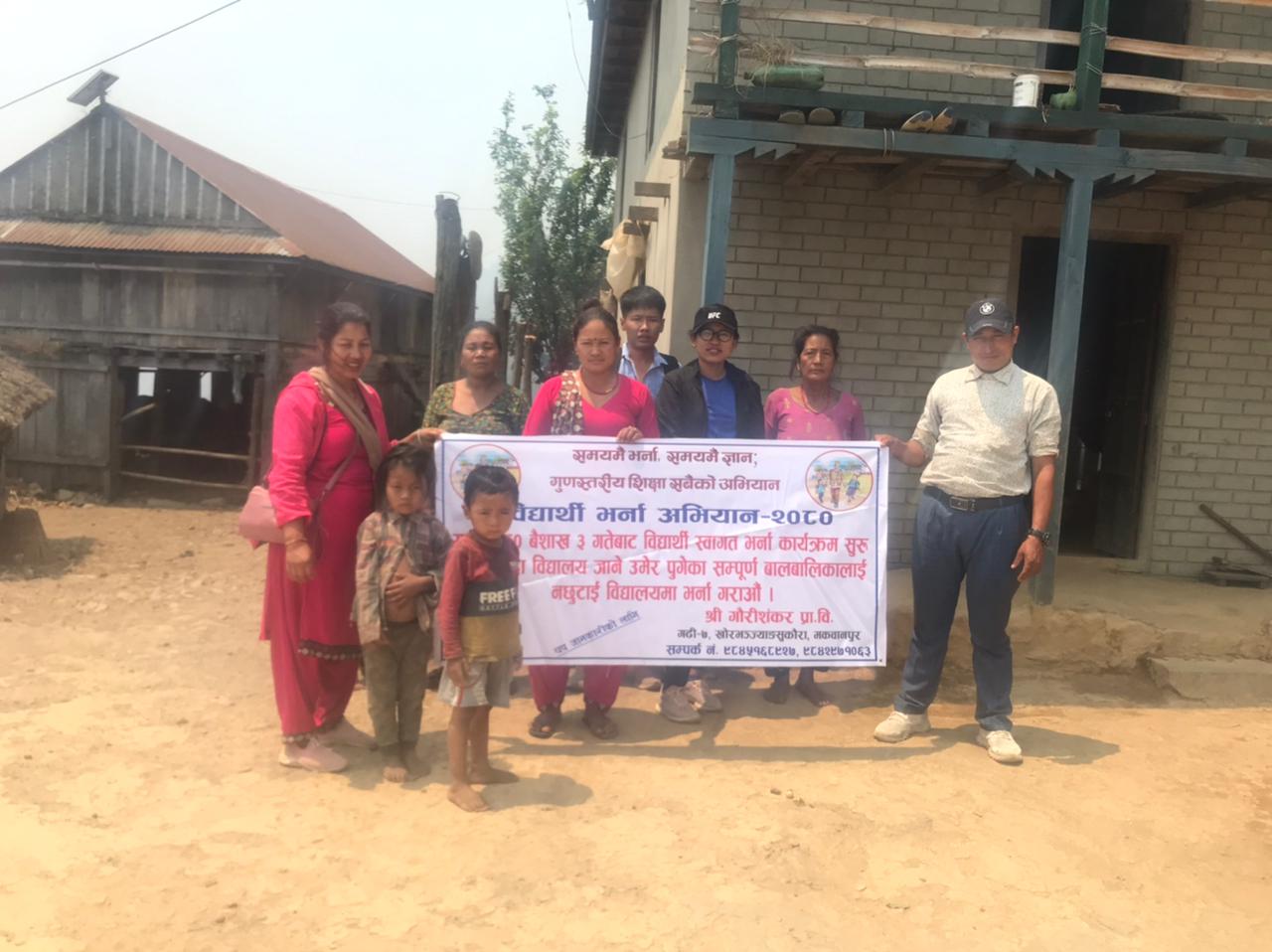
Nepali New Year falls in April, and April also means the start of the new school year. Every year, the government organises a campaign to motivate rural parents to send their children to school instead of making them work in the fields only. Parents are well aware of the importance of education, but schools often offer too little quality: children have to learn by heart and the subject matter does not take into account changes in life and society. Linking school education with everyday life is an innovation that should also improve the lives of families.
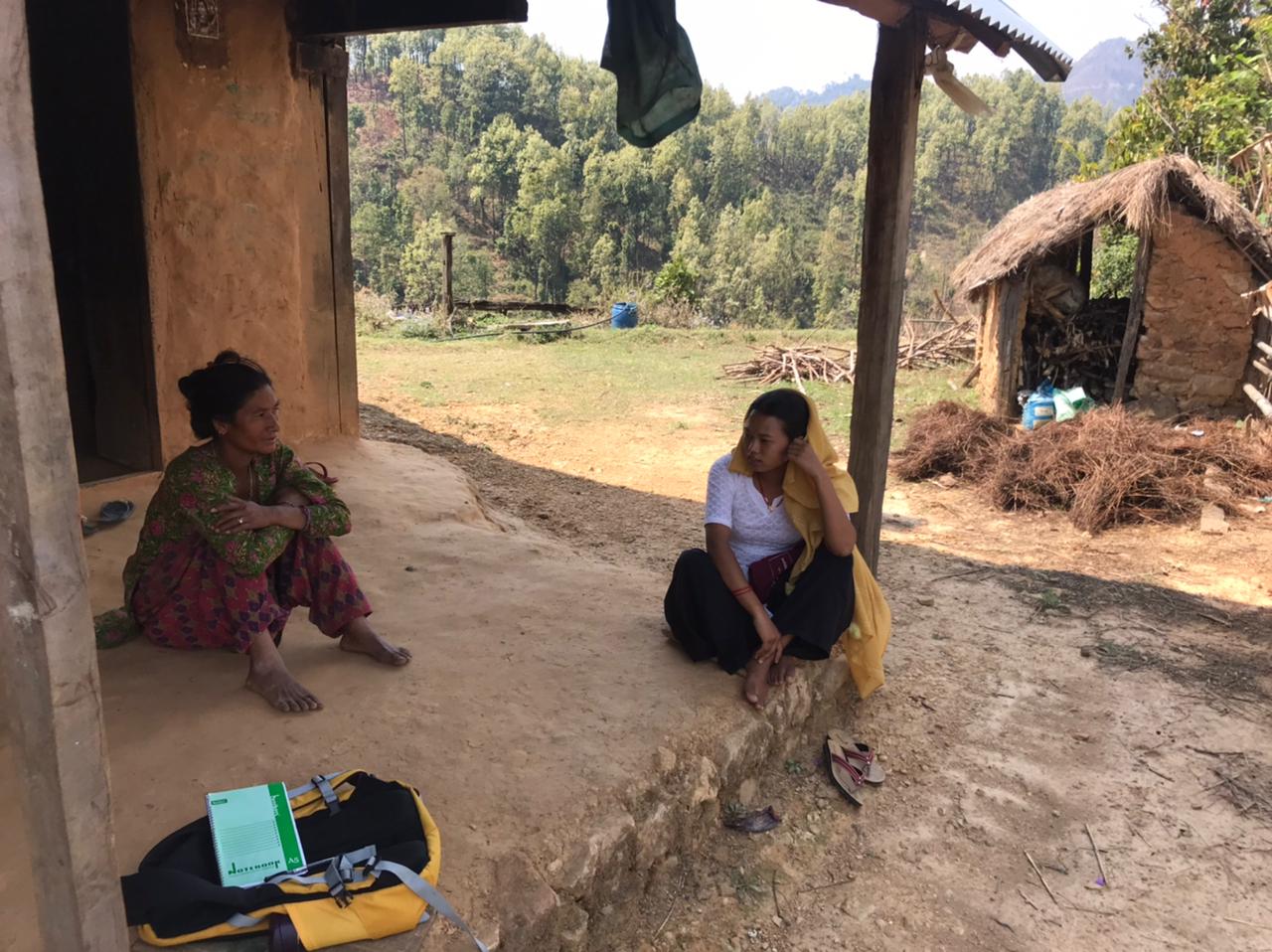
Aadi is a new member of CEPP staff too, hired as a 'nursery and parent mobiliser': she is co-responsible for the plant nursery that supplies schools and households with planting material. Here she is on a home visit. She goes 'from house to house', to talk to all the parents of each of the six villages in this new area of operation about their ups and downs and to increase their involvement in the school. The link between the school and the community is essential. Most better-off people take their children to private schools. Even the government is not so much interested in the free public schools as their own children also attend these for-profit private schools. Without the participation and control of parents, the quality of public schools may continue to deteriorate. Most of the people in Makwanpur Gadhi are Tamang: they have their own language and distinct culture. CEPP staff members who will be living and working in these villages belong to the same ethnic group, which encourages contact and facilitates cooperation.
At BIKAS, we are happy and curious now that this new project is starting. Would you like to help make it a success, to support the villages and schools in their development, for the benefit of the children? We appreciate your contribution on account number BE32 2200 7878 0002 of Bikas npo, with the mention 'From School to School'.
Paul Beké and Carine Verleye - thank you Chhiring and Teeka for your input.
2022, a year in Hakpara
February 2023
2022, or 2079 according to the Nepali calendar, was the fourth year of CEPP's operation in Sindhuli District, in Inner Terai, the region where the alluvial plains on the border with India merge into the Himalayas. The Centre for Educational Policies and Practices works with several rural schools there, was supported for that region for three years by HeSpace Children's Foundation and the fourth year by Rotary Aalst and all the while also by the small and larger donations of BIKAS sympathisers and our personal fundraising. Global warming and persistent erosion problems affect Nepal greatly. Malaria, dengue fever, landslides, thoughtless use of soil and natural resources are daily problems. This is why CEPP has chosen ecology as its main focus in 2022.
Hakpara Janjyoti Basic School will be a model school for the region. The school used to be difficult to reach, but now the government is also connecting these remote areas to the capital by major roads, and the various villages to each other by smaller roads and bridges over the rivers. That work is laborious: in one village, the road is a bumpy path full of puddles and obstacles; in another, it is almost a highway along which people stroll at night. With the road come benefits: better mobility, electricity, and then Internet. But the road also brings with it plenty of temptations: fast food (think one-man portions of noodles in plastic cups), destruction of (virgin) forest on the planned route, supply of pesticides and insecticides for agriculture... In response to these temptations, CEPP promotes ecological farming as a sustainable alternative.
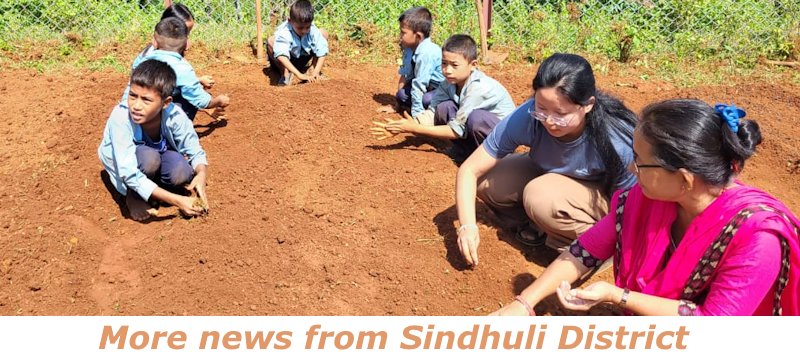
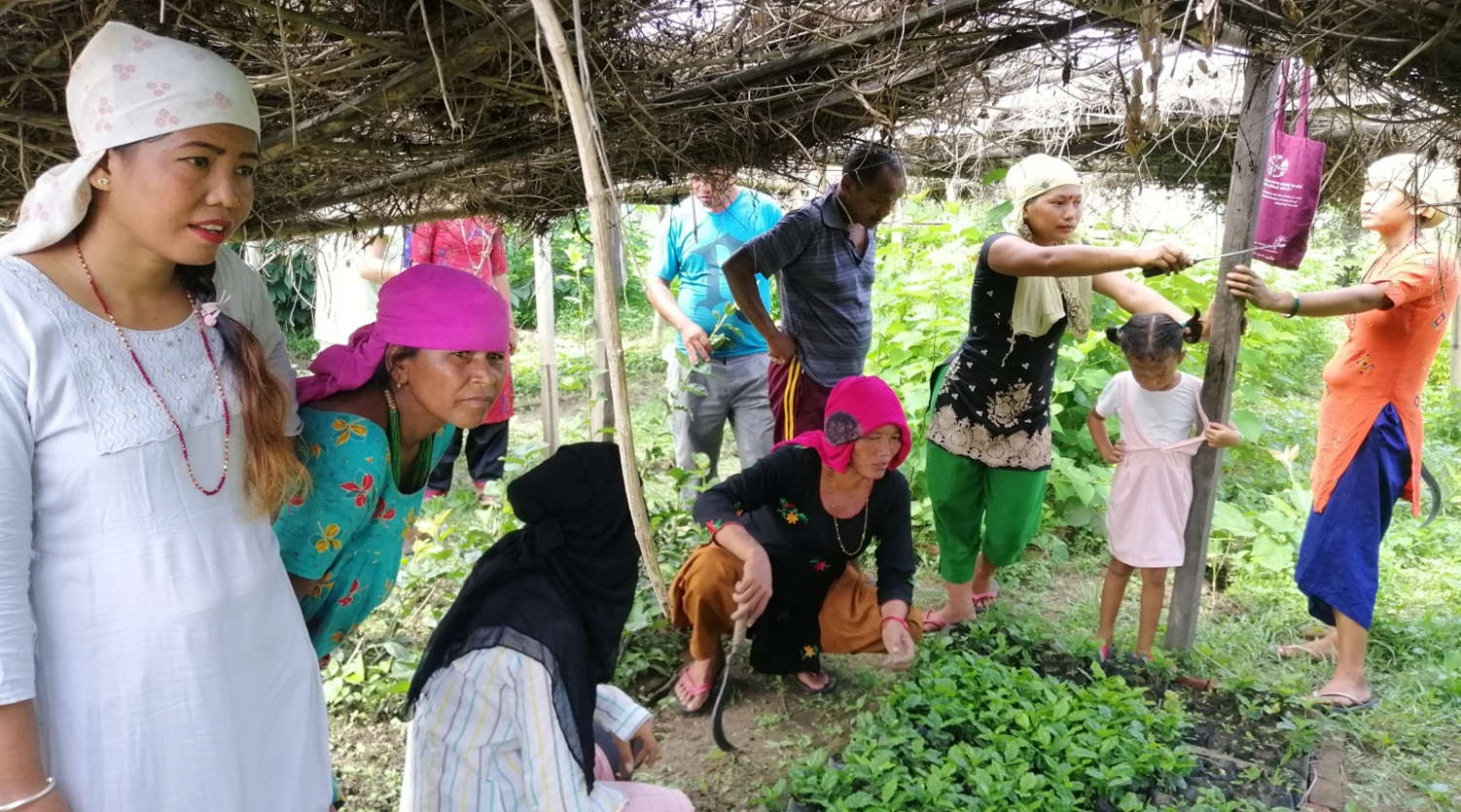
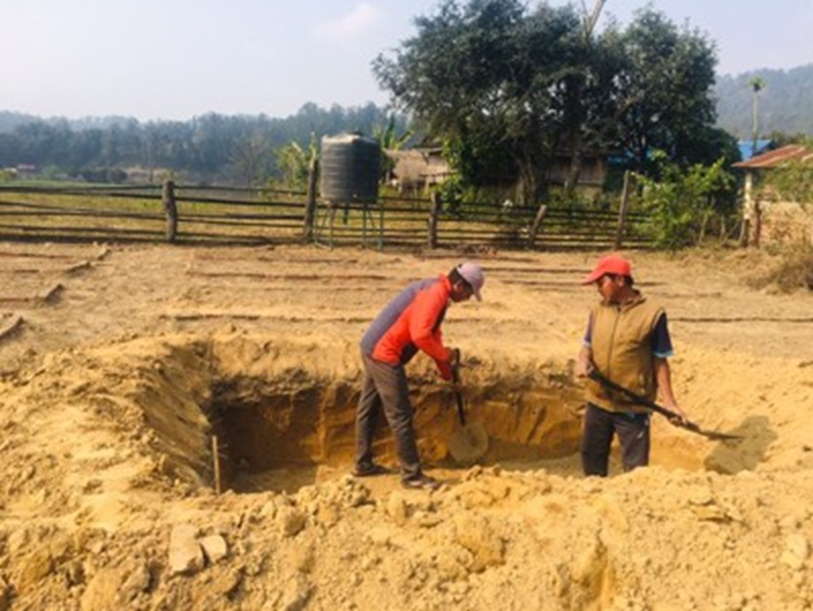
One advantage of this approach is that it strengthens the local community. Establishing a school vegetable garden requires preparing the soil, and a fence to keep wandering cattle away from the plants. For that hard work, teachers and parents cooperate.
In the picture at the top of the article, we see the mothers at work. An added motivation is that they are also allowed to take some of the young plants home with them, thus creating their own vegetable garden (kitchen garden) to make their family's diet more varied and thus healthier.
A tree nursery should enable the greening of the school environment in several schools in the area.
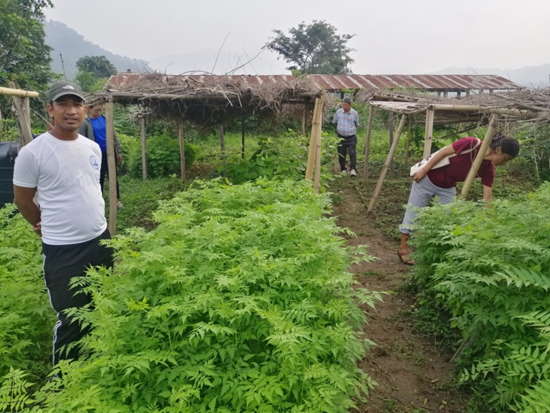
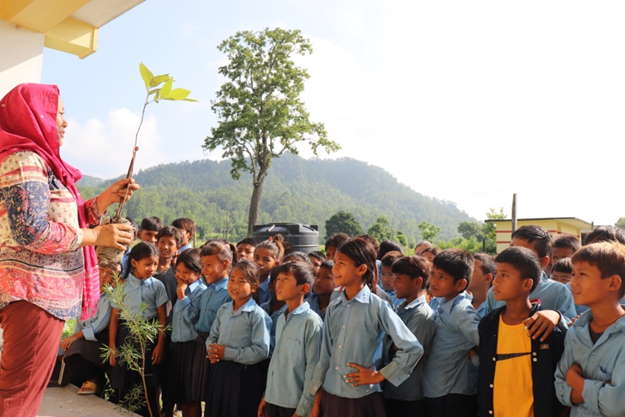
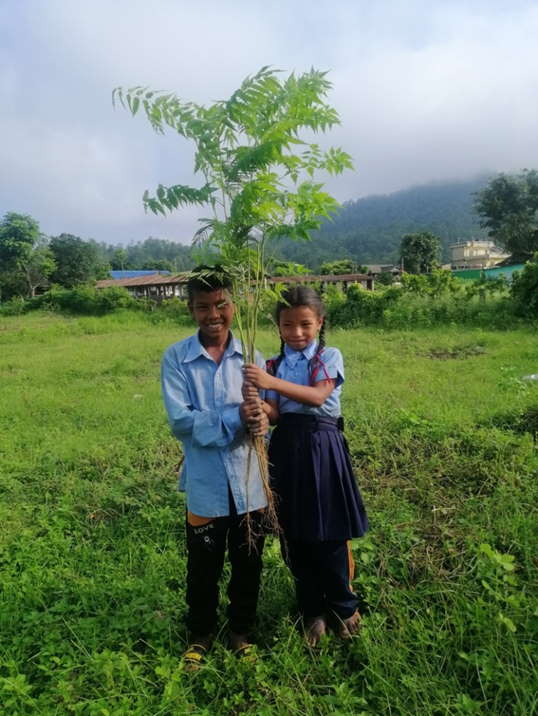
Shade plants are chosen for the school grounds, important in the hot, dry months - and fruit trees.The children have a great responsibility in planting and caring for the plants.
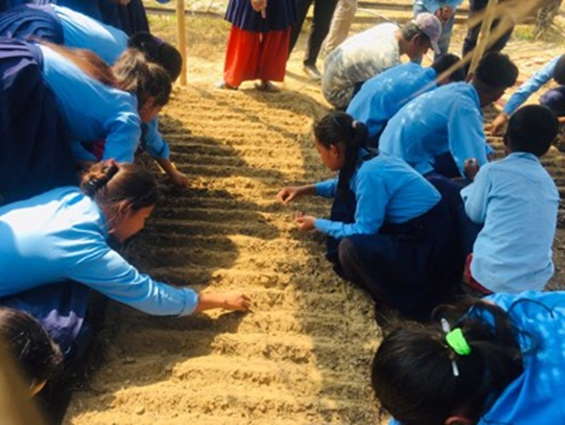
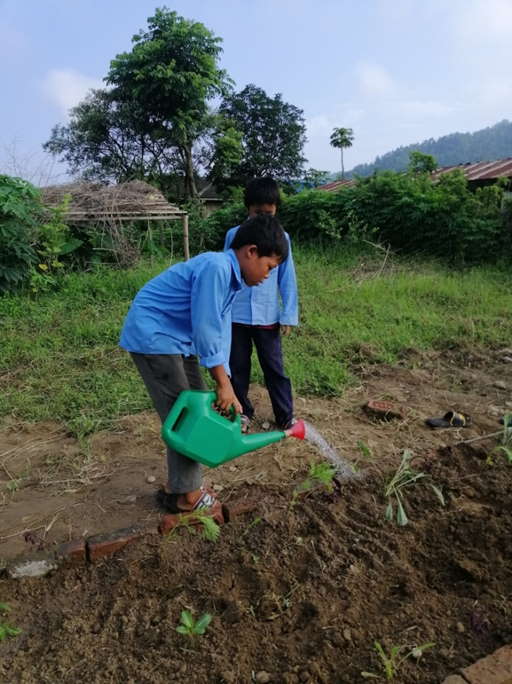
Higher educational attainment can also bring frustration: those who went to school longer find agricultural activities inferior and want to seek work in the cities. But outside tourism and services, there are few opportunities in Nepal. These children learn about plants, ecological alternatives that do not harm nature, and their knowledge and personal involvement lead to a reappraisal of the agricultural sector.
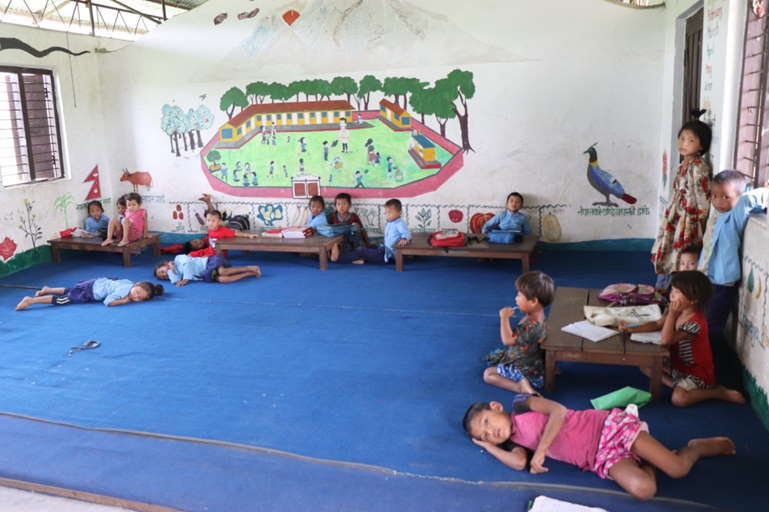
Furthermore, these pictures are not new to loyal readers of our Bikas magazine: the refurbished kindergarten classroom with an attractive design, particularly a representation of the school's grounds, low furniture and a raised wooden floor with cladding, a measure to make the classroom child-centred, i.e. warm, tidy and motivating…
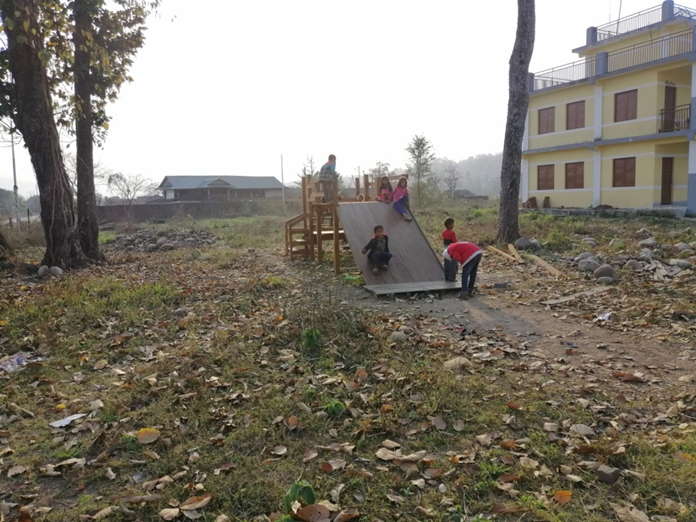
and the slide, made of reclaimed wood. Rural schools do not often have a playground, and this play equipment is very special to the children and encourages them to come to school . .
Education at Janjyoti Basic School in Hakpara thus becomes child-centred, emancipatory, region-specific, with great involvement of all partners in education. CEPP is working to improve primary education and increase ecological awareness. Caring for our planet is an attitude we want to impart to children, offering them the prospect of a better future.
Will you join us? Your support is appreciated and put to good use. BIKAS Nepal, account number BE32 2200 7878 0002, mentioning From School to School.
Thank you!
Paul Beké and Carine Verleye
From School To School 2022
From School To School 2021
From School To School 2020
From School To School 2019
[ Published previously ] |
| November 2018 |
 |
| August 2018 |
 |
| April 2018 |
 |
| January 2018 |
 |
| October 2017 |
 |
| July 2017 |
 |
| April 2017 |
 |
| January 2017 |
 |
| October 2016 |
 |
| July 2016 |
 |
| January 2016 |
 |